

Bulk Coffee Beans for Job Sites: A 2026 Buying Guide
Table of Contents
- Why Job Sites Need Better Bulk Coffee
- Calculating How Much Bulk Coffee Beans to Order
- Whole Bean vs. Ground: What Works Best On Site
- Roast Profiles and High Caffeine Coffee for Night Shifts
- How to Store Coffee Beans on Job Sites
- Bulk Ordering Strategies: One-Time vs. Subscription
- Equipment Considerations for High-Volume Brewing
- Conclusion: Fuel Your Crew with Fresh-Roasted Bulk Beans
- Frequently Asked Questions
Last Updated: September 7, 2026
A 10-person crew running two cups per worker each shift goes through roughly 20 cups of coffee a day. At about 1.5 ounces of whole bean per brewed pot and multiple pots per morning, a standard job site can empty a 5-pound bag in under a week. Ordering bulk coffee beans for job sites isn't just about saving money; it's about keeping a crew fueled, happy, and productive without daily gas station runs. At Blue Collar Brewing, we roast every batch to order, ensuring that when those beans arrive at the trailer or break room, they deliver the maximum flavor and aroma that keeps hardworking men and women coming back for another cup.
Most crews underestimate their consumption, run out mid-week, and fall back on stale convenience store coffee. This guide covers calculating your crew's needs, choosing between whole bean and ground, picking the right roast for shift work, storing beans properly on site, and setting up a reliable ordering system. We'll also cover the equipment you need to brew high volumes without burning out your machines.
Why Job Sites Need Better Bulk Coffee
The quality of coffee on a job site directly impacts crew morale and the pace of the workday. A hot, fresh cup at the morning tailgate meeting sets a different tone than a lukewarm pour from a thermos filled at a gas station. When you invest in bulk coffee beans, you are investing in the people who show up early and work hard, signaling that their comfort matters.
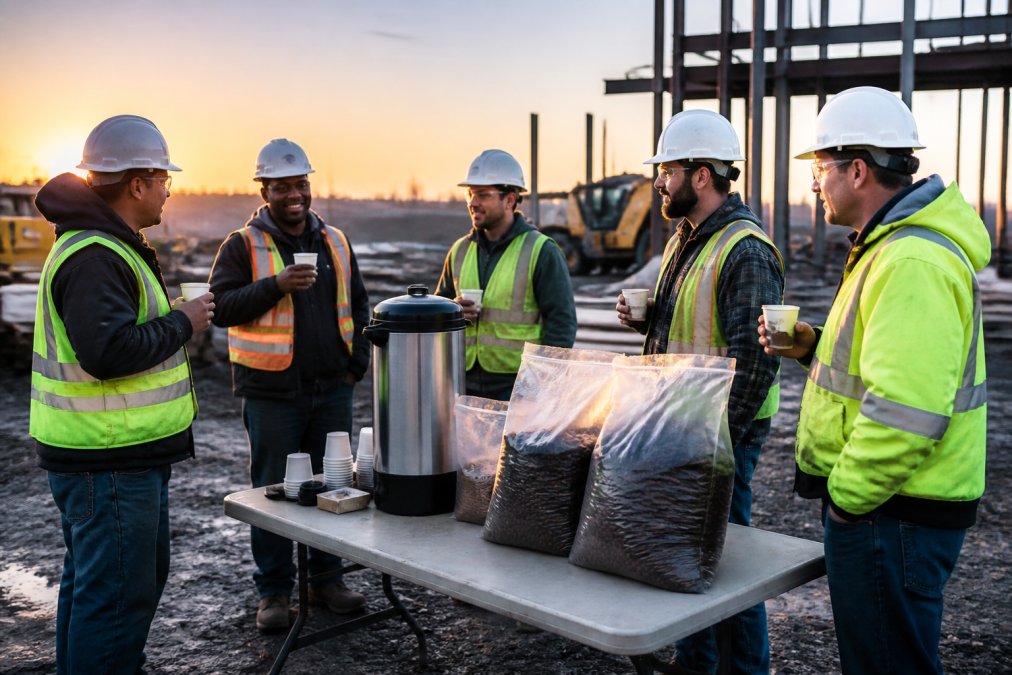
The logistical gap is real. Sending a foreman out mid-morning to grab coffee for the crew costs billable time and often results in inconsistent quality. High-volume brewing with pre-portioned, fresh beans eliminates the guesswork and the mid-shift exodus. It also cuts down on waste; when the coffee tastes good, workers are less likely to dump a pot and start over.
For crews running early mornings or long hauls, the ritual of a good cup is a small but significant anchor in the day. It provides a predictable moment of comfort amidst physically demanding work. Stocking freshly roasted beans ensures that the break is actually refreshing rather than just a pause.
Calculating How Much Bulk Coffee Beans to Order
To avoid running dry, you need a simple formula based on your crew size and consumption habits. A common rule of thumb for commercial brewing is that a 1.5-pound bag of whole bean coffee yields roughly 40 to 50 cups, depending on the strength you prefer (ncausa.org). For a crew of 10 drinking two cups each, that is 20 cups a day, meaning you will go through about 5 pounds of beans every two to three days.
Here is a practical method to estimate your weekly needs:
- Count the number of workers who drink coffee daily.
- Multiply that by the average cups per worker (usually 2 to 3).
- Divide the total daily cups by 45 to get the pounds of beans needed per day.
- Multiply the daily poundage by the number of workdays in your schedule.
- Add a 20% buffer for visitors, cold mornings, or double shifts.
So, for a 15-person crew averaging 2 cups each (30 cups), you need roughly 0.66 pounds per day. Over a 5-day work week, that is about 3.3 pounds, plus a buffer, bringing you to a solid 4-pound order. This calculation is the backbone of smart inventory management, preventing both waste and shortages. If you run a smaller operation, the National Coffee Association brewing guidelines suggest using about 2 tablespoons of ground coffee per 6 ounces of water, which helps you dial in the strength your crew expects.
Whole Bean vs. Ground: What Works Best On Site
Choosing between whole bean and ground coffee depends on your brewing equipment and how quickly you use the product. Whole bean coffee retains its volatile flavor compounds and aromatic oils far longer than pre-ground coffee, which begins to stale within minutes of grinding. If your crew goes through bags quickly, whole bean is the superior choice for flavor.
However, whole bean requires a grinder, which adds a piece of equipment to the job site and a step to the morning routine. For high-volume sites, a burr grinder set to a consistent grind consistency for drip or urn brewing is a worthwhile investment. The trade-off is undeniable: beans ground on-site produce a livelier, more aromatic cup than anything ground in a warehouse weeks prior.
For sites without power or counter space for a grinder, high-quality pre-ground coffee is a practical fallback. The key is to buy it in bulk packaging that you can seal tightly after opening. If you are using a commercial urn, a coarser grind is generally better to prevent over-extraction and bitterness. If you are using single-serve systems, you are locked into the specific format those machines require.
| Selection | Best For | Key Trade-Off |
|---|---|---|
| Whole Bean | Crews with a grinder and high daily volume | Superior freshness, requires extra equipment |
| Pre-Ground | Simple setups with urns or drip machines | Convenient, but stales faster after opening |
| Single-Serve Capsules | Small crews or varied shift times | Portion control, but higher cost per cup |
Roast Profiles and High Caffeine Coffee for Night Shifts
Roast profiles do more than change the flavor; they change the caffeine experience and the body of the coffee. Medium roast beans generally offer a balanced acidity and a brighter, more nuanced flavor, making them a crowd-pleaser for all-day drinking. Dark roast profiles provide a heavier body with smoky, chocolatey notes that stand up well to cream and sugar, often favored by crews who want a bolder taste.
For crews working nights or double shifts, the conversation shifts to caffeine content. Contrary to popular belief, a light roast can sometimes retain slightly more caffeine by volume than a dark roast due to the roasting process. However, robusta beans are the real game-changer for high caffeine coffee for night shifts. Robusta contains roughly double the caffeine of arabica beans.
A strategic choice for night crews is a blend that incorporates robusta for that extra kick. The Max Caf Blend from Blue Collar Brewing combines Tanzanian and Indian robusta beans specifically to deliver a potent caffeine boost without the jittery crash associated with sugary energy drinks. Similarly, the Breakfast Blend+ adds robusta to a medium roast for a smoother, sustained energy lift that carries a worker through the early hours. Offering a choice between a standard medium roast and a high-caffeine option lets workers self-select based on their shift and personal tolerance.

How to Store Coffee Beans on Job Sites
Proper storage is the difference between a fresh, aromatic pot and a bitter, flat one. Oxygen, heat, light, and moisture are the enemies of roasted coffee. On a dusty, temperature-fluctuating job site, protecting your beans requires a deliberate approach to bean storage.
The first rule is to keep beans in an airtight container. Once you open a bulk bag, transfer the beans to a sealed metal or ceramic canister with a one-way valve, or use a heavy-duty clip to seal the original bag if it has a valve. Exposure to oxygen triggers oxidation, which rapidly degrades the flavor compounds.
Temperature control is the second critical factor. A trailer sitting in the summer sun can easily exceed 90 degrees, which will bake the oils out of your beans and make them taste rancid. Store coffee in a cool, dark place, ideally below 75 degrees. For sites in extreme climates, FDA guidance on food storage safety highlights the importance of protecting dry goods from temperature abuse to maintain quality. Avoid storing beans near generators, heaters, or in direct sunlight.
Here is a quick checklist for job site storage:
- Transfer beans to an airtight, opaque container.
- Keep the container off the floor and away from direct heat sources.
- Never refrigerate beans, as they absorb surrounding odors and moisture.
- Buy in quantities you will use within 2 to 3 weeks to maintain shelf stability.
- Designate one person to manage the coffee inventory.
Bulk Ordering Strategies: One-Time vs. Subscription
The way you order is just as important as what you order. A one-time bulk order can secure a lower price per pound and is simple to execute. However, it requires accurate forecasting and a dedicated storage space to keep weeks' worth of beans fresh. For a large crew with steady consumption and a cool storage area, this can be an efficient, cost-effective approach.
A subscription model solves the freshness problem automatically. With a recurring delivery schedule, you ensure a constant supply of freshly roasted beans without the risk of them going stale in a hot trailer. Subscriptions also simplify the procurement process; you set it once, and the beans show up on a predictable schedule, eliminating the "we're out of coffee" scramble.
For most job sites, a subscription is the superior strategy because it aligns the supply chain with the consumption rate. It also protects against the "gap" problem where you run out and resort to gas station coffee. Blue Collar Brewing roasts every batch to order, so a scheduled delivery means the beans hitting your site were roasted and shipped recently, arriving at peak flavor. Whether you choose the 60 Pack Single Serve Coffee Capsules for individual convenience or 5-pound bags for urn brewing, a recurring order keeps the crew supplied without inventory headaches. The shipping logistics become a non-issue because the delivery is expected and planned for.

Equipment Considerations for High-Volume Brewing
Brewing for a crew is different from brewing a pot at home. The equipment must handle repeated cycles without breaking down, and the maintenance demands are higher. A standard 12-cup home drip machine will struggle to keep up with a 15-person crew and will likely burn out within months. For serious volume, you need commercial-grade equipment.
Commercial coffee urns are the workhorses of job sites. They brew 30 to 60 cups in a single cycle and keep the coffee hot for hours, which is ideal for staggered breaks. When using an urn, the brewing capacity and the grind size must be matched; a too-fine grind will clog the basket and slow the brew cycle. Maintaining these machines is critical. Mineral buildup from hard water and coffee oils will degrade the flavor and the machine's heating element over time.
A common mistake is neglecting the cleaning schedule. Run a vinegar and water solution through your urn or brewer weekly to descale it, followed by a few clean water cycles to rinse. This simple step extends the life of the machine and prevents the bitter, burnt taste that comes from old oil buildup. For sites using single-serve single-serve capsule systems, the maintenance is lower, but you still need to wipe down the needle and drip tray regularly. Regardless of the equipment, always have a backup plan, like a pour-over cone and a kettle, for the day the main brewer fails.
Conclusion: Fuel Your Crew with Fresh-Roasted Bulk Beans
Keeping a job site running requires more than just materials and blueprints; it requires a crew that is alert, focused, and satisfied. Sourcing bulk coffee beans that are roasted to order and delivered reliably solves the daily problem of good coffee, allowing you to focus on the work at hand. By calculating your crew's consumption and choosing between whole bean and ground, you can build a system that is both cost-effective and appreciated.
The right coffee and equipment reduce downtime and boost morale, making the investment in quality beans a practical decision for any operation. Blue Collar Brewing provides the fuel for the men and women who build, fix, and haul, with carefully sourced beans and a simple ordering process that delivers maximum flavor to your site.
Get started with Blue Collar Brewing and keep your crew running on fresh, reliable coffee that works as hard as they do. Shop Coffee to find the perfect bulk solution for your team.
Frequently Asked Questions
How much bulk coffee should I order for a crew of 20 people?
A standard estimate is 1.5 to 2 tablespoons of ground coffee per 6-ounce cup. For a crew of 20 having two cups a day, you will need roughly 1.5 pounds of beans daily. Ordering on a bi-weekly or monthly schedule based on this consumption rate ensures you maintain freshness while avoiding running out. Blue Collar Brewing offers bulk packaging options for high-volume needs.
What is the most cost-effective way to buy coffee for large crews?
Buying whole bean coffee in bulk is the most cost-effective approach. Whole beans retain their flavor longer than pre-ground coffee, reducing waste from stale batches. You also control the grind size to match your brewing equipment. Compare the cost per cup, not just the price per pound, to see the real savings.
How should bulk coffee beans be stored on a job site to maintain freshness?
Store beans in an airtight, opaque container away from heat, moisture, and direct sunlight. A climate-controlled break room or trailer is ideal. Avoid storing beans near ovens, generators, or exterior walls where temperatures fluctuate. For high-volume sites, divide beans into smaller daily-use containers so the main bulk supply is not constantly exposed to air.
What is the difference between commercial-grade and premium bulk coffee beans?
Commercial-grade beans often prioritize low cost and high volume, frequently using commodity-grade beans that may be stale or inconsistently roasted. Premium beans, like those from Blue Collar Brewing, are roasted to order from trusted farms, offering better flavor, aroma, and a more reliable caffeine kick. The difference is noticeable in the cup, especially for crews drinking multiple cups a day.