

Buy Fresh Roasted Coffee for Home: 2026 Guide
Table of Contents
- Why Fresh Roasted Coffee Tastes Better Than Store-Bought
- Benefits of Roasted-to-Order Coffee
- Shop by Roast Profile: Finding Your Flavor
- How to Store Coffee Beans for Maximum Freshness
- Coffee Subscription Services: Consistent Fresh Delivery
- Sustainably Sourced Coffee: Why It Matters for Your Cup
- How to Buy Fresh Roasted Coffee for Home Without Overpaying
- Conclusion
Last Updated: August 27, 2026
Why Fresh Roasted Coffee Tastes Better Than Store-Bought
Fresh roasted coffee retains its full spectrum of volatile aromatic compounds, natural oils, and CO2 within two to four weeks of roasting. Grocery store coffee has often been roasted months prior, leaving oils oxidized, aromatics off-gassed, and flavor diminished. Stale coffee tastes flat and bitter; fresh roasted coffee has acidity that brightens the cup, body that gives it weight, and aroma that hits before you sip.
At Blue Collar Brewing, we roast every batch to order, which means the coffee leaving our roastery is as fresh as it gets before it ships to your door.
Roast Date Transparency: What to Look For
The single most important thing to check when buying fresh roasted coffee is the roast date, not the "best by" date. A "best by" date can be set 12 to 18 months out from roasting, meaning coffee might still be nearly a year old when you buy it. Specialty roasters confident in their freshness always show the actual roast date.
Whole bean coffee is at its best between 5 and 21 days post-roast. Ground coffee degrades faster due to increased surface area. Buy whole bean and grind just before brewing.
According to the Specialty Coffee Association's freshness guidance, the sweet spot for most roast profiles is 5 to 14 days post-roast, after CO2 off-gassing has completed.
Benefits of Roasted-to-Order Coffee
Roasted-to-order means the roastery doesn't roast your coffee until you place your order. You get coffee at peak flavor, not coffee that peaked in a warehouse weeks ago.
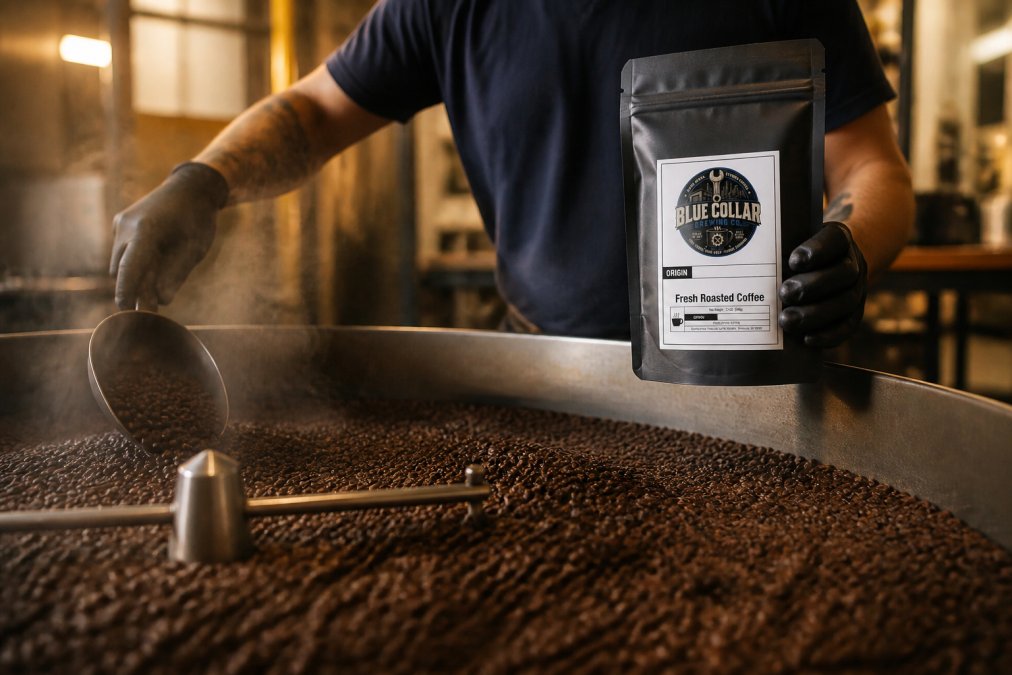
For people who need coffee that actually delivers, the difference between a flat, stale cup and a fresh one is functional, not a luxury.
Shop by Roast Profile: Finding Your Flavor
Understanding roast profiles takes two minutes and immediately improves your buying decisions.
Light roast preserves the most origin character: fruit notes, floral aromatics, bright acidity. Light roasts have higher caffeine content and a thinner body, shining with pour over and drip brewing.
Medium roast balances the bean's natural flavors with caramelized sugars developed during roasting. You get body, sweetness, and complexity. Medium roasts work across nearly every brewing method.
Dark roast develops bold, smoky, bittersweet flavors. Origin character largely disappears in favor of roast character. Body is heavy, acidity is low, and the cup is rich. Dark roasts hold up well with milk and are traditional for espresso.
Single Origin vs. Blends: Which Should You Buy?
Single origin coffee comes from one farm, cooperative, or region. Blends combine beans from multiple origins to create a consistent, balanced flavor profile across seasons.
Single origin is the better choice when you want to taste a specific flavor profile or understand what good arabica tastes like from a particular altitude and soil type. Our Brazil Santos, grown at 750 to 1,050 meters on volcanic loam soil with tasting notes of cocoa, exemplifies this. Our Colombia from smallholder farmers in Medellín brings dried orange, berry, and chocolate at 1,300 to 1,500 meters.

Blends are the better choice when you want consistency year-round. Our House Blend and Breakfast Blend are built for that: smooth, clean, and consistent, with a medium body that works for a crew or solo thermos.


| Option | Best For | Flavor Character | Consistency |
|---|---|---|---|
| Single Origin | Exploring specific flavors | Distinct, terroir-driven | Seasonal variation |
| Blend | Daily drinking, crews | Balanced, approachable | Consistent year-round |
| Light Roast | Pour over, drip | Bright, fruity, acidic | Origin-dependent |
| Medium Roast | All brewing methods | Balanced, sweet | Reliable |
| Dark Roast | Espresso, with milk | Bold, smoky, rich | Consistent |
Match Your Beans to Your Brewing Method
The biggest mismatch most home brewers make is using the wrong grind size or roast profile for their equipment:
- Pour over (Chemex, V60): Light to medium roast, medium-coarse grind.
- Drip machine: Medium roast, medium grind.
- French press: Medium to dark roast, coarse grind.
- Espresso: Medium to dark roast, fine grind.
- Cold brew: Dark roast, extra-coarse grind.
For job site thermoses, a medium-dark whole bean ground coarse for a French press or coarse drip machine is most reliable. It stays drinkable longer and doesn't turn bitter as it cools.
How to Store Coffee Beans for Maximum Freshness
Proper storage is the second half of the freshness equation. You can buy the best roasted-to-order coffee and ruin it in a week with bad storage habits.
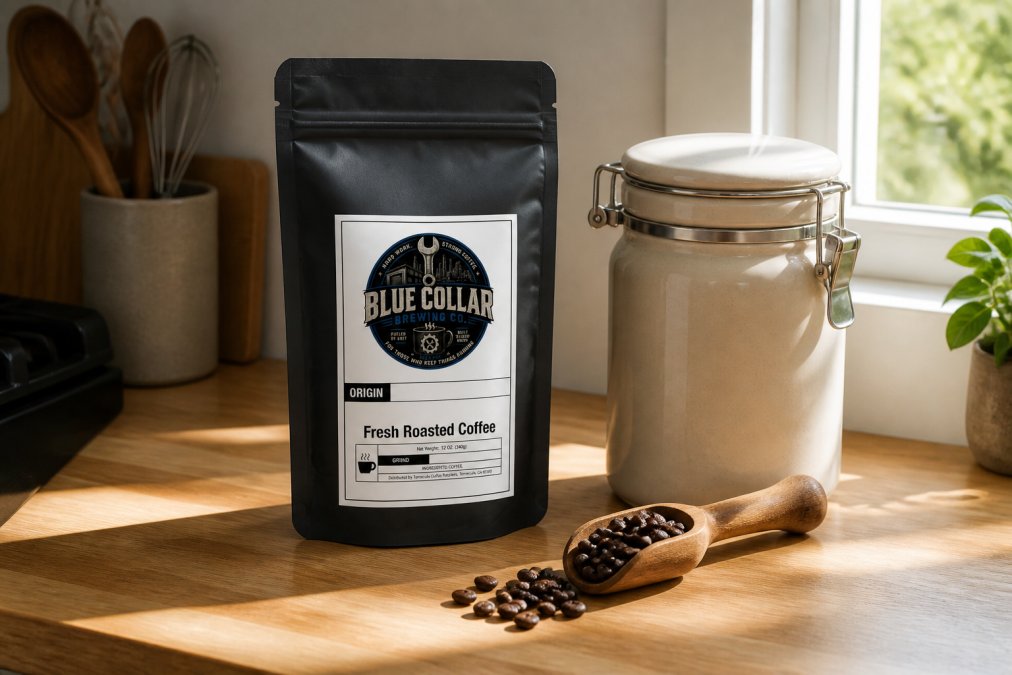
The four enemies of fresh roasted coffee are oxygen, moisture, light, and heat.
Oxygen is the primary threat. Keep beans in their original bag with the valve intact, or transfer to an airtight ceramic or stainless steel canister.
Moisture causes beans to go stale fast. Never store coffee near a sink, dishwasher, or coffee maker that produces steam. The refrigerator is a common mistake: humidity and odor absorption ruin coffee within days.
Light degrades coffee oils. Opaque bags and dark canisters are functional, not aesthetic choices.
Heat accelerates degradation. Store beans at room temperature, away from the stove or oven.
For freezing, according to food science guidance from the University of California, it only works correctly when done in airtight, moisture-proof packaging in single-use portions, never refrozen. For most home brewers, buying smaller quantities more frequently is simpler and more reliable.
Coffee Subscription Services: Consistent Fresh Delivery
A coffee subscription is the most reliable way to maintain a steady supply of fresh roasted coffee. When you order on demand, you often wait until nearly out, meaning you drink stale coffee while waiting for the next shipment. A subscription synced to your consumption rate keeps you in the fresh window.
For tradespeople and construction crews who go through coffee fast, subscriptions remove the friction of reordering.
Shipping and Delivery: What to Expect
A bag roasted Monday and shipped Tuesday should reach most destinations within two to five business days, keeping coffee in the optimal freshness window of 5 to 21 days post-roast.
What to look for in a roaster's shipping policy:
- Roast-to-ship lag: One to two days is ideal.
- Carrier reliability: Ground shipping is fine for most destinations within two to three days.
- Delivery consistency: Does the roaster guarantee consistent delivery intervals?
According to USPS shipping time estimates for ground advantage, most domestic ground shipments arrive within two to five business days. For roasters in the continental US, that keeps coffee well within the freshness window.
Sustainably Sourced Coffee: Why It Matters for Your Cup
Sustainability in coffee directly affects bean quality. Farms that invest in sustainable practices tend to produce higher-quality arabica. Healthy soil, proper altitude, and careful harvesting produce denser, more complex beans.
Certifications like Fair Trade, Rainforest Alliance, and organic designation give you a starting point. Direct trade relationships, where the roaster buys directly from the farm, often go further in ensuring quality and fair compensation.
The Fair Trade USA certification standards require minimum price floors for farmers and investment in community development funds, creating economic incentive for quality over volume.
Our Colombia single origin is sourced from smallholder farmers in Medellín, processed fully washed and dried in solar dryers for a cleaner, brighter cup. The Brazil Santos is pulped natural and sun-dried, an environmentally efficient process producing the cocoa-forward, smooth character you taste.
When you buy sustainably sourced coffee, you're paying for the farming conditions that produced a better bean.
How to Buy Fresh Roasted Coffee for Home Without Overpaying
Fresh roasted, small batch coffee costs more than grocery store brands, but the price difference is smaller than most expect. Here's how to buy smart:
Buy whole bean, not pre-ground. Whole beans stay fresh longer. A basic burr grinder pays for itself quickly in reduced waste.
Match bag size to consumption rate. A 12-ounce bag brews roughly 17 to 20 cups. If you drink two cups a day, it lasts about nine days, well within the freshness window. Buying larger bags to save money only works if you finish within three weeks.
Use a subscription to lock in freshness and price. Many roasters offer modest discounts for subscriptions compared to one-time purchases.
Don't overbuy on variety. Most will go stale before you finish them. Start with one or two bags, find what works, then expand.
Our full lineup, including the House Blend, Breakfast Blend, Brazil Santos, and Colombia, is priced at $19.99 per bag. That's straightforward pricing for roasted-to-order, small batch coffee with full roast date transparency and direct farm sourcing. No tiered pricing or subscription lock-in required.
The question isn't whether fresh roasted coffee costs more than Folgers. It does. The question is whether the difference in your cup is worth a few extra dollars per bag. For most people who try it, the answer is obvious.
=== FAQ ANSWERS (audit these too, same rules) ===
[1] Q: How do I know if my coffee beans are actually fresh? A: Check the roast date printed on the bag, not a 'best by' date, but the actual date the beans were roasted. Fresh whole bean coffee is best consumed within 2 to 4 weeks of that date. You can also test freshness by placing beans in water: CO2 released during degassing causes fresh beans to bubble. Stale beans sink without reaction. A roastery that roasts to order will ship within days of roasting, so the beans arrive at peak flavor and aroma.
[2] Q: What are the benefits of buying coffee roasted-to-order? A: Roasted-to-order coffee ships within days of leaving the roaster, meaning you receive beans at peak freshness rather than bags that sat in a warehouse for weeks. The difference shows up in the cup: brighter acidity, fuller body, more pronounced tasting notes, and a stronger aroma. For everyday drinkers who just want something noticeably better than stale grocery store coffee, the improvement is immediate and obvious, no tasting expertise required.
[3] Q: Where can I buy fresh roasted coffee online? A: Specialty roasteries that operate direct-to-consumer online stores are your best option. Look for roasters who list an actual roast date on every bag, ship within 24 to 48 hours of roasting, and offer single origin and blend options. Blue Collar Brewing roasts every batch to order and ships directly to your door, with whole bean and ground options available. Prices start at $19.99 per 12 oz bag, which is competitive for small-batch, freshly roasted arabica coffee.
[4] Q: Can I order bulk fresh roasted coffee for a job site or crew? A: Yes. Ordering multiple bags of the same roast is straightforward through most direct-order roasteries. Blue Collar Brewing's lineup, including the House Blend and Breakfast Blend at $19.99 each, scales well for crews. Ordering several bags at once keeps cost per cup low while ensuring everyone has fresh coffee on site. Reach out directly if your crew needs a recurring wholesale arrangement, as many small-batch roasters accommodate regular bulk orders.
Frequently Asked Questions
How do I know if my coffee beans are actually fresh?
Check the roast date printed on the bag, not a 'best by' date, but the actual date the beans were roasted. Fresh whole bean coffee is best consumed within 2 to 4 weeks of that date. You can also test freshness by placing beans in water: CO2 released during degassing causes fresh beans to bubble. Stale beans sink without reaction. A roastery that roasts to order will ship within days of roasting, so the beans arrive at peak flavor and aroma.
What are the benefits of buying coffee roasted-to-order?
Roasted-to-order coffee ships within days of leaving the roaster, meaning you receive beans at peak freshness rather than bags that sat in a warehouse for weeks. The difference shows up in the cup: brighter acidity, fuller body, more pronounced tasting notes, and a stronger aroma. For everyday drinkers who just want something noticeably better than stale grocery store coffee, the improvement is immediate and obvious, no tasting expertise required.
Where can I buy fresh roasted coffee online?
Specialty roasteries that operate direct-to-consumer online stores are your best option. Look for roasters who list an actual roast date on every bag, ship within 24 to 48 hours of roasting, and offer single origin and blend options. Blue Collar Brewing roasts every batch to order and ships directly to your door, with whole bean and ground options available. Prices start at $19.99 per 12 oz bag, which is competitive for small-batch, freshly roasted arabica coffee.
Can I order bulk fresh roasted coffee for a job site or crew?
Yes. Ordering multiple bags of the same roast is straightforward through most direct-order roasteries. Blue Collar Brewing's lineup, including the House Blend and Breakfast Blend at $19.99 each, scales well for crews. Ordering several bags at once keeps cost per cup low while ensuring everyone has fresh coffee on site. Reach out directly if your crew needs a recurring wholesale arrangement, as many small-batch roasters accommodate regular bulk orders.
Getting fresh coffee delivered to your door shouldn't require a deep dive into specialty coffee jargon or a complicated subscription model. Blue Collar Brewing keeps it simple: roasted to order, sourced from trusted farms, shipped fast, and priced fairly. Whether you're fueling a solo morning or keeping a whole crew running, Shop Coffee at Blue Collar Brewing and taste the difference freshness makes.
This article was written using GrandRanker