

High Caffeine Coffee for Night Shifts: Top Picks
Table of Contents
- Quick Comparison: High Caffeine Coffee Options for Night Shifts
- How We Chose the Best Coffee for 12 Hour Shifts
- The Best High Caffeine Coffee Blends for Night Shifts, Ranked
- Caffeine Timing for Night Shift: When to Drink, When to Stop
- How to Stay Awake on Night Shift Without Crashing
- Caffeine Sensitivity, Genetic Variance, and Safe Dosage
- Conclusion
Last Updated: August 28, 2026
Night shift workers face a physiological challenge that most caffeine advice ignores: your body actively fights you. High caffeine coffee for night shifts isn't just about picking the strongest bag on the shelf, it's about understanding when to drink, how much to take, and how to avoid the crash at 3 a.m. This guide from Blue Collar Brewing breaks down the best high caffeine coffee options for overnight and 12-hour shifts, along with timing strategies, crash prevention, and post-shift recovery.
Quick Comparison: High Caffeine Coffee Options for Night Shifts
| Coffee | Roast Level | Caffeine Level | Best For | Price |
|---|---|---|---|---|
| Max Caf Blend | Dark/Robusta Blend | Highest | Overnight shifts, maximum alertness | $19.99 |
| Breakfast Blend + | Medium + Robusta | High | Evening shift start, sustained energy | $19.99 |
| Italian Roast | Darkest | High | Long hauls, smooth and slow-burning | $19.99 |
| 6 Bean Blend | Dark | Moderate-High | Espresso pulls, versatile use | $19.99 |
| Single Serve Capsules | Medium (Original Roast) | Moderate | Mid-shift brewing, convenience | $59.99/60-pack |
How We Chose the Best Coffee for 12 Hour Shifts
The biggest mistake most guides make is treating "strongest coffee" as synonymous with "best for shift work." They're not the same.


For a 12-hour shift, you need real caffeine milligrams and a roast that won't wreck your gut after three cups. Our selection criteria:
- Caffeine source: Robusta beans carry roughly twice the caffeine of Arabica. Any serious shift-work blend should include Robusta.
- Roast profile: Darker roasts don't have more caffeine, roasting burns some off. Blends combining Robusta with controlled roasting maximize actual caffeine content.
- Brew strength: Grind size, water temperature, and brew method all affect how much caffeine reaches your cup. We prioritize versatility.
- Digestibility: Shift workers can't afford acid reflux mid-task. Slow-roasted blends are gentler on the stomach.
- Convenience: Not every shift has a full kitchen. Single-serve options matter.
The FDA guidance on caffeine and safe consumption recommends healthy adults stay under 400 milligrams of caffeine per day.
The Best High Caffeine Coffee Blends for Night Shifts, Ranked
The five options below cover every major use case for overnight and extended shifts. All are roasted to order.
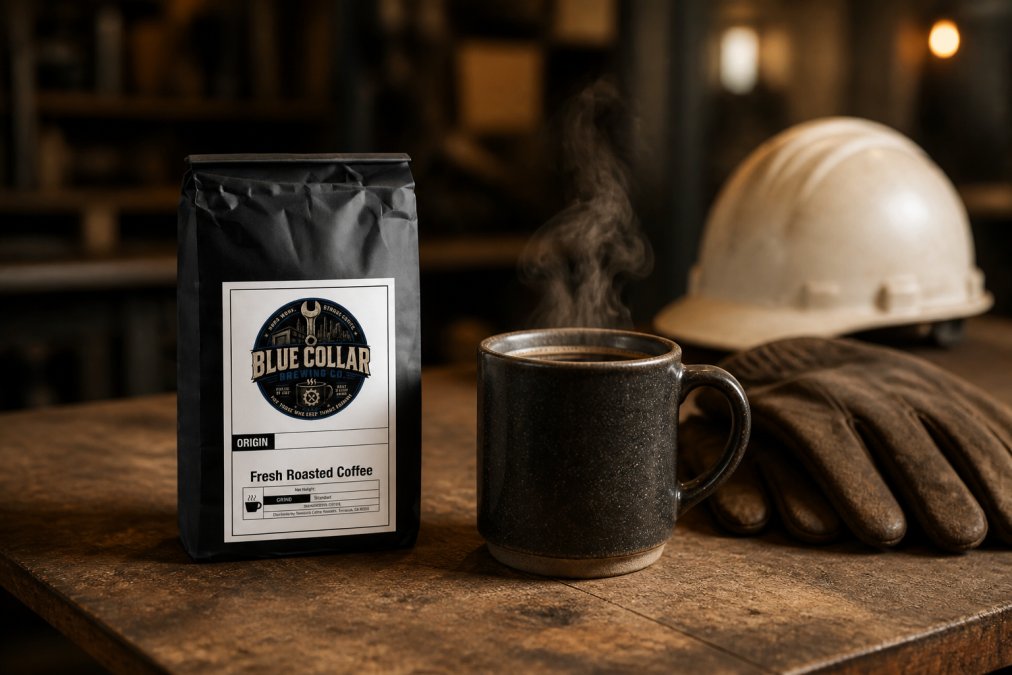
1. Max Caf Blend, Highest Caffeine, Built for Overnight Shifts
The Max Caf Blend combines Tanzania Arabica with India Robusta, pushing caffeine content well above a standard single-origin Arabica brew. The Tanzania origin provides a clean, bright base that stays drinkable at high brew strength, while the India Robusta adds stimulant payload and body.
What works: Highest caffeine in the lineup. Robusta content delivers real alertness support. Roasted to order, so you're not drinking stale warehouse beans.
What to watch: This isn't a casual morning cup. Brew it too strong late in a shift and caffeine will still be active when you're trying to sleep after clocking out.
Best for: Overnight workers, construction crews on night sites, long-haul drivers during early shift hours.
2. Breakfast Blend +, Medium Roast with a Robusta Boost
The Breakfast Blend + suits shift workers who want elevated caffeine without a heavy dark roast. The medium roast base is lighter on the stomach, and added Robusta pushes caffeine content above a standard breakfast blend. This works well for 6 p.m. to 6 a.m. shifts, preserving the bean's natural brightness for a livelier cup.
What works: Gentler on the stomach than darker blends. Better flavor complexity. Robusta addition gives a caffeine edge over standard medium roasts.
What to watch: If you're three hours into an overnight and need an emergency boost, Max Caf is the better call.
Best for: Evening shift starts, workers sensitive to dark roast acidity, anyone wanting real caffeine without full dark roast intensity.
3. Italian Roast, Darkest Roast, Smooth and Sustained
The Italian Roast is slow-roasted, which caramelizes sugars evenly and produces a dark flavor without harshness. For a 12-hour shift, this distinction matters: slow roasting delivers sustained energy without jitteriness.
What works: Smoothest cup in the lineup. Least likely to cause jitteriness or hard crashes. The Arabica/Robusta blend keeps caffeine content meaningful despite dark roasting.
What to watch: Not the highest caffeine option. If raw caffeine milligrams are the priority, Max Caf wins. Italian Roast is about sustained, comfortable alertness.
Best for: Workers needing steady cognitive performance mid-shift without the edge of a high-caffeine hit.
4. 6 Bean Blend, Dark Roast Versatility for Long Nights
The 6 Bean Blend is a dark roast house blend from multiple origins, built for versatility and optimized for espresso. Espresso extraction pulls significantly more caffeine per ounce than drip coffee, useful for a fast mid-shift boost in a Moka pot.
What works: Multi-origin complexity. Espresso-optimized grind and roast. Dark roast body holds up well with milk or creamer.
What to watch: This is the "do everything well" option rather than the "maximum output" option.
Best for: Workers with access to an espresso machine or Moka pot. Crews wanting a dark roast that works equally well as drip, espresso, or cold brew.
5. Single Serve Capsules, Convenience for Mid-Shift Brewing
The 60 Pack Single Serve Capsules ($59.99) solve a real problem: most break rooms have a single-serve machine, not a full brewing setup. The Original Roast capsules are oxygen-sealed, keeping coffee fresh from roast date to brewing. A 12-pack option ($18.99) is available for workers wanting to try the format first.
What works: Maximum convenience for break room or job site brewing. Oxygen-free sealing preserves freshness. Better extraction than most capsule formats.
What to watch: Capsule format limits your ability to adjust brew strength. For maximum caffeine, pair with a Max Caf bag when you have a full brewer available.
Best for: On-the-road workers, job site breaks, anyone whose shift location only has a single-serve machine.
Caffeine Timing for Night Shift: When to Drink, When to Stop
Caffeine timing is arguably more important than which blend you choose. Drink at the wrong time and you'll either crash before the shift ends or lie awake for hours after clocking out.
Caffeine Half-Life and Your Circadian Rhythm
Caffeine half-life is the time it takes your body to eliminate half the caffeine you consumed, typically four to six hours for most adults. Your circadian rhythm is your body's internal 24-hour clock, governed by light exposure and core body temperature. During an overnight shift, your circadian rhythm signals for sleep while adenosine receptors accumulate adenosine (the molecule causing drowsiness). Caffeine blocks these receptors temporarily, but when it clears, adenosine floods back, often producing a harder crash than daytime dips.
According to research on shift work disorder from the National Institute of Neurological Disorders and Stroke, chronic circadian rhythm disruption is associated with significant health effects beyond simple fatigue.
Dosage Windows That Prevent an Energy Crash
A common approach for 12-hour night shifts is splitting caffeine intake into two windows:
- Window 1 (shift start): Consume your primary dose within the first 30-60 minutes.
- Window 2 (mid-shift): A smaller secondary dose around the halfway point. For a 10 p.m. to 6 a.m. shift, this lands around 2 a.m., when circadian pressure peaks.
- Cut-off point: Stop caffeine at least five to six hours before planned sleep. For a 6 a.m. shift end and 8 a.m. sleep target, your last cup should be no later than 1-2 a.m.
| Shift Window | Recommended Action | Why It Works |
|---|---|---|
| Shift start (first hour) | Primary caffeine dose | Blocks adenosine before buildup peaks |
| Mid-shift (halfway point) | Smaller secondary dose | Maintains alertness during circadian low |
| Final 5-6 hours of shift | No new caffeine | Allows clearance before post-shift sleep |
| Post-shift wind-down | Hydration, no stimulants | Supports recovery and sleep onset |
How to Stay Awake on Night Shift Without Crashing
Caffeine is a tool, not a complete strategy. Workers relying on stimulants alone develop tolerance faster and experience harder crashes. Pair high caffeine coffee with non-caffeinated techniques for best results.
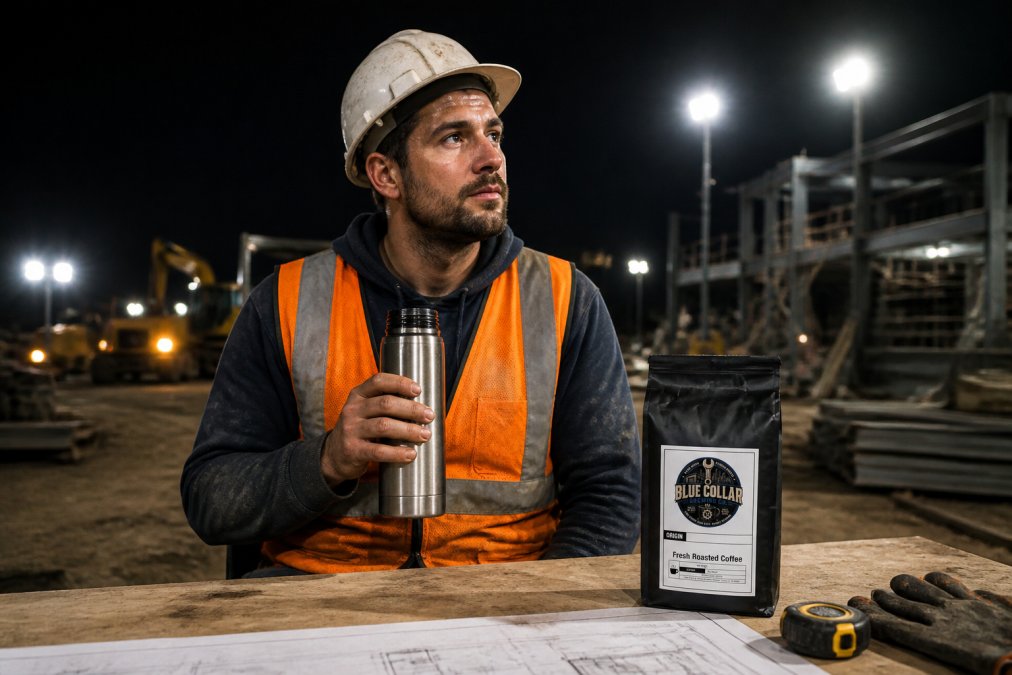
Non-Caffeinated Energy Sustainers to Pair with Coffee
Most night shift fatigue isn't a caffeine deficiency, it's a hydration and blood sugar problem that caffeine masks temporarily.
Hydration: Caffeine is a mild diuretic. For every cup of coffee, drink comparable water. Dehydration accelerates fatigue and impairs cognitive performance.
Strategic light exposure: Bright light suppresses melatonin and signals wakefulness. Maximize light exposure at shift start and during the 2-4 a.m. circadian dip window.
Short movement breaks: Five minutes of physical movement increases blood flow and temporarily elevates alertness.
Low-glycemic snacks: High-sugar snacks cause blood glucose spikes followed by crashes that compound fatigue. Protein and fat-based snacks (nuts, jerky, cheese) provide sustained energy between caffeine doses.
Post-Shift Sleep Hygiene to Recover Faster
Post-shift sleep hygiene is the most overlooked element of shift work optimization:
- Blackout your sleep environment. Daytime sleep is interrupted by light signals suppressing melatonin. Blackout curtains or a sleep mask are essential.
- Wind down before bed. Avoid screens for 30 minutes before sleep. Blue light delays sleep onset by suppressing melatonin.
- Keep your sleep schedule consistent. Even on days off, maintain a similar sleep window. Irregular timing compounds circadian disruption over weeks and months.
- Avoid alcohol as a sleep aid. Alcohol reduces sleep quality and suppresses REM sleep, leaving you less rested even after a full sleep period.
According to sleep and shift work guidance from the Centers for Disease Control and Prevention, shift workers prioritizing sleep hygiene report significantly better recovery and reduced fatigue.
Caffeine Sensitivity, Genetic Variance, and Safe Dosage
Not everyone metabolizes caffeine the same way. This variance is largely genetic, tied to variants in the CYP1A2 gene, which controls how quickly the liver processes caffeine. Fast metabolizers clear caffeine quickly and may need more frequent doses. Slow metabolizers retain caffeine longer, meaning a cup at 2 a.m. may still affect their system at 8 a.m.
A common mistake is assuming that if you don't feel caffeine's effects strongly, you can drink more freely. Tolerance to perceived effects develops faster than tolerance to physiological sleep disruption. You may feel less wired, but caffeine is still disrupting your sleep quality.
Practical guidelines for shift workers:
- Start with a lower dose and assess your response before increasing
- Track sleep quality alongside caffeine intake, not just how alert you feel on shift
- If experiencing persistent jitteriness, anxiety, or heart palpitations, reduce dosage and consult a healthcare provider
- Consider stimulant cycling: taking one or two days per week at lower caffeine intake to prevent tolerance buildup
As documented in caffeine and health overview from Harvard T.H. Chan School of Public Health, individual genetic differences in caffeine metabolism should inform your intake strategy. The 400 milligram daily ceiling from the FDA is a general guideline, not a target. For workers with cardiovascular conditions, anxiety disorders, or sleep disorders, lower thresholds apply, and a doctor's guidance is appropriate.
Night shift work puts real demands on your body, and generic coffee advice doesn't cut it six hours into a 12-hour overnight. Blue Collar Brewing roasts every batch to order, delivering fresh caffeine bioavailability in every bag. The Max Caf Blend is the strongest starting point for overnight workers, while the Italian Roast and Breakfast Blend + offer sustained energy profiles for different shift points. Shop Coffee at Blue Collar Brewing and get fresh-roasted fuel delivered directly to your door, on a schedule that works for your rotation.
Frequently Asked Questions
How much caffeine is safe to consume during a night shift?
The FDA considers 400 milligrams of caffeine per day safe for healthy adults. For a 12-hour shift, spacing doses of 100-150 mg every three to four hours keeps alertness steady without pushing past that ceiling. Workers with heart conditions, high blood pressure, or caffeine sensitivity should stay well below that threshold and check with a doctor before relying on high caffeine coffee as a regular stimulant.
How should I time my caffeine intake for a 12-hour night shift?
Start with a full cup roughly 30 minutes before your shift begins. Take a second dose around the midpoint of the shift when adenosine receptors start signaling fatigue most strongly. Cut off caffeine intake at least five to six hours before you plan to sleep, since caffeine's half-life averages around five hours. This caffeine timing for night shift approach prevents an energy crash late in the shift while still protecting sleep quality afterward.
Does high-caffeine coffee affect sleep quality after a night shift?
Yes, if you drink it too close to bedtime. Caffeine blocks adenosine receptors, delaying the onset of sleep and reducing deep sleep duration. After a night shift, aim to stop drinking high caffeine coffee at least five hours before you intend to sleep. Keeping your sleep environment dark and cool, and avoiding screens for 30 minutes before bed, helps your circadian rhythm reset faster so recovery sleep is actually restorative.
What is the best drink to stay alert during a night shift besides coffee?
Water is the most underrated option. Dehydration causes fatigue that mimics an energy crash, so steady hydration throughout the shift maintains baseline cognitive performance. Green tea offers a lower caffeine dose with L-theanine, which smooths out jitteriness. Electrolyte drinks without added sugar support sustained alertness during physically demanding shifts. These non-caffeinated energy sustainers work best when paired with smart caffeine timing, not used as a replacement.
Is Robusta or Arabica better for staying awake on a night shift?
Robusta beans contain roughly twice the caffeine of Arabica by weight, making them the practical choice for high caffeine coffee blends targeting alertness maintenance. Arabica delivers better flavor complexity and lower acidity, which is why the best blends for night shifts combine both. Blends like the Max Caf Blend use Tanzania and India Robusta specifically to push caffeine content higher while keeping the cup drinkable through a long overnight shift.
This article was written using GrandRanker