

How to Choose Coffee Roast Levels
Table of Contents
- Understanding Coffee Roast Levels
- Light Roast: Brightness and Origin Flavor
- Medium Roast: Balance and Complexity
- Dark Roast: Bold Body and Smoky Character
- Best Coffee for Early Mornings
- Caffeine Content by Roast Level
- Brewing Methods for Different Roasts
- How to Match Roast Levels to Milk-Based Drinks
- Frequently Asked Questions
Last Updated: September 3, 2026
Understanding Coffee Roast Levels
When green coffee beans hit heat, they transform chemically, developing the flavors and aromas that define your entire brewing experience. At Blue Collar Brewing, we roast every batch to order so you get beans at their peak freshness, capturing the exact roast level you need.
Heat causes the bean's sugars to caramelize and proteins to break down through the Maillard reaction, creating hundreds of flavor compounds. This is why a single-origin Ethiopian bean tastes completely different from an Indonesian bean, origin flavors interact with roast development to create entirely unique profiles.
What Happens During the Roasting Process
The roasting process unfolds in distinct phases. First, beans absorb heat and lose moisture, shifting from green to yellow. Then the Maillard reaction kicks in, creating brown pigments and aromatic compounds. The beans expand as internal pressure builds, producing a sharp, rapid crackling sound, the first crack.
The first crack marks a critical threshold. The bean's structure fractures under pressure, and the interior opens up. Light roasts are typically pulled here, preserving origin characteristics. Continue heating and more caramelization happens, the body becomes heavier, and oils migrate to the surface, medium roast territory.
Push past medium and you approach the second crack, a gentler, more sporadic popping sound. Between first and second crack is medium-dark roast. Past second crack, you're in dark roast territory, where beans take on an oily sheen and smoky, bold character.

First Crack and Second Crack
First crack occurs around 356-401°F when the bean's structure physically breaks apart from internal steam pressure (peer-reviewed research). Light roasts are pulled immediately after or just before, preserving origin characteristics and acidity. The beans remain dense with a dry surface, delivering bright, nuanced flavors. Caffeine content remains essentially unchanged, roasting doesn't significantly reduce caffeine despite common misconceptions.
Second crack occurs around 410-430°F and sounds quieter and more irregular than first crack (peer-reviewed research). At this point, beans are already fractured, so the sound is more like occasional pops. Between first and second crack is the sweet spot for medium and medium-dark roasts. After second crack, beans push into dark roast territory.
Understanding these moments matters because they determine flavor profile. Light roasts preserve acidity and floral or fruity notes. Medium roasts balance acidity with body and complexity. Dark roasts emphasize body and boldness at the expense of origin flavor brightness.
Light Roast: Brightness and Origin Flavor
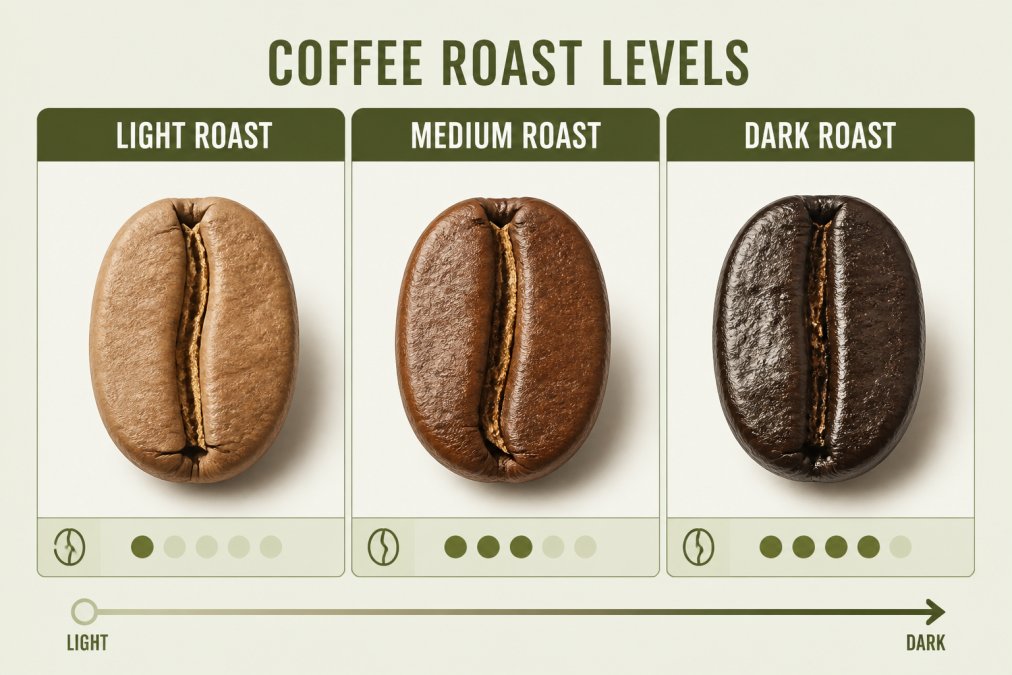
Light roasts showcase what makes each origin unique. Pulled at or just after first crack, they preserve origin characteristics with high acidity, floral notes, fruity notes, and tea-like body. The surface is dry with no visible oil.
When you brew light roast, you're tasting the terroir, altitude, soil composition, and processing method all come through. An Ethiopian light roast tastes completely different from a Kenyan light roast. This is why specialty coffee enthusiasts favor light roasts.
Light roasts work best with pour-over, Aeropress, and single-serve methods that highlight acidity and complexity. Cold brew made from light roast develops sweetness as cold water extraction pulls different compounds than hot water.
The caffeine content in light roast is slightly higher than dark roast, though the difference is minimal. The perceived difference comes from body and acidity, light roasts feel brighter and more stimulating because of their acidity, not because they have substantially more caffeine.
Medium Roast: Balance and Complexity
Medium roasts hit the sweet spot between origin flavor and roast character. Roasted past first crack but before second crack, they develop more body while preserving some origin characteristics. You get moderate acidity, more sweetness than light roasts, and fuller mouthfeel. The surface shows minimal oil, just starting to develop sheen.
The Maillard reaction has progressed further than in light roasts, creating deeper flavor compounds. Caramelization of sugars adds sweetness and body. But origin flavor still shines through, a medium roast Ethiopian tastes distinctly different from a medium roast Colombian.
Medium roasts work across most brewing methods: drip, pour-over, Aeropress, French press, and espresso. Many coffee drinkers find medium roast the most approachable, not as bright as light roast, not as bold as dark roast, with real complexity that isn't demanding.
Dark Roast: Bold Body and Smoky Character
Dark roasts are pulled after second crack, developing an oily surface sheen. Origin flavor is largely masked by roast character. You get low acidity, heavy body, and bold, smoky flavors, charcoal, smoke, dark chocolate, molasses.
The heavy body and low acidity make dark roast approachable for many people. There's no brightness or sharpness to navigate. This is the roast level that tastes "like coffee" to people who grew up on diner coffee.
Dark roasts excel in French press, espresso, and cold brew. The oiliness contributes to mouthfeel and richness, though it requires more equipment maintenance, oily beans can clog grinders and espresso machine screens.
Best Coffee for Early Mornings
The best coffee for early mornings depends on what you need. If you're starting a physically demanding shift, medium and medium-dark roasts hit the mark better than light or very dark roasts.
Light roasts are bright and complex, but their acidity can hit your stomach hard first thing in the morning. Medium roasts provide body and sweetness that feel more substantial when waking up, delivering caffeine smoothly without sharp edges.
Dark roasts are bold but their heaviness can sit in your stomach. Medium-dark roasts offer the best balance, enough body to feel substantial, enough brightness to energize, without full dark roast heaviness.
If you're making coffee at home before heading to a job site, French press or drip works well. A travel mug of medium roast holds up better than light roast as it cools. Blue Collar Brewing's Ethiopia Natural is a med-light roast that works well for mornings, enough body to feel substantial but enough origin brightness to wake you up without harshness.

Caffeine Content by Roast Level
Caffeine content doesn't change significantly between roast levels (the FDA). Roasting doesn't destroy caffeine, heat doesn't break down caffeine molecules meaningfully. A light roast and dark roast from the same bean have essentially the same caffeine content.
What changes is perception. Light roasts feel more caffeinated because of their acidity and brightness. Dark roasts feel less caffeinated because their heaviness masks stimulation. But the actual caffeine is there in both.
The real variable is bean density. A light roast bean is denser and weighs more. A dark roast bean is less dense, having lost more water during roasting. If you measure by volume (scoops), light roast gives slightly more caffeine. If you measure by weight, they're identical.
For early mornings, choose based on how your body responds to acidity and body, not roast level for caffeine.
Brewing Methods for Different Roasts
Pour-over works best with light and medium roasts, extracting bright, nuanced flavors. Light roasts shine, with acidity and origin flavor coming through clearly.
French press is ideal for medium and dark roasts. The immersion method extracts body and oils. Light roasts can taste thin or over-extracted.
Espresso works across all roast levels with different results. Light roast espresso is bright and sharp. Medium roast espresso is balanced and sweet. Dark roast espresso is bold and syrupy.
Drip coffee makers work with any roast level, though medium roast is the safest choice for balance and approachability.
Cold brew works with any roast level. Light roast cold brew develops sweetness and clarity. Medium roast is smooth and balanced. Dark roast is smooth and slightly sweet.
Aeropress works well with light and medium roasts, creating clean, bright cups.
How to Match Roast Levels to Milk-Based Drinks
Milk changes everything about how coffee tastes. The milk's sweetness and fat content mask acidity and highlight body, making roast level choice different than for black coffee.
Light roasts in milk-based drinks can taste thin or get lost. Skip them for lattes and cappuccinos.
Medium roasts are ideal for milk-based drinks. The body is substantial enough to stand up to milk, and complexity still comes through. Blue Collar Brewing's Gourmet Donut Shop is a light-medium blend designed for this, with cocoa, caramel, and toffee notes that work beautifully in milk.

Dark roasts excel in milk-based drinks. The boldness and body cut through milk's richness, and smoke and chocolate notes become more pronounced. Blue Collar Brewing's 6 Bean Blend is a dark roast house blend designed for espresso and milk drinks.
For flat whites, medium-dark roast works best. For cappuccinos with more foam, dark roast shines. For lattes with more milk, medium roast is safest. For cortados, medium-dark roast matches the drink's balance.
Choosing the right coffee roast level is about matching the roast to how you'll brew it and how you'll drink it. Light roasts preserve origin flavor for black coffee drinkers who want complexity and brightness. Medium roasts offer balance for most brewing methods and preferences. Dark roasts deliver boldness for milk-based drinks and people who want straightforward, satisfying coffee. At Blue Collar Brewing, we roast to order so you get exactly the roast level you need at peak freshness. When you know what you're looking for, brightness, balance, or boldness, choosing becomes simple. Shop Coffee and find the roast level that matches your morning routine and your palate.
| Roast Level | Body | Acidity | Flavor Profile | Best Brewing Method | Best For |
|---|---|---|---|---|---|
| Light | Thin to medium | High | Floral, fruity, tea-like | Pour-over, Aeropress | Origin flavor enthusiasts, black coffee drinkers |
| Medium | Medium | Moderate | Balanced, sweet, complex | Drip, pour-over, espresso | Most preferences, milk or black |
| Dark | Full, heavy | Low | Smoky, bold, chocolate | French press, espresso, cold brew | Milk-based drinks, bold flavor preference |
Frequently Asked Questions
Does a darker roast have more caffeine than a light roast?
No. Caffeine content is determined primarily by the bean variety and origin, not the roast level. Light, medium, and dark roasts from the same bean contain nearly identical caffeine amounts. The roasting process burns off only minimal caffeine. If caffeine content matters to your morning routine, focus on bean type rather than roast darkness. Blue Collar Brewing's Ethiopia Natural and Bali Blue both deliver consistent energy regardless of their roast profiles.
What's the best coffee roast level for early mornings?
Medium and medium-light roasts work best for early mornings because they balance caffeine delivery with clean, bright flavor that wakes you up mentally. Light roasts offer higher acidity and floral or fruity notes that feel fresh. Dark roasts provide heavier body and bold character that some find satisfying but can feel sluggish on an empty stomach. Choose based on whether you prefer brightness (light to medium) or richness (medium to dark). Test both to see which energizes you better.
How should I match roast levels to my brewing method?
Different brewing methods extract flavor differently. Light roasts work well with pour-over and drip methods that highlight acidity and origin characteristics. Medium roasts suit espresso and French press, offering balanced extraction and body. Dark roasts excel in espresso machines and Moka pots, where their bold, smoky character and low acidity prevent over-extraction. If you use milk-based drinks like lattes, medium-dark roasts cut through milk better. Match your roast to your equipment for the best flavor.
How long does fresh-roasted coffee stay fresh?
Fresh-roasted coffee peaks in flavor 3-7 days after roasting, once degassing is complete. Light roasts maintain quality for 2-3 weeks when stored properly in an airtight container away from heat and light. Medium roasts stay fresh for 3-4 weeks. Dark roasts, with their lower acidity and oilier surface, remain flavorful for 4-5 weeks. Blue Collar Brewing roasts to order, so your coffee arrives at peak freshness. Store in a cool, dark place and grind just before brewing for maximum aroma and flavor.
This article was written using GrandRanker