

How to Identify Ethically Sourced Coffee
Table of Contents
- Understanding What Ethically Sourced Coffee Actually Means
- Coffee Certification Labels Explained
- Fair Trade vs. Direct Trade Coffee: Which Model Delivers Better Results
- Is Organic Coffee Better for the Environment
- How to Research a Roaster's Supply Chain Transparency
- Spotting Greenwashing and False Claims
- Practical Steps to Verify Ethical Sourcing Before You Buy
- Frequently Asked Questions
Last Updated: September 27, 2026
Understanding What Ethically Sourced Coffee Actually Means
Ethically sourced coffee means beans grown and harvested with fair treatment of farmers, environmental protection, and transparent supply chains. It's not just one standard, it's a commitment to knowing where your coffee comes from and who benefits from your purchase.
Most coffee drinkers don't think about the journey from farm to cup. But that journey matters. Farmers in developing countries often earn less than a dollar per pound of beans they grow. Ethical sourcing flips that model. Fair wages, safe working conditions, and sustainable farming practices become the baseline, not the exception.
The core idea is simple: your coffee shouldn't come at someone else's expense. When you buy ethically sourced coffee, you're supporting farmers who can invest in their land, send kids to school, and build better lives. You're also supporting farming practices that protect soil, water, and forests instead of depleting them.
Coffee Certification Labels Explained
Walking into a coffee shop or specialty roaster, you'll see labels. Fair Trade. Rainforest Alliance. UTZ. Organic. Each one claims to represent ethical sourcing, but they measure different things. Understanding what each label actually verifies helps you make informed choices.
Certifications exist because consumers can't visit every farm. A third party steps in, audits the operation, and stamps it approved. But not all certifications carry the same weight or cover the same ground. Some focus on environmental impact. Others prioritize farmer income. A few attempt to do both.
Fair Trade Certification
Fair Trade certification guarantees a minimum price for farmers (Fair Trade Premium & Prices: List of Fair Trade Commodities). If market prices drop, Fair Trade-certified operations still pay that floor price. This creates financial stability for producers. Fair Trade also requires democratic cooperatives, safe working conditions, and environmental standards.
The Fair Trade label is one of the most recognizable. Many specialty roasters and major coffee chains carry Fair Trade options. The certification body verifies that farmers receive fair compensation and that supply chains follow strict guidelines.
However, Fair Trade isn't perfect. The certification process costs money. Small, independent farmers sometimes can't afford it. Fair Trade also doesn't guarantee the highest prices, just a minimum. And some critics argue the focus on price overshadows environmental concerns.
Rainforest Alliance and Other Third-Party Verifications
Rainforest Alliance prioritizes environmental protection alongside farmer welfare (Rainforest Alliance Certification). Their certification requires shade-grown coffee (which preserves forest habitat), limits pesticide use, and protects water sources. They also verify fair wages and safe conditions.
Other certifications include UTZ, which focuses on sustainable farming and supply chain transparency, and Bird Friendly, which emphasizes shade-grown practices that protect migratory bird populations. Each brings different priorities to the table.
The strength of these certifications lies in their specificity. Rainforest Alliance's environmental standards are rigorous. Bird Friendly certification appeals to conservation-minded buyers. UTZ emphasizes traceability, you can often track your beans back to the specific farm or cooperative.
The trade-off is complexity. Multiple certifications exist because no single standard covers everything. A coffee can be Fair Trade but not organic. It can be shade-grown but not Fair Trade certified. Understanding which certification aligns with your values matters.
Fair Trade vs. Direct Trade Coffee: Which Model Delivers Better Results
Fair Trade and Direct Trade represent two different philosophies. Fair Trade relies on certification bodies and minimum prices. Direct Trade cuts out middlemen, roasters buy directly from farmers at negotiated prices, often higher than Fair Trade minimums.
Direct Trade appeals to specialty roasters because it builds relationships. A roaster visits the farm, understands the farmer's costs, and negotiates fair payment directly. The farmer gets transparency and often higher income. The roaster gets beans with known provenance and quality control.
Fair Trade works through cooperatives and certification bodies. It's more scalable. Larger operations can participate. Farmers get stability through guaranteed minimums. The downside is less personal connection and sometimes slower adaptation to farmer needs.
In practice, Direct Trade often delivers higher prices to farmers. But it requires roasters with the time and resources to build relationships. Fair Trade reaches more farmers but may not maximize individual income. Neither model is inherently superior, they serve different markets and farmer groups.
Blue Collar Brewing sources from trusted farms worldwide, prioritizing transparency and fair compensation. The goal is supporting farmers who can sustain their operations and their families.
Is Organic Coffee Better for the Environment
Organic certification prohibits synthetic pesticides and fertilizers. This protects soil health and water quality. Organic farming also typically involves shade-grown practices, which preserve forest ecosystems and bird habitat.
However, organic doesn't automatically mean sustainable. An organic farm using water-intensive irrigation in a drought region creates problems. An organic monoculture (single-crop farming) depletes soil faster than diversified, non-organic practices.
Environmental sustainability in coffee farming depends on multiple factors: water management, biodiversity, soil practices, and carbon footprint. Shade-grown coffee matters more than organic certification alone. Soil health matters. Water conservation matters.
The best environmental practices combine multiple approaches. Shade-grown, organic, and Fair Trade together create strong protections. But shade-grown non-organic can outperform organic monoculture from an environmental perspective.
When evaluating environmental impact, look beyond single certifications. Ask whether the farm practices shade-growing, protects water sources, and maintains soil health. Certifications help, but they're not the complete picture.
How to Research a Roaster's Supply Chain Transparency
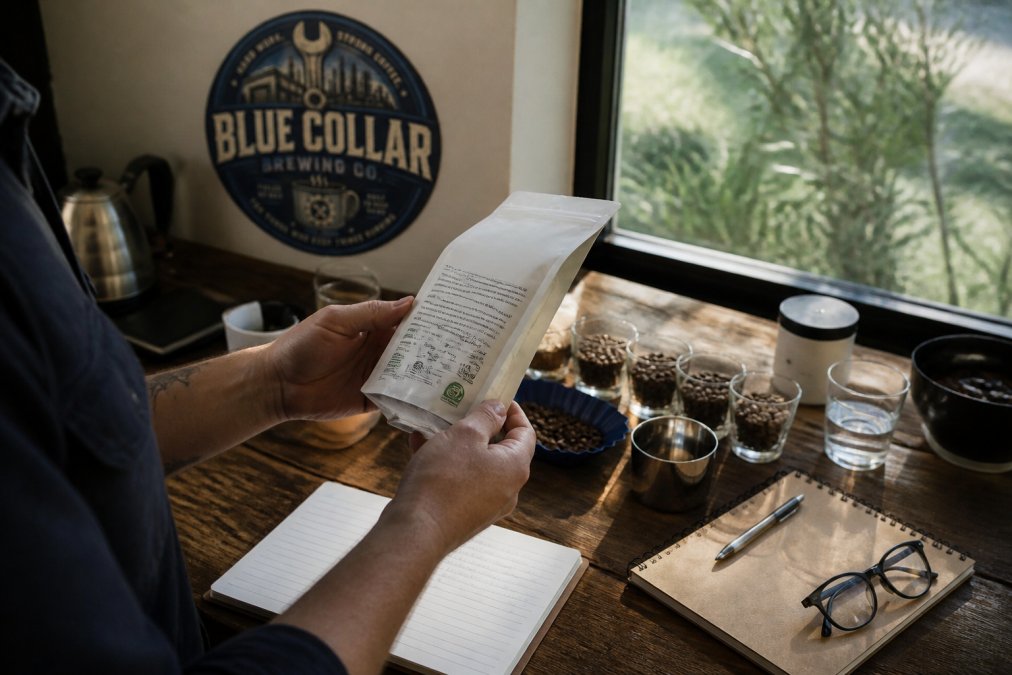
Transparency means you can trace your coffee back to the source. A transparent roaster tells you the farm name, the region, the farmer or cooperative, and how much they paid for the beans.
Start by checking the roaster's website. Look for specific information about bean origin. Vague claims like "sourced from Africa" don't cut it. You want "Ethiopian Yirgacheffe from the Gedeo Zone, purchased directly from the Kebena Cooperative at $2.40 per pound."
Many specialty roasters publish detailed sourcing information on their bags or websites.
Key questions to ask any roaster:
- Where exactly were these beans grown?
- What cooperative or farm produced them?
- How much did you pay per pound?
- What certifications does this farm hold?
- Can you provide a farm contact or visit documentation?
- How fresh are these beans when shipped?
Spotting Greenwashing and False Claims
Greenwashing happens when companies use vague language to sound ethical without backing it up. "Responsibly sourced." "Sustainably grown." "Ethically traded." These phrases sound good but mean nothing without specifics.
Watch for these red flags:
- No specific farm or farmer names mentioned
- Vague terms like "fair trade inspired" instead of certified
- No third-party verification or certification
- Prices suspiciously low (below market rates for ethical coffee)
- Beautiful marketing but no sourcing details available
- Claims about environmental practices without certification
Practical Steps to Verify Ethical Sourcing Before You Buy
Step 1: Check the bag or website for origin details
Step 2: Verify certifications
Step 3: Research the roaster
Step 4: Look for third-party verification
Step 5: Ask the roaster directly
Step 6: Compare with known ethical standards
Step 7: Track your purchase
| Step | What to Check | Red Flag | Green Flag |
|---|---|---|---|
| Origin Details | Farm name, region, altitude | Vague "Africa" or "Latin America" | Specific farm and cooperative names |
| Certifications | Fair Trade, Rainforest Alliance, organic | No certifications listed | Multiple verifiable certifications |
| Roaster Research | Sourcing transparency, farm visits | Marketing-heavy, no details | Published sourcing reports, farm stories |
| Third-Party Verification | Supply chain audits, partner organizations | None mentioned | Independent audits or partnerships |
| Direct Contact | Roaster responsiveness to questions | Evasive or no response | Detailed, specific answers provided |
| Price Comparison | Cost per pound vs. fair trade standards | Below Fair Trade minimums | At or above Fair Trade minimums |
| Traceability Tools | QR codes, batch tracking, farm links | Not available | Working traceability system |
Frequently Asked Questions
What's the difference between Fair Trade and Direct Trade coffee?
Fair Trade certification involves third-party verification that farmers receive minimum prices and fair working conditions, with a standardized approach across many producers. Direct Trade bypasses middlemen entirely, roasters work directly with farms, often paying higher prices but with less formal certification. Direct Trade offers more traceability and often better farmer compensation, but Fair Trade provides consistent, audited standards. Both models aim to improve farmer livelihoods, but they achieve it through different supply chain structures.
How can I tell if a coffee brand is actually paying farmers a fair wage?
Look for transparency reports on the roaster's website detailing farm locations, prices paid per pound, and third-party verification. Roasters committed to fair compensation often publish supply chain audits or direct relationships with cooperatives. Ask the roaster directly, legitimate companies share specifics about farmer wages and working conditions. Certifications like Fair Trade, Direct Trade, or Rainforest Alliance provide some assurance, but direct communication with the roaster is your strongest verification tool.
Does organic certification guarantee ethical labor practices?
No. Organic certification focuses on farming methods and pesticide use, not labor conditions or farmer compensation. A coffee can be certified organic while farmers still earn poverty wages or work in poor conditions. For ethical sourcing, look for organic certification combined with Fair Trade, Direct Trade, or other labor-focused certifications. Always check the roaster's supply chain transparency separately, organic alone doesn't ensure farmers are treated fairly or paid living wages.
What are the most reliable coffee certifications for ethical sourcing?
Fair Trade USA, Rainforest Alliance, and Direct Trade partnerships are the most credible. Fair Trade USA requires minimum prices and third-party audits. Rainforest Alliance verifies environmental and social practices through independent inspections. Direct Trade, while not formally certified, involves roasters building direct relationships with farms and publishing pricing details. Combinations matter, look for coffees with multiple certifications or transparent roasters who use Direct Trade with Fair Trade verification.