

How to Tell If Coffee Is Fresh: 6 Simple Tests
Table of Contents
- Why Freshness Changes Everything in Your Cup
- How to Tell If Coffee Is Fresh: Smell, Look, and Touch
- The Coffee Bloom Test: Your Most Reliable Freshness Check
- What Oxidation and Degassing Actually Do to Your Coffee
- How Long Do Coffee Beans Last Before Going Stale
- How to Store Coffee Beans for Maximum Freshness
- Troubleshooting Freshness by Brew Method
- How to Tell If Coffee Is Fresh When You Buy It
Last Updated: August 26, 2026
Why Freshness Changes Everything in Your Cup
Knowing how to tell if coffee is fresh is the single most important skill any coffee drinker can develop. Stale coffee isn't just disappointing, it's a fundamentally different product. The aromatic compounds that give specialty coffee its character begin breaking down the moment roasting ends, and degradation accelerates once beans are ground or exposed to air. At Blue Collar Brewing, we roast every batch to order precisely because we understand the difference a fresh roast makes compared to beans that have been sitting in a warehouse for months.
Coffee passes through distinct freshness windows, each with different flavor profiles and brewing behaviors. Below, we'll walk through six concrete tests you can run right now, plus the science behind why each one works. You don't need a lab, your nose, eyes, and a kettle are enough.
| Test | What You're Checking | Time Required |
|---|---|---|
| Smell test | Volatile aroma compounds | 10 seconds |
| Visual inspection | Bean surface and color | 30 seconds |
| One-way valve check | CO₂ degassing activity | 10 seconds |
| Bloom test | Active degassing during brew | 2-4 minutes |
| Taste profile check | Acidity, sweetness, bitterness | During brewing |
| Roast date check | Days since roasting | 5 seconds |
How to Tell If Coffee Is Fresh: Smell, Look, and Touch
The three fastest checks for coffee freshness don't require brewing. They're sensory evaluations you can complete before the kettle boils.
Step 1: Check the Aroma
Fresh coffee has a complex, vibrant aroma. Open the bag and take a slow breath. You should detect layered notes, chocolate, fruit, nuts, or caramel depending on the roast and origin. The scent should hit you immediately and feel alive.
Stale coffee smells flat, papery, or faintly rancid. The oils in coffee beans contain aromatic compounds that oxidize over time, producing off-smells that replace the nuanced notes you paid for. If your nose doesn't register much of anything, the beans have already lost significant flavor potential.
Step 2: Inspect the Beans Visually
Fresh whole beans look alive. Darker roasts show a visible sheen of oils on the surface, this is normal and desirable. Medium roasts should appear consistent in color with a slight luster. Avoid chalky, matte surfaces with no oil, or beans that look dull and dried out.
Check for consistency too. Uneven coloring can indicate uneven roasting, which creates unpredictable extraction. White or gray patches indicate moisture has gotten in, those beans are done.
Step 3: Feel for the One-Way Valve
Most quality coffee bags include a one-way valve, usually on the front or back of the pouch. Its job is to let carbon dioxide escape from freshly roasted beans without letting oxygen in. Press the bag gently and smell through the valve. A strong burst of coffee aroma means the beans are still actively degassing and genuinely fresh. If you smell nothing or the bag feels completely flat, the CO₂ has already dissipated and the beans are likely past their prime.
The Coffee Bloom Test: Your Most Reliable Freshness Check
The bloom test is the most reliable real-time indicator of coffee freshness available to home brewers. Fresh coffee releases carbon dioxide when it contacts hot water, creating a visible dome of bubbles and foam. This process is called degassing, a direct result of CO₂ trapped in the bean's cellular structure during roasting.
To run the bloom test, add your grounds to a pour-over dripper or French press. Pour a small amount of hot water, just enough to saturate the grounds, then stop and wait 30-45 seconds. A strong, active bloom means the coffee is fresh. The grounds will swell, bubble, and rise noticeably. A weak, sluggish bloom or no bloom at all tells you the CO₂ has already escaped.
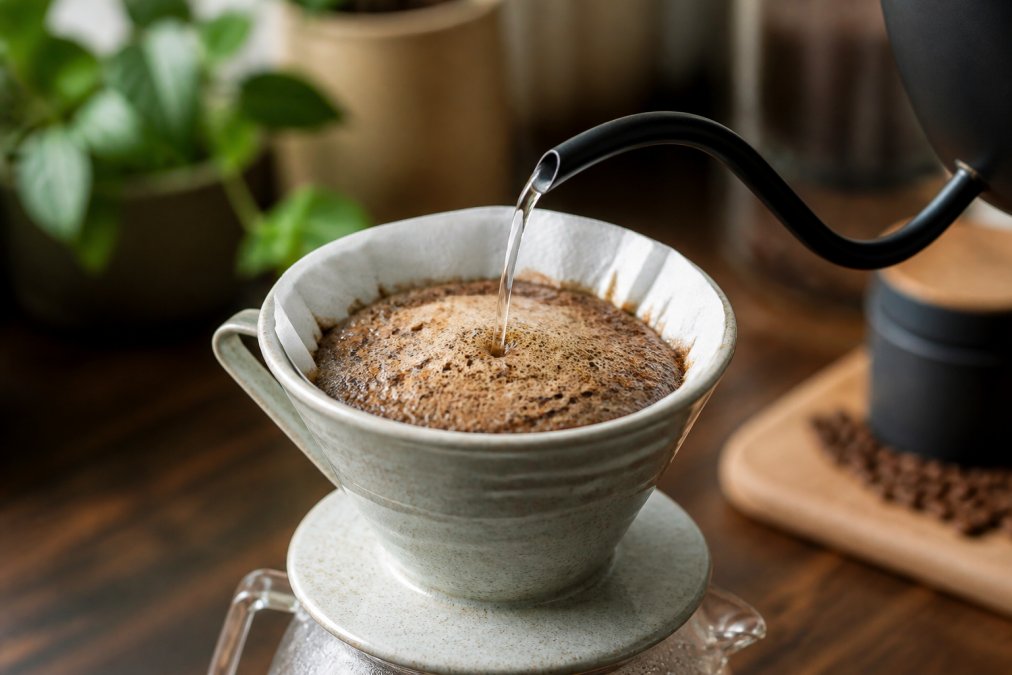
The bloom also matters for extraction quality. Escaping CO₂ creates turbulence that can disrupt even water flow through the grounds. Allowing the bloom to complete before your main pour gives water a cleaner path through the grounds, improving extraction consistency.
What Oxidation and Degassing Actually Do to Your Coffee
Roasting coffee beans triggers the Maillard reaction and caramelization, creating hundreds of volatile aromatic compounds and significant amounts of carbon dioxide, which becomes trapped inside the bean's cellular structure.
Two parallel processes begin the moment roasting ends. First, degassing: CO₂ slowly escapes through the bean's porous structure. This is actually desirable for a short period, beans roasted too recently can produce uneven, gassy brews. Second, oxidation: oxygen from the air reacts with the coffee's lipids and aromatic compounds, breaking them down into less complex, less pleasant molecules. According to research published by the Specialty Coffee Association's technical resources, oxygen exposure is the primary driver of flavor degradation in roasted coffee.
Lipid degradation is critical. Coffee beans contain oils that carry a significant portion of their flavor. When those lipids oxidize, they produce compounds associated with rancidity, the same chemical process that makes cooking oil smell bad when it's old. This is why truly stale coffee doesn't just taste bland; it tastes actively off.
Ground coffee is dramatically more vulnerable than whole bean because grinding increases surface area exponentially. A single bean exposed to air degrades slowly. The same bean ground into espresso-fine particles exposes hundreds of times more surface area to oxygen simultaneously.
How Long Do Coffee Beans Last Before Going Stale
Whole beans roasted to order are at their best between 5 and 21 days post-roast for most brewing methods. The first few days are a resting period. After 21 days, flavor complexity begins declining noticeably. By 45-60 days, most nuanced notes have faded, and you're largely tasting bitterness and body rather than origin character. As noted in guidance from the National Coffee Association's brewing guidelines, proper storage can extend peak freshness, but it cannot stop the clock entirely.
Whole Bean vs. Ground: A Real Difference
Whole beans, stored properly in an airtight container away from light and heat, maintain peak flavor for 2-4 weeks post-roast. Pre-ground coffee, even in a sealed bag, typically reaches peak staleness within 1-2 weeks of opening, with degradation beginning the moment grinding occurs.
If you're buying pre-ground coffee for convenience, buy it in smaller quantities and use it faster. If you're buying whole bean, invest in a grinder. The flavor difference is not subtle.
The Resting Period: Myth vs. Reality
Many coffee drinkers assume fresher is always better, that coffee roasted this morning is better than coffee roasted three days ago. This is not accurate.
Freshly roasted coffee needs time to degas before it brews well. Beans roasted within 24-48 hours contain so much CO₂ that water struggles to extract evenly, resulting in an uneven, sometimes sour or hollow-tasting cup. For espresso, the ideal resting period is typically 7-14 days post-roast. For pour-over and filter methods, 5-10 days is generally sufficient. The bloom test is your best real-time indicator, if the bloom is extremely aggressive and the cup tastes sour or thin, the beans may need another few days.
"Fresh and rested" is the target, not simply "freshest."
How to Store Coffee Beans for Maximum Freshness
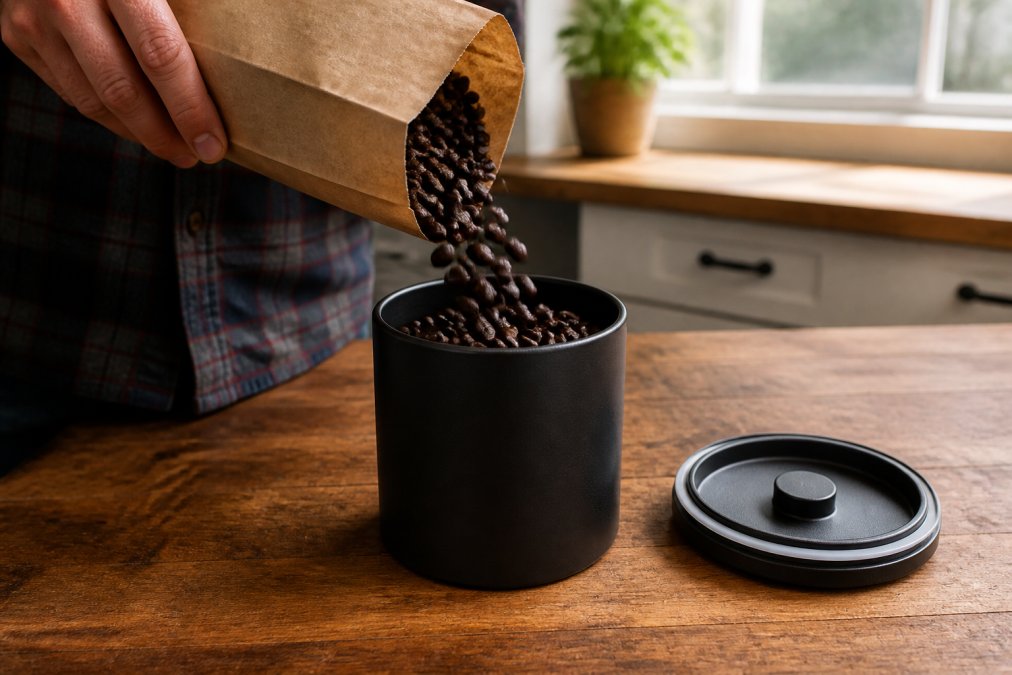
Proper storage is where most people lose freshness they've already paid for. The enemies of fresh coffee are oxygen, moisture, light, and heat. The best way to store coffee beans is in an opaque, airtight container kept at room temperature, away from direct light and heat sources. Ceramic or dark glass containers with airtight seals work well.
A few specific rules:
- Don't store in the freezer unless keeping beans longer than a month. Repeated freeze-thaw cycles introduce moisture condensation, which accelerates degradation.
- Don't store in the fridge. Coffee absorbs odors readily, and refrigerators are full of them.
- Buy in quantities you'll use within 2-3 weeks. The best container can't compensate for beans sitting open for two months.
- Keep the original bag if it has a one-way valve. Roll it down tight and clip it. The valve continues to let CO₂ escape without letting oxygen in.
Troubleshooting Freshness by Brew Method
Freshness manifests differently depending on how you brew.
Pour-over and drip: The bloom test is your primary diagnostic. Weak or absent bloom means stale beans. If the cup tastes flat with no acidity and little sweetness, oxidation has done its work. Try adjusting your grind slightly finer to compensate, finer grounds extract more aggressively, partially offsetting flavor loss from stale beans.
Espresso: Watch the crema. Fresh beans produce thick, reddish-brown crema that holds for 1-2 minutes. Stale beans produce thin, pale, or gray crema that dissipates within seconds. Channeling, uneven water flow through the puck, is also a likely contributor with stale beans.
French press: Stale coffee produces a flat, muddy cup with excessive bitterness and little aroma. Because French press is an immersion method with no paper filter, it extracts oils directly, meaning rancid oils from stale beans come through clearly.
Cold brew: Cold brew is more forgiving of slightly older beans because slow, cold extraction pulls different compounds than hot brewing. Beans 3-5 weeks post-roast that taste flat in a pour-over can still produce a decent cold brew. Truly stale or rancid beans will still produce an off-tasting cold brew.
The Perfect Daily Grind's guide to brew methods and freshness offers additional context on how different extraction methods interact with bean age.
How to Tell If Coffee Is Fresh When You Buy It
Look for a roast date, not a "best by" date. A best-by date tells you almost nothing useful, it's typically set 12-24 months from roasting. A roast date tells you exactly how old the beans are. If a bag doesn't have a roast date, that's a red flag about the roaster's transparency.
Buy from roasters who roast to order. This is the single biggest factor in receiving genuinely fresh coffee. Beans that ship within days of roasting arrive in their ideal freshness window.
Check the bag's condition. A bag that's puffed up slightly is a good sign, CO₂ is still actively escaping from recently roasted beans. A completely flat, deflated bag suggests degassing is complete and the beans are older.
Ask about roast frequency. Roasters who roast in small, frequent batches are generally more likely to ship fresh product.
For online purchases, the key question is: how many days between roast and your door? For most specialty roasters shipping standard ground shipping, that's 3-7 days. Add that to the resting period, and you should be in the ideal freshness window when the bag arrives. If a roaster can't or won't answer that question, shop elsewhere.
Blue Collar Brewing roasts to order and ships fast, so you're not getting coffee that's been sitting on a shelf. Every batch goes out fresh, because that's the only way to deliver the flavor profile we source these beans for in the first place.
Understanding how to tell if coffee is fresh, through smell, bloom, visual cues, and roast dates, puts you in control of your cup. You stop guessing and start knowing.
Frequently Asked Questions
How long does coffee stay fresh after it's ground?
Ground coffee loses much of its aroma and flavor within 15 to 30 minutes of grinding due to rapid oxidation. Stored in an airtight container at room temperature, pre-ground coffee stays reasonably fresh for up to one week, though the flavor profile degrades noticeably each day. For the best-tasting cup, grind whole beans immediately before brewing. This single habit makes a bigger difference to freshness than almost any other storage decision.
Does the roast date on the bag really matter?
The roast date is one of the most useful pieces of information on a coffee bag. Freshly roasted whole beans are generally at their best between 5 and 21 days after roasting, once degassing has settled. After 4 to 6 weeks, oxidation noticeably dulls the flavor and aroma. A bag without a roast date, or one that only lists a 'best by' date, gives you far less information about actual freshness. Always look for a specific roast date when choosing coffee.
How can you tell if coffee beans have gone rancid?
Rancid coffee beans smell stale, musty, or faintly sour rather than rich and aromatic. The oils on the surface of the beans, which give specialty coffee its vibrant notes, break down through lipid degradation and produce off-flavors. If your brewed cup tastes flat, bitter without any pleasant acidity, or carries a cardboard-like aftertaste, the beans are likely past their prime. The bloom test is another quick check: stale beans produce little to no bubbling when hot water hits the grounds.
Is 2-year-old coffee still safe to drink?
Old coffee is generally safe to drink as long as it has been kept dry and shows no signs of mold. However, 2-year-old coffee, even if sealed, will taste significantly different from fresh-roasted. The aroma fades almost completely, the flavor profile flattens, and the natural oils that create crema and body have long since oxidized. It won't make you sick, but it won't taste like the coffee you paid for. For anything approaching good flavor, stick to beans roasted within the past 4 to 6 weeks.
Stale coffee is one of those problems that's completely preventable once you know what to look for. Blue Collar Brewing sources beans from trusted farms worldwide and roasts every batch to order, so the freshness window starts when you need it to, not months before you open the bag. If you're tired of flat, lifeless coffee that doesn't deliver on the aroma or flavor you're paying for, it's time to make a change. Shop Coffee at Blue Collar Brewing and taste what fresh-roasted actually means.
This article was written using GrandRanker