

What Makes Coffee Beans High Quality? The Real Answer
Table of Contents
- Arabica vs Robusta Quality Differences: What You're Actually Buying
- The Roast Date Is the Single Biggest Factor in Coffee Beans High Quality
- How to Tell If Coffee Is Fresh: Inspect Before You Brew
- Beyond the Bean: How Altitude and Processing Shape Quality
- Spotting Defects: What High Quality Beans Look Like
- The Bottom Line: What to Buy for a Better Cup
- Frequently Asked Questions
Quality Isn't Just About the Label: It's About Specifics
Walk into any grocery store and you'll see bags promising "premium" and "gourmet" coffee. Most of those claims mean very little. Coffee beans high quality isn't determined by marketing language on a bag. It's determined by measurable factors you can verify before you spend a dollar: the species of the bean, the roast date, the visual condition of the beans, and how the coffee was processed after harvest.
You don't need to be a professional cupper to spot the difference. This guide breaks down the four factors that separate exceptional coffee from the stale, bitter stuff.
Arabica vs Robusta Quality Differences: What You're Actually Buying
The first quality filter is the species of the coffee plant. Two species dominate the market: Arabica and Robusta, and they are not created equal.
Arabica accounts for the majority of specialty coffee because it produces a sweeter, more complex cup with higher acidity and a wider range of tasting notes. It grows at higher altitudes, which slows the cherry's development and allows more sugars to form. The trade-off is that Arabica is more delicate and expensive to grow.
Robusta, as the name suggests, is hardier. It contains roughly double the caffeine of Arabica, which acts as a natural pesticide (peer-reviewed research). That higher caffeine content is why Robusta tastes more bitter and earthy. Robusta is often used in espresso blends to add crema and body, but on its own, it rarely delivers the flavor clarity of Arabica.
A quality blend, such as Blue Collar Brewing's Italian Roast, combines specialty grade Arabica with Robusta to get the complexity of one and the crema and kick of the other. The defining word here is "specialty grade," which refers to beans scoring 80 or above on the Specialty Coffee Association's 100-point cupping scale (sca.coffee). That score is your first objective marker of coffee beans high quality.

The Roast Date Is the Single Biggest Factor in Coffee Beans High Quality
Here is the factor that matters more than any other, and it's the one most commercial brands hide from you: the roast date.
Coffee is a perishable agricultural product. Once roasted, beans release carbon dioxide in a process called degassing and start oxidizing the moment they meet air. Oxidation makes coffee taste stale, flat, and cardboard-like. A bag of premium beans roasted eight months ago will taste worse than a modest bean roasted last week.
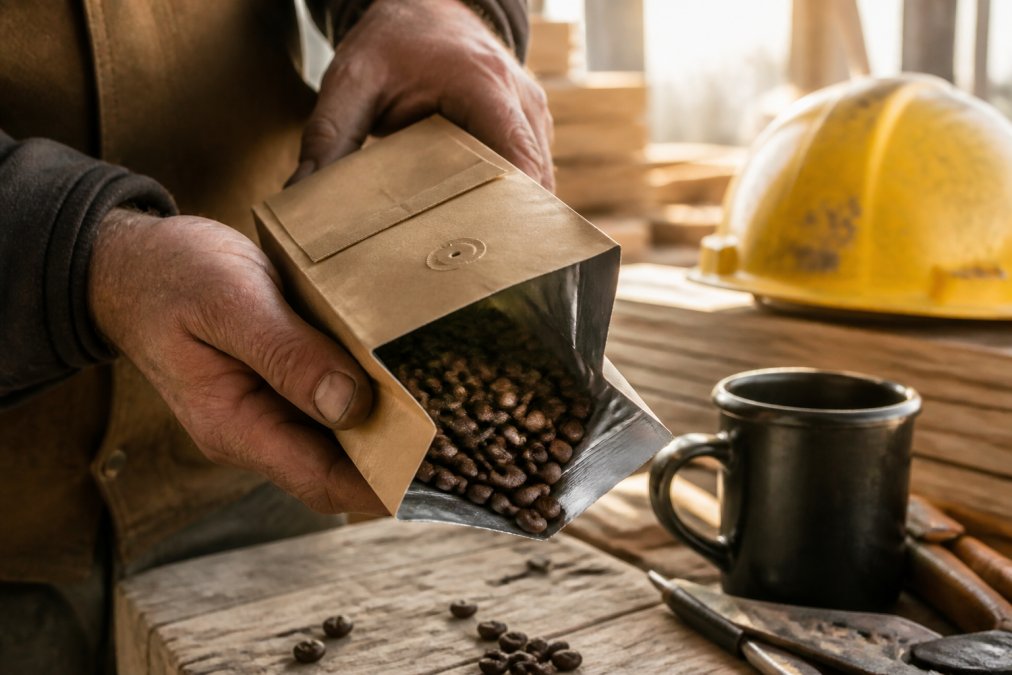
Most commercial coffee on shelves was roasted months before it arrives. Roasters rarely print the date because they don't want you to know. When you buy coffee beans high quality, you are buying freshness first and origin second.
Why Freshness Means Better Flavor and More Energy
Freshly roasted coffee contains volatile aromatic compounds that create the complex flavors and aromas you smell when grinding. These compounds degrade rapidly. Within two weeks of roasting, much of the nuanced flavor is gone, leaving only bitter base notes (sciencedirect.com).
Freshness also affects how the coffee hits you. Natural oils and acids are at their peak shortly after roasting. Many drinkers report that freshly roasted beans deliver a cleaner, steadier energy boost without the jittery crash of stale, over-extracted coffee. This matters if you're starting a 12-hour shift.
How to Tell If Coffee Is Fresh: Inspect Before You Brew
Learning how to tell if coffee is fresh requires a two-step check: one on the bag, one on the beans themselves.
Step 1: Decode the Bag
First, look for a "Roasted On" date, not a "Best By" date. A "Best By" date is meaningless and often set 12 to 18 months out. For whole beans, the ideal window is roughly 2 to 6 weeks after roasting. For pre-ground coffee, it shrinks to days, since grinding exposes far more surface area to oxygen.
The bean's flavor is not static during that window. It follows a predictable curve.
- Days 1-3 (The Rest Period): Beans are still aggressively degassing. Carbon dioxide, which is a byproduct of roasting, continues to escape. This gas actually protects the bean from oxidation, but it also interferes with extraction. Coffee brewed in this window often tastes slightly hollow or muted because the gas pushes water away from the bean surface. Most specialty roasters recommend waiting at least 3 to 5 days after the roast date before brewing.
- Days 4-14 (The Peak Window): The most aggressive degassing has subsided. The volatile aromatic compounds, the ones responsible for floral, fruity, and sweet notes, are at their highest concentration relative to the bean's structure. This is when you get the clearest expression of the origin and the roaster's intent.
- Days 15-42 (The Plateau): Flavor is still good, but the brightest top notes begin to fade. The bean's cellular structure starts to lose integrity, and oxidation slowly converts the oils, producing a flatter, more papery taste. You will notice the aroma is less intense when you open the bag.
- After Day 45 (The Decline): The coffee is not dangerous, but it is stale. The complex sugars have broken down, and the remaining flavor is dominated by bitter, woody, or cardboard-like notes. This is the point where even a great origin bean tastes like commodity coffee.
Step 2: Engage Your Senses
Second, inspect the beans. Fresh beans have a matte, slightly oily surface and a strong, sweet aroma. If they look shiny and wet with oil, they've been sitting a long time. If they smell flat or musty, they're stale. Fresh beans feel dense and hard when squeezed; stale beans crumble more easily.
Go beyond the surface. Here is the sensory checklist professional roasters use:
- The Grind Test: Grind a small amount of beans. Fresh grounds should smell intensely aromatic, like baking bread, caramel, or ripe fruit, and should clump slightly due to residual CO2 and oil. Stale grounds smell like sawdust or old paper and flow like dry sand.
- The Crush Test: Take a single whole bean and crush it with your thumb against a hard surface. A fresh bean fractures with a sharp, clean snap. A stale bean will often crush into a powder or feel rubbery.
- The Bloom Test (For Brewing): When you pour hot water over fresh grounds, they should visibly bubble and swell. This is the release of trapped CO2. If there is little to no bloom, the coffee is old. This is the most direct proof of freshness you can get at home.
The Grinding Trade-Off
One exception: vacuum-sealed pre-ground coffee packaged immediately after grinding has a short window of 1 to 2 weeks of acceptable flavor. Once you open that bag, the clock resets to days. The surface area of ground coffee is exponentially larger than whole beans, so oxidation accelerates dramatically. For the best cup, the 30 seconds it takes to grind your own beans is the highest-leverage step.
Beyond the Bean: How Altitude and Processing Shape Quality
The species and roast date tell you a lot, but two other factors determine whether a coffee reaches its potential: where it grew and how it was processed.
Altitude is a reliable predictor of quality. Coffee grown at 4,000 feet or higher develops more slowly, producing a denser bean with more complex sugars and acids. This is why single-origin coffees from high-altitude regions command higher prices. Lower-altitude coffee grows faster and tends to taste flat.
Soil chemistry also plays a role. Volcanic soils, rich in minerals, contribute to the flavor profile in ways difficult to replicate elsewhere. This concept, known as terroir, is why coffee from one valley can taste dramatically different from coffee grown just a few miles away.
Coffee Processing Methods Explained: Washed vs. Natural
After harvest, the coffee cherry must be stripped away from the bean. How this happens shapes the final flavor more than almost any other decision the farmer makes.
Washed process removes the fruit from the bean before drying. This produces a clean, bright cup with high acidity and clear, distinct flavor notes. The flavor clarity makes washed coffees a favorite for those who want to taste the origin of the bean.
Natural process dries the whole cherry with the bean inside it. The bean absorbs sugars from the drying fruit, producing a heavier body, lower acidity, and flavors that lean toward berry and chocolate. Natural processed coffees can be spectacular, but they are harder to execute well and more prone to defects.
Understanding the processing methods above helps you predict what a coffee will taste like before you open the bag. For a crisp, bright morning cup, look for washed process. For a smooth, rich cup that stands up to cream, natural or honey processed coffees are often the better choice.
Spotting Defects: What High Quality Beans Look Like
Before you brew, do a quick visual scan. High quality beans are uniform in size and color. This matters because beans of different sizes roast at different rates, leading to an inconsistent cup where some beans are underdeveloped and others are burnt.
But what does "uniform" actually mean in practice? And how do you tell a minor cosmetic issue from a flavor-ruining defect? This is the gap between casual observation and the systematic grading used by the Specialty Coffee Association (SCA).
The SCA Grading Framework
The SCA uses a 350-gram sample (about 12.3 ounces) for physical grading. A coffee is classified as Specialty Grade if it has zero primary defects and no more than five secondary defects. Six to 9 secondary defects is still Premium Grade, but it scores lower on the cupping table. Anything with more than 9 defects falls into commercial or commodity grade.
Here is the key distinction:
- Primary Defects (Full Defects): These are severe. A single primary defect can ruin a cup. Examples include a full black bean, a full sour bean, or a dried cherry (the whole fruit, not just the bean). One of these in a 350-gram sample disqualifies the coffee from Specialty Grade.
- Secondary Defects (Partial Defects): These are less severe but still affect flavor. Examples include broken beans, insect-damaged beans, or shells (hollow beans). It takes three to five of these to equal one full defect.
The Visual Checklist: What to Look For
When you open a bag, you are not grading 350 grams. But you can apply the same logic. Here is what to look for, ranked by how much they will hurt your cup:
- Black Beans (Primary Defect): These are beans that have fully fermented and turned dark before roasting. They look almost charcoal-black and feel brittle. In the cup, they contribute a foul, rotten, or fermented flavor that can ruin an entire pot. If you find one, the batch was poorly sorted.
- Sour Beans (Primary Defect): These look pale, yellowish, or even pinkish-brown. They are the result of beans fermenting too long or drying improperly. They taste sharply acidic, like vinegar or overripe fruit, and they create a harsh, sour cup.
- Quakers (Secondary Defect): These are light, under-roasted beans that look pale and feel hollow. They are often the result of picking unripe cherries. They taste like peanuts or baked bread and flatten the flavor of the whole batch. They are common in natural-processed coffees.
- Broken or Chipped Beans (Secondary Defect): Often a sign of careless milling. They extract unevenly because they have more surface area relative to their mass, which means they over-extract and add bitterness.
- Insect-Damaged Beans (Secondary Defect): Beans with small pinholes or tunnels. The coffee berry borer is the most common culprit. These beans contribute bitter, off flavors and are a sign that the farm did not use adequate pest control.
- Shells (Secondary Defect): These are beans that are hollow and look like open oyster shells. They roast much faster than whole beans and often burn, adding a smoky, acrid note.
- Excessive Silver Skin: Flaky chaff clinging to the beans is a sign of sloppy roasting. A little is normal, but a lot indicates the roaster did not properly cool and clean the beans after roasting.
The Practical Rule of Thumb
A handful of defects in a bag isn't a dealbreaker, but a bag riddled with them signals poor sorting and quality control. Specialty grade coffee is rigorously sorted to have fewer than a handful of defects per pound. Commodity coffee can have dozens.
Here is a simple home test: take 100 whole beans and count the defects. If you find more than 5 that are broken, insect-damaged, or visibly discolored, you are drinking coffee that missed the Specialty Grade cutoff. If you find a single black bean or a fully sour bean, that is a primary defect, the equivalent of a roaster or importer failing a quality inspection.
This level of inspection is not about being obsessive. It is about understanding that the roaster's job is to highlight the farmer's work, not to hide its flaws. When you can spot a quaker or a broken bean, you are no longer relying on the label's promises. You are verifying the quality yourself.
The Bottom Line: What to Buy for a Better Cup
The search for coffee beans high quality comes down to a simple checklist. Buy whole beans with a visible roast date within the last few weeks. Choose Arabica or a specialty grade Arabica/Robusta blend. Look for beans that are uniform in size with a matte surface and a strong aroma. If you can, find out the altitude and processing method, because those details tell you the farmer cared about the result.
For a coffee that checks every box, Blue Collar Brewing roasts to order, so the bag you receive was roasted days before it arrives, not months. Our French Roast is a single-origin blend of specialty grade coffee from Central America, offering a smooth, rich profile. If you want the energy benefits of functional ingredients without sacrificing quality, our Coffee with Mushrooms Dark Roast pairs specialty grade beans with Lion's Mane, Cordyceps, and Reishi for steady, focused energy.


Finding a genuinely fresh, high quality coffee often feels like a gamble, especially when you're comparing unlabeled bags at the store. The fix is to buy from a roaster that puts the roast date on the bag and roasts only after you order. At Blue Collar Brewing, we source beans from trusted farms and roast every batch to order, so you get maximum flavor and aroma in every delivery. Shop our full lineup and get a coffee that actually tastes as good as it promises.
Frequently Asked Questions
How can you tell if coffee beans are high quality?
Look for three things. First, find a roast date on the bag; beans roasted within the last two to four weeks will taste noticeably better than older stock. Second, check the beans themselves: they should look uniform in size and color with no broken pieces or pale, under-roasted beans called quakers. Third, know what you're buying. Specialty-grade arabica beans from a named region or farm generally deliver more complex flavor than commodity blends.
Does the roast date really affect coffee bean quality?
Yes, and it matters more than any other single factor. Coffee beans start releasing carbon dioxide (degassing) right after roasting. They taste best between 4 and 14 days off roast, when the flavors have settled but the beans haven't gone stale. After about a month, oxidation sets in and the coffee tastes flat and papery. A bag without a roast date is usually old stock, so you're already starting behind.
Is it worth paying more for high quality coffee beans?
For most people, yes, because the price difference is smaller than you think. A 12-ounce bag of freshly roasted, specialty-grade coffee costs around $20, which works out to roughly $0.50 per cup if you brew at home. That's still less than a gas station cup, and the flavor is in a different league. The real value is the freshness, not the label. Paying more only makes sense if the roast date is recent.
What is the difference between arabica and robusta beans?
Arabica and robusta are the two main coffee species, and they produce very different cups. Arabica beans grow at higher altitudes, which gives them more sugar and complex flavors like fruit and chocolate. Robusta grows lower, has about double the caffeine, and tastes more bitter and earthy. Many high quality blends use a mix to balance flavor and crema. A specialty-grade arabica and robusta blend can offer both depth and a strong kick.
Specialty Coffee Association's cupping protocol and grading standards National Coffee Association's guide to coffee freshness and storage USDA Agricultural Research Service on coffee quality and processing