

Artisan Coffee vs Grocery Store: What Actually Matters
Table of Contents
- Artisan Coffee vs Grocery Store: The Core Differences
- Coffee Roast Date Importance and Freshness
- Fresh Roasted Coffee Benefits for Flavor and Aroma
- Bean Quality, Grading, and Sourcing Transparency
- Price Comparison and Value Analysis
- How Brewing Equipment and Water Chemistry Impact Your Cup
- Finding the Middle Ground: Accessible Premium Options
- Frequently Asked Questions
Last Updated: September 22, 2026
Artisan Coffee vs Grocery Store: The Core Differences
When comparing artisan coffee vs grocery store coffee, the difference goes far deeper than price. When you buy artisan coffee, you're getting beans roasted within days of brewing. Grocery store coffee? Often roasted months ago, sitting on shelves losing flavor by the week. This single factor, freshness, changes everything about what ends up in your cup.
At Blue Collar Brewing, we've spent years sourcing beans from trusted farms worldwide and roasting every batch to order. The contrast is stark. Artisan coffee preserves the bean's natural character: its acidity, aroma, and complexity. Grocery store blends prioritize shelf stability and consistency, which means they're engineered to taste the same whether they're three weeks old or three months old. That consistency comes at a cost, the loss of what makes coffee worth drinking.
Here's what actually separates the two categories:
Roast Date Transparency. Artisan roasters stamp a roast date on every bag. Grocery store brands rarely do. When they do, it's often buried or uses a code you can't decipher. A roast date tells you exactly how fresh your coffee is. No guessing.
Bean Sourcing and Traceability. Artisan roasters typically source from specific farms or regions, often with direct relationships. You'll see single-origin coffees labeled by country, altitude, and processing method. Grocery store brands blend beans from multiple sources, sometimes multiple countries, without transparency about where they came from or how they were grown.
Roasting Profile. Artisan roasters develop specific roasting curves for each bean to highlight its unique characteristics. Grocery store brands use standardized roasting to create a predictable, middle-of-the-road flavor profile that appeals to the broadest audience.
Price Point. The gap in price between artisan and grocery store coffee reflects differences in bean quality, sourcing costs, and small-batch roasting versus mass production.
The real question isn't which is objectively better. It's whether freshness, flavor complexity, and traceability matter to you. For construction crews, logistics professionals, and trades workers who value a straightforward, high-quality experience during their workday, artisan coffee delivers noticeably better results.
Coffee Roast Date Importance and Freshness
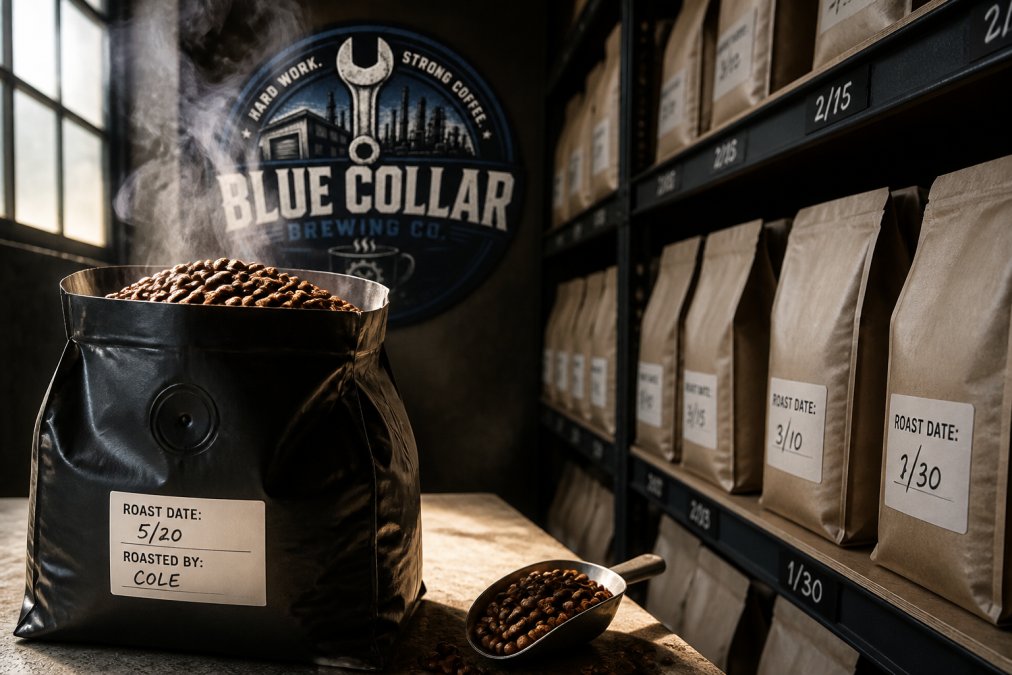
The roast date is the single most important number on a coffee bag, more important than the origin, the roast level, or the price. Fresh roasted coffee benefits from a predictable window of peak flavor.
Here's why: roasting creates chemical compounds that make coffee taste good. But immediately after roasting, the beans release CO2 gas.
Grocery store coffee sits in warehouses and on shelves for months. A bag you buy today might have been roasted 4-6 months ago. That's not coffee anymore, it's a reminder of what coffee used to be. The bitter, flat taste people associate with "regular coffee" isn't the bean's fault. It's oxidation.
Artisan roasters roast to order or in small batches. When you order from Blue Collar Brewing, your coffee ships within days of roasting, arriving at your door in its peak flavor window. The difference is immediate. The first cup tastes brighter, smoother, and more complex than anything from a grocery store shelf.
Fresh Roasted Coffee Benefits for Flavor and Aroma
Fresh roasted coffee benefits extend beyond marketing claims. Rather than taking our word for it, you can conduct your own blind taste test at home and experience the difference directly.
Aroma Preservation and Volatile Compound Loss. Fresh roasted coffee delivers aroma that enhances every sip.
You can measure this yourself: open a bag of fresh artisan coffee and a bag of grocery store coffee. Smell both. The difference is immediate and obvious. The fresh coffee has a bright, complex aroma. The stale coffee has little aroma at all.
Extraction Consistency and CO₂ Degassing. Fresh coffee brews cleaner and more balanced every time.
You can observe this during brewing: fresh coffee produces a visible bloom (foam) when you pour hot water over it. The bloom is a visual indicator of freshness.
Flavor Complexity and Origin Expression. The origin of the bean, the altitude, soil, processing method, and variety create distinct flavor notes. These notes fade as the coffee oxidizes. By the time grocery store coffee reaches your cup, those subtle flavors are gone. All that's left is generic bitterness.
DIY Blind Taste Test Methodology. Here's how to conduct your own comparison and verify these claims:
-
Prepare two samples. Obtain a bag of fresh artisan coffee (roasted within 10 days, with a visible roast date) and a bag of grocery store coffee (note the roast date or estimate based on purchase date). Do not tell yourself which is which during the test.
-
Grind immediately before brewing. Use a burr grinder set to medium-fine. Grind equal amounts (by weight, ideally using a kitchen scale) from each bag. Grind size should be consistent between samples.
-
Brew identically. Use the same brewing method for both samples, pour-over, French press, or AeroPress work well. Use filtered water at 200°F. Use the same brew time and water-to-coffee ratio for both. The only variable should be the coffee itself.
-
Blind taste. Pour both cups into unmarked mugs. Have someone else label them 'A' and 'B' so you don't know which is which. Taste both, noting:
- Aroma (bright, complex, or flat, musty?)
- Flavor notes (can you identify fruit, chocolate, nuts, flowers?)
- Mouthfeel (smooth and full, or thin and harsh?)
- Aftertaste (clean and pleasant, or bitter and lingering?)
- Overall impression (which would you choose to drink again?)
-
Reveal and compare. After tasting, reveal which cup was which. Most people find the fresh artisan coffee noticeably brighter, more complex, and smoother.
This test removes marketing bias. You're not choosing based on price or brand reputation, you're tasting blind and comparing directly. The results are usually decisive.
Smoother Mouthfeel and Oil Preservation. Fresh coffee has a fuller body and smoother mouthfeel. During your blind taste test, pay attention to how the coffee feels in your mouth. Fresh coffee often has a slightly oily, velvety texture.
Practical Application for Workers. For construction crews, logistics professionals, and trades workers who rely on coffee to fuel long shifts, the difference matters. A smooth, flavorful cup is more satisfying and delivers cleaner energy without the jitter that comes from the bitter compounds in stale coffee. One excellent cup often provides better focus and alertness.
If you're skeptical about the price difference between artisan and grocery store coffee, conduct this blind taste test. The test costs less than one bag of artisan coffee and provides evidence you can trust because you generated it yourself.
Bean Quality, Grading, and Sourcing Transparency
Not all coffee beans are created equal. The coffee industry uses a grading system based on bean density, size, and defects. Understanding these grades helps explain why artisan coffee costs more.
Specialty Grade vs. Commercial Grade. The Specialty Coffee Association grades beans on a 100-point scale. Specialty grade coffee scores 80 or above. Commercial grade coffee scores below 80.
Specialty grade beans are often grown at higher altitudes where the cooler climate slows maturation, allowing the bean to develop complexity. Commercial grade beans are often grown at lower altitudes, machine-picked, and processed quickly to maximize volume.
Single-Origin vs. Blended. Single-origin coffee comes from one farm, one region, or one country. The sourcing is transparent. You know exactly where the bean came from and how it was processed. Blended coffee combines beans from multiple sources. Blending is a craft, a skilled blender can create balance and complexity that single-origin beans sometimes lack. But blending also obscures sourcing. You don't know which beans are in the blend or where they came from.
Grocery store brands rely heavily on blending to standardize flavor across batches and seasons. Artisan roasters use both single-origin and blended coffees, but they're transparent about sourcing and intentional about the blend.
Hand-Picked vs. Machine-Picked. Hand-picked coffee costs more because labor costs more. But hand-picking allows farmers to select only ripe cherries, leaving unripe fruit on the tree.
Price Comparison and Value Analysis
| Factor | Artisan Coffee | Grocery Store Coffee |
|---|---|---|
| Price per Pound | $12-18 | $4-8 |
| Roast Date | Stamped, recent | Unknown or months old |
| Bean Quality | Specialty grade (80+) | Commercial grade (<80) |
| Sourcing | Transparent, single-origin or intentional blend | Opaque, commodity blends |
| Shelf Life (peak flavor) | 2-4 weeks | Already degraded |
| Cups per Pound | 16-18 | 16-18 |
| Cost per Cup | $0.75-1.13 | $0.25-0.50 |
Better Extraction. Fresh coffee brews stronger. You use less coffee per cup and still get a richer, more flavorful result.
How Brewing Equipment and Water Chemistry Impact Your Cup
Equipment and water chemistry are not optional refinements, they are the foundation that determines whether artisan coffee tastes exceptional or merely acceptable.
Finding the Middle Ground: Accessible Premium Options
The middle ground also includes:
Subscription Services. Many artisan roasters offer subscriptions that ship fresh coffee monthly. The cost per bag drops compared to one-off purchases.
Frequently Asked Questions
Why does artisan coffee taste better than grocery store brands?
Artisan coffee tastes better because roasters control every step: bean selection, roasting profile, and roast-to-ship timing. Grocery store brands blend lower-grade beans and sit on shelves for months, allowing oxidation to flatten flavor. Fresh roasted coffee retains its aroma profile and acidity for weeks, while shelf-stable options develop stale, bitter aftertaste.
How does coffee roast date importance affect flavor?
Roast date matters because coffee begins losing flavor immediately after roasting. Artisan roasters roast to order, so your coffee arrives at peak freshness. Check the roast date on any bag: if it's more than 4 weeks old, oxidation has already compromised the flavor notes.
What does 'specialty grade' mean, and is it worth the price difference?
Specialty grade coffee scores 80+ points on the Specialty Coffee Association cupping scale. Commercial grade coffee scores below 80 and often includes defective beans, machine-picked harvests, and blended batches. Specialty beans command higher prices because growers hand-pick, sort carefully, and maintain supply chain transparency. For manual laborers and tradespeople who depend on consistent energy, specialty coffee's smoother finish and lack of bitter aftertaste offers a premium experience over mass-produced alternatives.
Is fresh roasted coffee worth buying if I'm not a coffee enthusiast?
Yes. Fresh roasted coffee benefits anyone seeking better flavor without complexity. You don't need to memorize tasting notes to notice the difference: fresh roasted coffee tastes cleaner, smoother, and has no stale aftertaste. If you currently drink grocery store coffee and find it harsh or bitter, fresh roasted options from artisan roasters will taste noticeably better. The roast date and single-origin sourcing mean you're getting fresh beans.