

Why Fresh Roasted Coffee Tastes Better
Table of Contents
- Why Fresh Roasted Coffee Tastes Better: The Science Behind Peak Flavor
- Understanding the Coffee Bean Degassing Process
- The Resting Paradox: When Fresh Doesn't Mean Immediate
- Roast Profiles and Their Impact on Freshness
- Oxidation and Flavor Degradation in Stale Coffee
- How to Store Coffee Beans for Freshness
- Signs of Stale Coffee Beans and How to Identify Them
- Brewing Method Sensitivity and Freshness Requirements
- Roast Date vs. Expiration Date: What Actually Matters
- Frequently Asked Questions
Last Updated: September 19, 2026
Why Fresh Roasted Coffee Tastes Better: The Science Behind Peak Flavor
Fresh roasted coffee tastes better because beans release volatile aromatic compounds that degrade over time. Brewing within days of roasting captures flavors at peak intensity. At Blue Collar Brewing, we roast every batch to order because freshness determines everything about the final cup. A bag of grocery store coffee sitting on a shelf for months has lost the compounds that make coffee worth drinking.
This guide explains why timing matters, how to identify peak freshness, and what storage choices preserve flavor. By the end, you'll understand why fresh roasted coffee tastes better and how to ensure every cup delivers the experience it should.
Understanding the Coffee Bean Degassing Process
Degassing is the release of carbon dioxide and volatile aromatic compounds from roasted coffee beans. This process begins the moment beans leave the roaster and continues for weeks. During roasting, heat causes the bean's cellular structure to expand and crack, creating pathways for gases to escape.
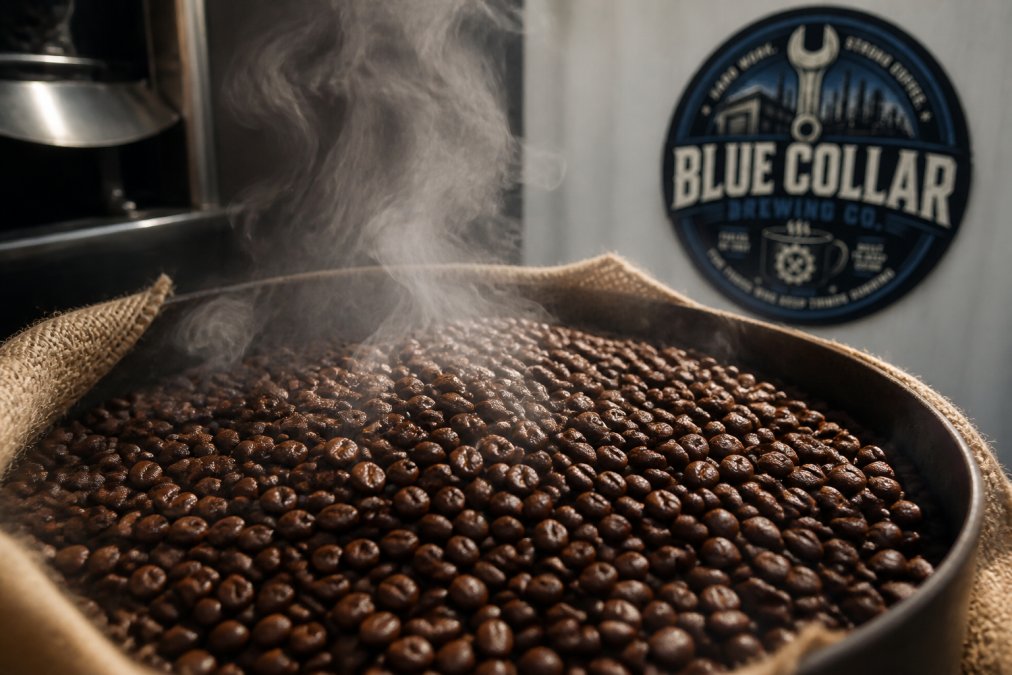
The degassing window is critical. For the first 24-48 hours after roasting, beans degas rapidly. After about two weeks, degassing slows significantly. By four weeks, the majority of volatile compounds have either escaped or been reabsorbed into the bean, when freshness begins to decline noticeably.
Carbon Dioxide Release and Volatile Aromatic Compounds
Carbon dioxide creates a practical challenge during brewing. When hot water contacts freshly roasted beans, CO2 can prevent water from reaching grounds evenly. However, CO2 itself isn't the flavor problem. The real issue is what happens to the aromatic compounds traveling alongside it.
Volatile aromatic compounds are fragile. Once exposed to oxygen, light, and heat, they oxidize and break down. A bean roasted two days ago holds 90 percent of its aromatic potential. A bean roasted three weeks ago has lost significant aroma. These compounds differentiate a Colombia medium roast with notes of dried orange and chocolate from a Bali dark roast with molasses and brown sugar. Without them, you're left with basic bitter and acidic flavors.
The Resting Paradox: When Fresh Doesn't Mean Immediate
The best cup doesn't come from beans roasted yesterday. Beans roasted 6-24 hours ago are still degassing heavily, and that active CO2 release interferes with even extraction. Espresso pulls unevenly. Drip coffee over-extracts in some areas and under-extracts in others.
Optimal brewing happens when degassing has calmed but aromatic compounds remain abundant. For most roast profiles, this window opens around 3-5 days after roasting. This peak flavor window typically lasts 2-4 weeks depending on storage and roast level. When you order coffee roasted to order, you control when the clock starts and get beans at their optimal point on the freshness curve.
Roast Profiles and Their Impact on Freshness
Different roast levels degrade at different rates. Different roast levels degrade at different rates.
Light, Medium, and Dark Roasts: Flavor Windows and Shelf Life
Light roasts develop fruity and caramel notes with delicate aromatics.
Medium roasts develop richer body and complex flavor notes while maintaining acidity that adds dimension.
Dark roasts develop dark chocolate, molasses, and brown sugar notes.
Whiskey Barrel Aged coffee is single origin Guat. aged 30 days in a Bourbon barrel and then roasted to order.

Oxidation and Flavor Degradation in Stale Coffee
Oxidation is the primary enemy of coffee freshness. When aromatic compounds and oils contact oxygen, they break down into different molecules. Some taste bitter or sour. Others simply disappear, leaving a flatter, less interesting cup.
How Oxygen Exposure Breaks Down Flavor Compounds
Oxygen exposure accelerates dramatically when coffee is ground. Whole beans have relatively small surface area exposed to air. Ground coffee has massive surface area, a single bean broken into particles increases exposed surface roughly 200-fold. This is why pre-ground coffee tastes noticeably stale compared to whole beans ground fresh.
Stale coffee also develops rancid flavors from oxidized oils. Fresh coffee oils are stable and contribute to mouthfeel and flavor. Oxidized oils taste acrid and unpleasant. Temperature matters significantly.
How to Store Coffee Beans for Freshness
The ideal storage container is airtight, opaque, and kept in a cool, dark place. Oxygen is the enemy, so the container must seal completely. Light degrades aromatic compounds, so clear containers accelerate staling. Heat accelerates oxidation, so cool storage is better than room temperature.
Packaging Technology and One-Way Valves
Professional roasters use one-way valves in their bags to let CO2 escape without letting oxygen in. During the first week after roasting, beans degas actively. A one-way valve allows gas out but prevents air from entering. Once you transfer beans to your own container, the valve's benefit only applies to the original roasted bag.
Container Choice and Environmental Factors
Glass jars with rubber seals work well for storage. Metal tins with tight lids are excellent. Vacuum-sealed bags are good for extended storage. The worst option is the original bag left open or loosely sealed.
Location matters as much as the container. A dark cupboard away from heat is ideal. A kitchen counter next to the stove is terrible. Sunlight directly damages aromatic compounds. Heat from appliances accelerates oxidation.
Signs of Stale Coffee Beans and How to Identify Them
Learning to identify stale beans protects you from wasting money on old inventory.
Sensory Evaluation: What Fresh Coffee Should Look, Smell, and Taste Like
Fresh roasted beans have a glossy appearance with visible oils on the surface. The color is even and rich. Stale beans look dull and dry.
Aroma is the clearest freshness indicator. Fresh coffee smells complex and inviting with identifiable notes like chocolate, fruit, or caramel. Stale coffee smells flat and thin.
Fresh coffee tastes bright and complex. Stale coffee tastes flat, bitter, or sour.
Brewing Method Sensitivity and Freshness Requirements
Different brewing methods respond differently to freshness. Some methods mask staleness better than others.
Espresso Extraction vs. Drip Coffee: Why Freshness Matters More in Some Methods
Espresso is the most freshness-sensitive brewing method. Hot water passes through grounds in 25-30 seconds under high pressure, pulling every soluble compound from the beans. If beans are stale and oxidized, those oxidized compounds come through clearly. Espresso also depends on CO2 pressure during extraction.
Roast Date vs. Expiration Date: What Actually Matters
The roast date is the day beans were roasted and determines freshness. A roast date tells you exactly where the beans sit on their freshness curve.
Frequently Asked Questions
Does freshly roasted coffee really taste better than older coffee?
Yes. Fresh roasted coffee tastes better because volatile aromatic compounds and carbon dioxide are still present in the beans. Within the first 2-4 weeks after roasting, these compounds create peak flavor, acidity, and body. As coffee ages, oxidation breaks down these compounds, leaving behind a flat, stale taste. The difference is most noticeable in espresso extraction and specialty brewing methods, but any brewing method benefits from beans roasted within the last 4 weeks.
How long should you wait to drink coffee after it is roasted?
The ideal window is 3-10 days after roasting. Immediately after roasting, beans are still degassing heavily, which can trap carbon dioxide and make extraction uneven. By day 3-4, degassing has progressed enough that the coffee reaches peak flavor. For most brewing methods, beans roasted 5-14 days ago produce the best cup. After 4 weeks, oxidation begins to noticeably degrade flavor compounds, especially in light roasts. This is why roast-to-order coffee from sources like Blue Collar Brewing ensures you receive beans at their optimal freshness window.
What are the signs of stale coffee beans?
Stale coffee beans show several telltale signs: the surface appears dull or chalky instead of shiny and dark, the aroma is weak or absent (fresh beans smell fragrant and vibrant), and the color looks faded. When brewed, stale coffee tastes flat, bitter, or sour without the full body and complexity of fresh beans. If beans are more than 4-6 weeks old or stored improperly, they've lost most volatile aromatic compounds to oxidation. Sensory evaluation is the most reliable test: fresh coffee should smell rich and complex, while stale coffee smells muted or papery.
How does the coffee bean degassing process affect flavor?
Degassing releases carbon dioxide and volatile aromatic compounds that create the coffee's flavor profile. During the first 24-48 hours after roasting, beans degas heavily, which can actually make extraction difficult and uneven. By days 3-10, degassing slows and the beans reach peak flavor as the remaining compounds stabilize. After this window, oxidation begins breaking down the aromatic compounds, and the coffee loses complexity, acidity, and body. Roast-to-order ensures your beans arrive during the optimal degassing phase, delivering maximum flavor and aroma in every cup.
How should you store coffee beans to keep them fresh longer?
Store beans in an airtight container away from light, heat, and moisture. One-way valves on specialty coffee bags allow carbon dioxide to escape while preventing oxygen from entering, which is why many premium roasters use them. Whole beans stay fresh longer than ground coffee because grinding increases surface area exposed to oxygen, accelerating oxidation and flavor loss.
Does roast level affect how quickly coffee goes stale?
Yes. Light roasts have more volatile aromatic compounds and higher acidity. Medium roasts offer a balance. Dark roasts have fewer delicate aromatics but more stable oils and caramelized sugars. However, all roasts taste noticeably better when consumed within 4 weeks of the roast date.