

How to Store Coffee Beans Properly: A 2026 Guide
Table of Contents
- Why Proper Coffee Bean Storage Matters for Flavor and Freshness
- How to Store Coffee Beans Properly: Core Principles
- How Long Do Coffee Beans Stay Fresh?
- Best Coffee Storage Canisters: Materials That Actually Work
- Can You Freeze Coffee Beans? The Rules for Cold Storage
- Step-by-Step: How to Store Coffee Beans Properly at Home
- Common Mistakes to Avoid When Storing Coffee Beans
- Frequently Asked Questions
Last Updated: September 17, 2026
Why Proper Coffee Bean Storage Matters for Flavor and Freshness
Coffee beans begin losing quality the moment they finish roasting. Oxygen, light, heat, and moisture work against the aromatic oils that give every cup its character, and the decline starts faster than most people expect. Knowing how to store coffee beans properly is the difference between a roastery-quality cup and cardboard.
At Blue Collar Brewing, we roast every batch to order, so our beans reach your door at peak flavor. What happens next is up to you. This guide covers the core principles, the best containers, the freezing debate, and the mistakes that ruin good beans.
How to Store Coffee Beans Properly: Core Principles
Good storage comes down to four variables: oxygen, light, heat, and moisture. Control those, and you control how long your beans stay worth drinking.
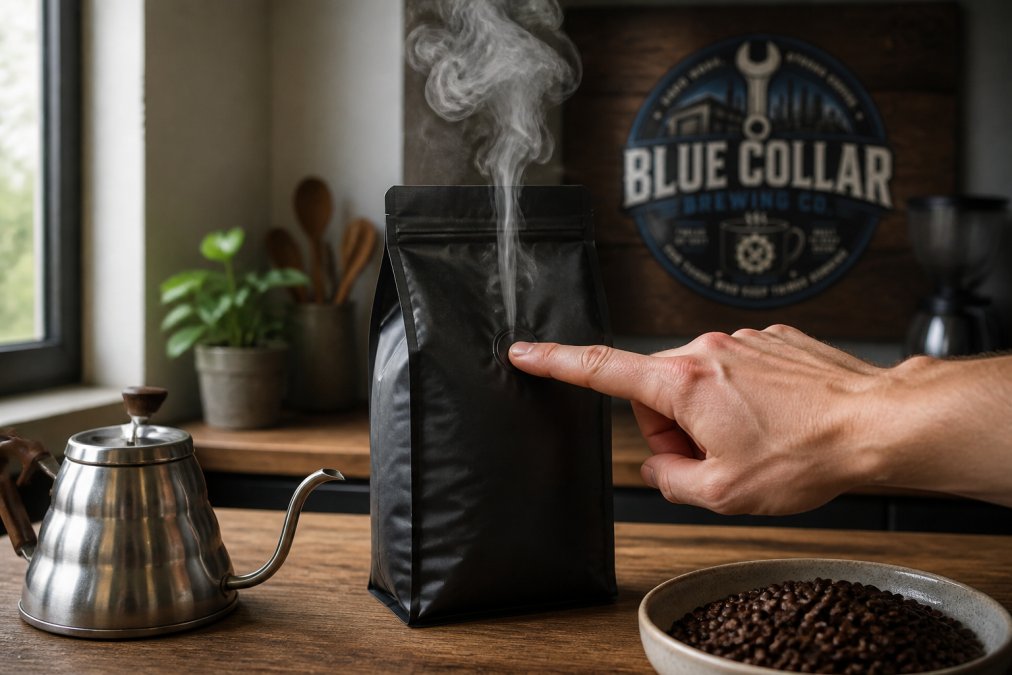
The single best move is keeping beans in the original bag with its one-way valve intact.
The Four Enemies: Oxygen, Light, Heat, and Moisture
Oxidation is the main culprit. When oxygen meets the aromatic oils on the bean surface, those oils break down and the flavor flattens. Light accelerates the process, which is why clear containers on an open shelf are a bad idea. Heat pushes oils toward rancidity, and moisture degrades bean integrity from the inside.
Keep the Original Bag (It Has a One-Way Valve)
That valve is not decoration. During the first days after roasting, beans release carbon dioxide in a process called degassing. A sealed bag without a valve would inflate and trap that gas; a one-way valve releases it while blocking air from getting back in.
How Long Do Coffee Beans Stay Fresh?
Whole roasted beans hold peak flavor for roughly two to four weeks after the roast date when stored in a cool, dark, airtight spot. Ground coffee loses its edge within days, which is why grinding right before brewing matters as much as the container you choose. But that window is an average, and storage needs change across three distinct phases after roasting.
The Degassing Timeline: Day 1 to Day 30
Most guides treat freshness as a single countdown. In practice, what protects the bean on day 2 is not what protects it on day 25.
Signs of Stale Coffee
Stale beans announce themselves. Watch for these signals:
- A flat, papery smell instead of a sweet, roasty aroma
- Beans that look dry and matte rather than slightly oily
- A cup that tastes hollow or bitter no matter how you adjust your grind size
- Little to no bloom when hot water hits the grounds
Roast Date vs. Best-By Date
Roast date beats best-by date every time. A best-by date is a manufacturer's shelf-life estimate, often set months out and tied to unopened packaging, not to the day the beans peaked. If a bag has no roast date, you have no idea what you are buying. Look for a printed roast date within the last two weeks, and treat anything older as a candidate for cold storage.
Best Coffee Storage Canisters: Materials That Actually Work
The best coffee storage canisters are opaque, airtight, and sized to hold about a week of beans. Material matters more than most guides admit, because each option trades off differently between oxygen blocking, light blocking, and static. The table below is a starting point; the details underneath are where the real decisions live.
| Material | Blocks Light | Airtight | Best For |
|---|---|---|---|
| Stainless steel | Yes | Yes | Everyday counter storage |
| Ceramic | Yes | Yes | Cool, dark pantry shelves |
| Glass | No, unless tinted | Yes | Short-term use in a dark cabinet |
| Plastic | Varies | Varies | Travel and short trips |
Airtight Containers vs. Original Packaging
An airtight container wins when you buy in bulk and open the bag repeatedly. The original bag wins when you finish it within a couple of weeks, because the one-way valve handles degassing automatically.
Container Material Science: Glass, Stainless Steel, Ceramic, and Plastic
Stainless steel blocks UV light, resists dents, and does not hold odors. It is the default recommendation for counter storage. The trade-off is that steel is opaque, so you cannot see how much is left without opening it, which means more air exchanges. Some people keep a small clear "working" jar in a cabinet and refill it from a larger steel container.
The One-Way Valve, Revisited
If you are storing in a canister rather than the original bag, you lose the automatic venting the bag's one-way valve provides, which matters most in the first week after roasting. Two options work: choose a canister with its own one-way valve, or leave the lid slightly ajar for the first day or two after transferring fresh beans, then seal it fully once the heavy off-gassing has passed.
Can You Freeze Coffee Beans? The Rules for Cold Storage
Yes, you can freeze coffee beans, and it works well when you follow two rules: freeze whole beans, and freeze them in sealed portions you will not reopen until you are ready to use them. Freezing slows oxidation dramatically, but moisture is the risk.
How to Freeze Coffee Beans Without Ruining Them
- Divide fresh beans into portions sized to about a week of brewing.
- Seal each portion in an airtight container or vacuum seal bag, pressing out as much air as possible.
- Label each portion with the roast date.
- Place portions in the freezer and leave them undisturbed.
- Thaw a portion fully before opening it, so condensation forms on the outside of the container instead of on the beans.
Freezer burn is the failure mode: air reaches the beans and dries them out, leaving a dull, papery flavor. Vacuum sealing prevents it better than a zip bag ever will.
Travel Storage and Humidity/Altitude Impact
Two variables rarely get mentioned in storage guides: humidity and altitude. In humid climates, beans pull moisture from the air every time you open a container, speeding degradation and clogging grinders. In dry, high-altitude settings, beans lose moisture faster than usual.
Step-by-Step: How to Store Coffee Beans Properly at Home
Here is the routine that works, in order:
- Buy beans with a visible roast date, and buy only what you will finish in two to four weeks.
- Leave beans in the original bag with the one-way valve if you will use them quickly.
- Transfer to an opaque, airtight canister if you bought in bulk, filling it completely.
- Store in a cool, dark, dry spot, away from the stove, oven, and windows.
- Keep a week's worth out and freeze the rest in sealed portions.
- Grind right before brewing, matching grind size to your method.
- Clean your container between refills so old oils do not carry over.
Common Mistakes to Avoid When Storing Coffee Beans
The refrigerator is the most common error. Fridge storage exposes beans to moisture and to whatever else is in there, and the repeated temperature swings every time the door opens do more harm than the cold does good.
Frequently Asked Questions
What is the best way to store coffee beans for long-term use?
For long-term storage, keep beans in an airtight container in a cool, dark place. If you won't use them within two weeks, freeze them in vacuum-sealed bags or airtight containers. Avoid the refrigerator because moisture and odors can penetrate the beans. Always let frozen beans come to room temperature before grinding to prevent condensation. Proper storage helps you store coffee beans without losing flavor.
Is it okay to store coffee beans in a Ziploc bag?
Ziploc bags are not ideal because they are not completely airtight and offer no light protection. However, if you squeeze out excess air and place the bag inside an opaque airtight container, it can work as a short-term solution. For better results, use the original bag with a one-way valve or invest in a dedicated coffee storage canister. This is a key step in how to store coffee beans properly.
Do coffee beans go bad after 2 years?
Yes, coffee beans lose freshness long before two years. Whole roasted beans stay fresh for about 2 to 4 weeks in a pantry and up to 6 months in the freezer. After that, they become stale, losing aroma and developing flat, cardboard-like flavors. Always check the roast date and use beans within the recommended window for the best cup.
Is it better to store coffee beans in glass or stainless steel?
Both glass and stainless steel are excellent choices for best coffee storage canisters. Glass is non-porous and doesn't retain odors, but it lets light through unless tinted or stored in a dark cabinet. Stainless steel blocks light completely and is durable. Whichever you choose, ensure it has an airtight seal. Keep the container in a cool, dark spot to maximize freshness.
Keeping coffee fresh is a losing battle if you start with beans that were already old when they shipped. Blue Collar Brewing roasts every batch to order, so your coffee arrives close to its roast date instead of weeks past it. Our lineup is built for people who work hard and want a cup that holds up, from whole bean blends to single serve capsules sealed with no oxygen inside. Shop Coffee with Blue Collar Brewing and give your beans the start they deserve.