

Best Brewing Methods for Maximum Caffeine Extraction
Table of Contents
- Caffeine Extraction: What Actually Decides How Much You Get
- How to Brew Coffee for Maximum Caffeine, Step by Step
- Brewing Methods Ranked by Caffeine Output
- French Press vs Drip Coffee Caffeine: Which Pours More
- Coffee-to-Water Ratio for Strong Coffee That Still Tastes Good
- Brew Time and Caffeine Extraction: Where the Returns Stop
- Picking Beans That Do the Heavy Lifting
- Frequently Asked Questions
Last Updated: October 18, 2026
Caffeine Extraction: What Actually Decides How Much You Get
Caffeine extraction is the process of dissolving caffeine from coffee grounds into water, and how much you get depends on five things: dose, grind size, water temperature, contact time, and agitation.
At Blue Collar Brewing, we roast for people who need their coffee to work as hard as they do. So here is the honest version of the caffeine extraction story, without the hype.
Caffeine per Serving vs. Caffeine per Gram of Coffee
Most comparisons confuse two different numbers. Caffeine per serving is what lands in your cup: a fixed drink size, usually 8 to 12 ounces. Caffeine per gram of coffee is a property of the bean itself.
A method can extract a high percentage of available caffeine and still deliver less per cup, simply because it uses fewer coffee grounds. That is the single biggest reason method rankings disagree with each other.
The Variables You Control: Grind, Ratio, Time, Temperature
Four levers do most of the work:
- Grind size: a finer grind exposes more surface area, so caffeine dissolves faster.
- Brew ratio: more coffee grounds per unit of water means more total caffeine.
- Contact time: longer steep time extracts more, up to a limit.
Agitation matters too. Stirring or turbulence keeps fresh water against the grounds.
How to Brew Coffee for Maximum Caffeine, Step by Step
Here is a reproducible high-caffeine recipe you can run with any gear.
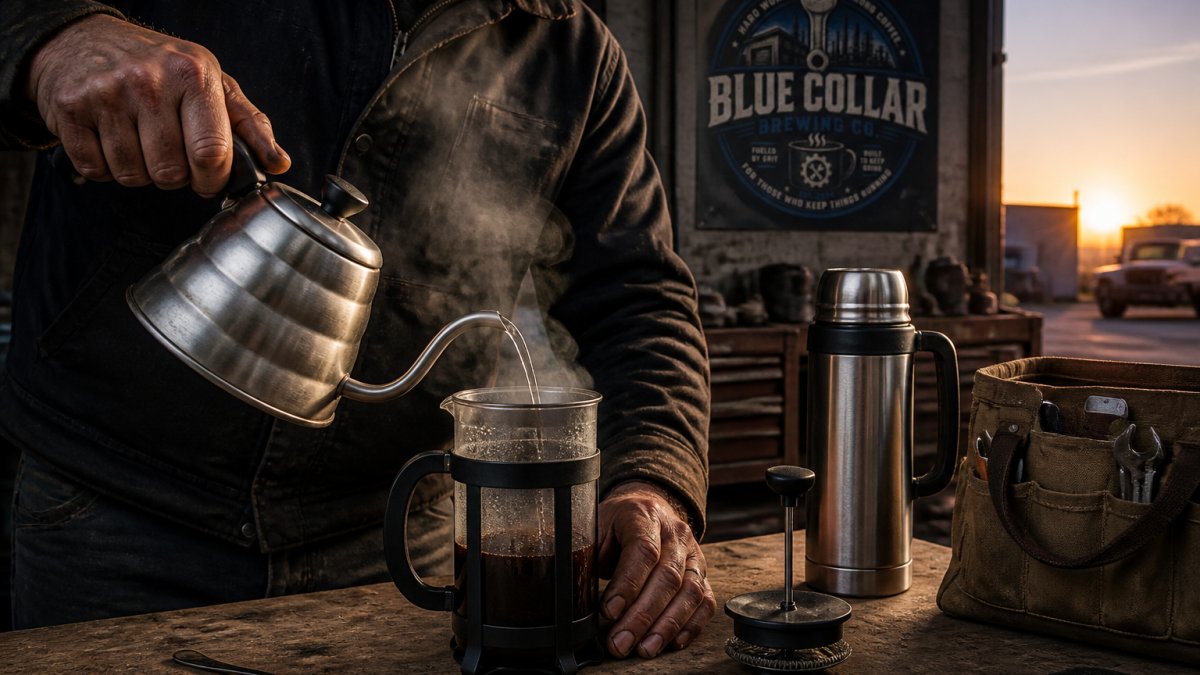
- Weigh 30 grams of coffee. That is a heavy dose for a 12-ounce brew, and it is the main lever.
- Grind medium-fine. Fine enough to extract fast, coarse enough to avoid a muddy cup.
- Heat water to just off boil. Full boil is fine for dark roasts.
- Add 360 grams of water. That is roughly a 1:12 coffee-to-water ratio.
- Stir once, then steep 4 to 5 minutes.
- Press slowly and pour immediately.
Expected result: a strong, full-bodied cup with more caffeine than a standard drip batch of the same size. If it tastes harsh, coarsen the grind slightly.
Brewing Methods Ranked by Caffeine Output
Most rankings you will find online disagree with each other because they compare different things: different doses, different serving sizes, and different beans. To rank methods honestly, you have to fix three variables first, the dry coffee dose, the beverage volume in the cup, and the bean itself. Here is the comparison framed both ways, because the two answers are not the same.
The Apples-to-Apples Setup
Assume a 15-gram dry coffee dose of the same medium-roast blend for every method, and measure caffeine in the finished beverage. That controls for the two biggest sources of disagreement: dose and bean. Under those conditions, the ranking below is what most practitioners and published caffeine tables converge on.
| Method | Typical caffeine per serving | Typical serving size | Caffeine per fluid ounce | Main lever |
|---|---|---|---|---|
| Espresso | 60-80 mg per shot | 1-1.5 oz | Highest | Fine grind, pressure, short contact |
| Cold brew (concentrate) | 150-250 mg per 8 oz | 8 oz diluted | High | Long steep, high dose |
| Drip / filter | 95-165 mg per 8 oz | 8-12 oz | Moderate | Dose and basket load |
| French press | 80-135 mg per 8 oz | 8-12 oz | Moderate | Steep time and dose |
| Instant | 30-90 mg per 8 oz | 8 oz | Variable | Scoops of powder used |
Those ranges are typical published figures, not lab results for your specific bag. Bean variety, roast, grind, and water chemistry all move them.
Why the Rankings Flip Depending on How You Measure
- Per fluid ounce, espresso wins. A 1-ounce shot carries roughly 60-80 mg of caffeine, which is a far higher concentration than any brewed cup. But a single shot is a small drink.
- Per serving, drip and cold brew often win. An 8- to 12-ounce drip cup at 95-165 mg delivers more total caffeine than a single espresso shot, simply because there is more liquid and more extracted coffee in the cup.
- Per gram of dry coffee, the methods converge. Once you fix the dose, extraction efficiency differences between drip, French press, and cold brew are smaller than the internet suggests. The dose does most of the work.
That is the single most useful takeaway from this section: if you want more caffeine, add coffee. If you want more caffeine per sip, choose espresso or cold brew concentrate. Those are different goals.
Pros and cons, briefly:
- Espresso: dense caffeine per ounce, but a single shot is a small drink and the serving size caps total intake.
- Cold brew: easy to batch and forgiving, but slow to make and weak if you under-dose the concentrate.
- Drip: consistent and simple, but easy to brew thin by under-loading the basket.
Measurement Uncertainty: Why the Numbers Are Ranges
Published caffeine figures come from lab analysis of specific samples, and they vary for real reasons: bean species (Robusta carries roughly twice the caffeine of Arabica by weight), roast level, grind, water temperature, and how long the sample sat before testing. A common pattern is that two bags labeled the same way can differ by 10-20% in caffeine. Treat any single number as a midpoint, not a guarantee, and use the ranges above to plan your day.
French Press vs Drip Coffee Caffeine: Which Pours More
French press and drip coffee land close together on caffeine per cup, and the winner is decided by dose, not method. But "close" is not the same as "identical," and the difference is worth quantifying so you can pick deliberately.
The Dose Math
Run both methods with the same 15-gram dose and the same 8-ounce finished cup, and the caffeine gap is small, typically within 10-20 mg, well inside the range of bean-to-bean variation. The French press holds grounds in contact with water for four minutes or more, which extracts thoroughly. Drip passes water through once, faster, but a batch brewer often uses more grounds per pot, which is why drip frequently wins in practice.
So the practical answer depends on which lever you pull:
- Same dose, same cup size: French press and drip are close enough that bean choice matters more than method.
- Batch brewer loaded heavy: drip wins on total caffeine per cup because the dose is higher.
- French press loaded heavy with a long steep: French press wins, because you control both dose and contact time directly.
A Reproducible Side-by-Side
If you want to settle it for your own setup, run this comparison with the same beans and a kitchen scale:
- French press: 15 g coffee, medium-coarse grind, 8 oz water just off boil, stir once, steep 4 minutes, press slowly.
- Drip: 15 g coffee, medium grind, 8 oz water, standard basket, brew through once.
- Compare: taste both, note body and bitterness, and if you want a caffeine read, send matched samples to a lab or use a consistent home test method. Do not change the dose between runs.
A common pattern is that the French press cup tastes heavier and more full-bodied because it keeps more oils and fine particles in suspension, while the drip cup tastes cleaner. That flavor difference is real; the caffeine difference is smaller than the flavor difference suggests.
When to Choose Which
- Choose French press when you want body, control over steep time, and cheap gear, and when you are willing to dose heavy for maximum caffeine.
- Choose drip when you want consistency, volume, and a clean cup, and when you are brewing for a group.
- Choose neither if you want maximum caffeine per sip, that is espresso or cold brew concentrate territory.
The French press also keeps more oils in the cup, which is why it tastes heavier. For a crew that wants body and a straightforward process, it is hard to beat, as long as you weigh the coffee.
Coffee-to-Water Ratio for Strong Coffee That Still Tastes Good
A coffee-to-water ratio of 1:12 to 1:15 by weight is the sweet spot for strong coffee that stays drinkable. Go stronger than 1:10 and extraction becomes uneven and bitter. Go weaker than 1:17 and you get a thin, tea-like cup.
Start at 1:12 for maximum caffeine, then walk it back toward 1:15 if the cup is too intense. Keep the ratio fixed and change one variable at a time.
Brew Time and Caffeine Extraction: Where the Returns Stop
Brew time and caffeine extraction follow a curve, not a straight line. Most of the available caffeine dissolves early.
Cold brew is the exception. Cold water extracts slowly, so cold brew needs 12 to 18 hours to reach full strength.
The practical takeaway: match contact time to grind and temperature, then stop. More time is not more caffeine after a point.
If you want the chemistry behind solubility and extraction yield, the coffee brewing standards from the Specialty Coffee Association are a solid reference.
Picking Beans That Do the Heavy Lifting
Bean choice sets the ceiling on caffeine extraction before you ever grind. Two species dominate: Arabica and Robusta.
Roast level matters less than people think. Dark roasts taste stronger but do not contain more caffeine by weight.
Our picks for a working day:
- Max Caf Blend ($19.99): a high-caffeine blend of Tanzania and India Robusta. This is the one for early starts and long shifts.
- Breakfast Blend + ($19.99): a medium roast house blend with added Robusta for extra caffeine.
- Italian Roast ($19.99): our darkest roast, a slow-roasted Arabica and Robusta blend.
- Cold Brew Coffee ($19.99): medium roast with chocolate and toffee notes, built for cold brew.
Freshness counts, too. We roast every batch to order, so the oils and aromatics are still there when it reaches your door. For more on how roast and species interact, see coffee research from UC Davis Coffee Center.


Caffeine extraction rewards discipline, not gear. Weigh your dose, grind fine, use hot water, and give it four minutes.
Shop Coffee and start your next shift with a cup that pulls its weight.
Frequently Asked Questions
What brewing method extracts the most caffeine?
Caffeine per cup depends on dose, grind, ratio, and contact time more than the method name. A French press with a fine grind, a 1:12 coffee-to-water ratio, and a 4 to 5 minute steep typically lands near the top for a full mug. Espresso concentrates caffeine into a small volume but often delivers less total caffeine per serving than a 12 oz drip or press cup. Cold brew with a long steep also extracts heavily. The honest answer: any method pushed with more grounds, finer grind, and longer contact time extracts more caffeine.
Does French press coffee have more caffeine than drip coffee?
The caffeine difference between French press and drip coffee, when using the same dose and grind, is often smaller than perceived. French press keeps grounds in contact with water for 4 minutes or more, allowing for thorough extraction. Drip coffee passes water through the bed quickly, resulting in shorter contact time. The key factor for more caffeine is often the dose of coffee used, rather than the method itself. Use a coarser grind for the press so it stays drinkable and doesn't turn muddy.
What is the 15-15-15 coffee rule?
The 15-15-15 rule is a simple mnemonic some brewers use: 15 grams of coffee per 15 units of water, brewed for about 15 minutes. It is not a standardized or tested formula, and 15 minutes of steeping over-extracts most hot brews into bitterness. Treat it as a starting point for cold brew, where long steep times are normal, and adjust from there. For hot methods, a 1:15 ratio with a 4 to 5 minute steep is a more reliable baseline.
How do grind size and brew time affect caffeine extraction?
Finer grinds expose more surface area, so water reaches more coffee particles and dissolves caffeine faster. Longer contact time does the same thing up to a point. Push both too far and you extract bitter compounds alongside the caffeine, which is why a fine grind in a 12 minute steep tastes harsh rather than strong. Match grind to method: medium-fine for drip, coarse for French press, and extra coarse for cold brew. Increase dose before you increase steep time past the recommended window.