

Coffee vs Tea for Long-Term Workday Focus
Table of Contents
- Coffee vs Tea for Long-Term Workday Focus: The Core Difference
- Caffeine Content and Relative Strength: Tea vs Coffee Caffeine
- Sustained Alertness vs Short-Term Energy Boost
- Best Tea for Focus at Work: Matcha, Hojicha, and English Breakfast
- Caffeine Timing for Work: Avoiding the Afternoon Crash
- How to Avoid an Afternoon Energy Crash During Your Workday
- Jitters, Crashes, and Long-Term Tolerance
- Which One Should You Choose for Your Workday
- Frequently Asked Questions
Last Updated: October 6, 2026
Coffee vs Tea for Long-Term Workday Focus: The Core Difference
When you're grinding through a 10-hour shift on the job site or hauling freight across state lines, understanding coffee vs tea for long term workday focus comes down to how your body processes caffeine over time. Coffee hits harder and faster. Tea builds steadier, longer-lasting alertness. Neither is universally better, the winner depends on what your workday actually demands.
Here's what matters: coffee delivers a sharp spike in energy within 15-30 minutes, while tea's caffeine releases more gradually over 45-60 minutes. That initial jolt makes coffee feel more effective.
At Blue Collar Brewing, we've built our coffee and tea lineup specifically for people who work hard and need fuel that actually delivers. Our Max Caf Blend and Breakfast Blend + give you that immediate kick when you need it most, early morning or after lunch.

The real decision isn't "which is better." It's understanding how each one works in your body and matching it to your actual workday rhythm. Let's break down exactly what's happening when you drink each one, and how to use that knowledge to stay sharp from clock-in to clock-out.
Caffeine Content and Relative Strength: Tea vs Coffee Caffeine
Coffee contains roughly 80-100 milligrams of caffeine per 8-ounce cup. Most teas contain 25-50 milligrams per serving. That's the raw number, and it's why coffee feels more powerful.
But raw caffeine content doesn't tell the whole story about tea vs coffee caffeine strength. A cup of strong black tea like English Breakfast delivers enough caffeine to noticeably sharpen your focus. The difference is how your body absorbs and processes it.
Coffee's caffeine enters your bloodstream quickly and peaks within 30-45 minutes. Tea's caffeine comes with compounds called L-theanine, which slow absorption and create a smoother, more sustained release. You get less total caffeine, but it lasts longer and doesn't spike as hard.
For a 12-hour workday, this matters. Two cups of coffee might give you 200 milligrams of caffeine by 7 a.m., leaving you wired but potentially crashed by noon.
Our Max Caf Blend uses Tanzania and India Robusta beans specifically selected for higher caffeine content, designed for mornings when you need immediate impact. Our Breakfast Blend + adds extra Robusta for that same early-shift punch.

Sustained Alertness vs Short-Term Energy Boost
Coffee excels at one thing: waking you up fast. That's its superpower. But sustained alertness, the kind you need to stay sharp and focused for hours, is where coffee and tea diverge.
When you drink coffee, your body experiences a clear energy arc. You feel alert and energized for 3-4 hours, then the caffeine wears off. If you've timed it right, that's perfect. If you haven't, you hit the afternoon wall hard.
Tea's lower caffeine content and the presence of L-theanine create a different pattern. Your alertness rises more gradually, plateaus at a moderate level, and sustains that level for 4-6 hours.
For trades and manual labor, construction, maintenance, logistics, manufacturing, sustained focus matters more than a caffeine spike. You need to stay sharp through repetitive tasks, make careful decisions, and maintain physical coordination. A jittery, spiked state can actually work against you.
This is where matcha and hojicha show their value. Both are green tea powders that deliver moderate caffeine with L-theanine, creating that sustained focus state. Matcha is refined and lingering, crafted for traditional preparation and mindful daily rituals.

Best Tea for Focus at Work: Matcha, Hojicha, and English Breakfast
Not all teas perform the same way during a workday. The best tea for focus at work depends on when you're drinking it and what kind of focus you need.
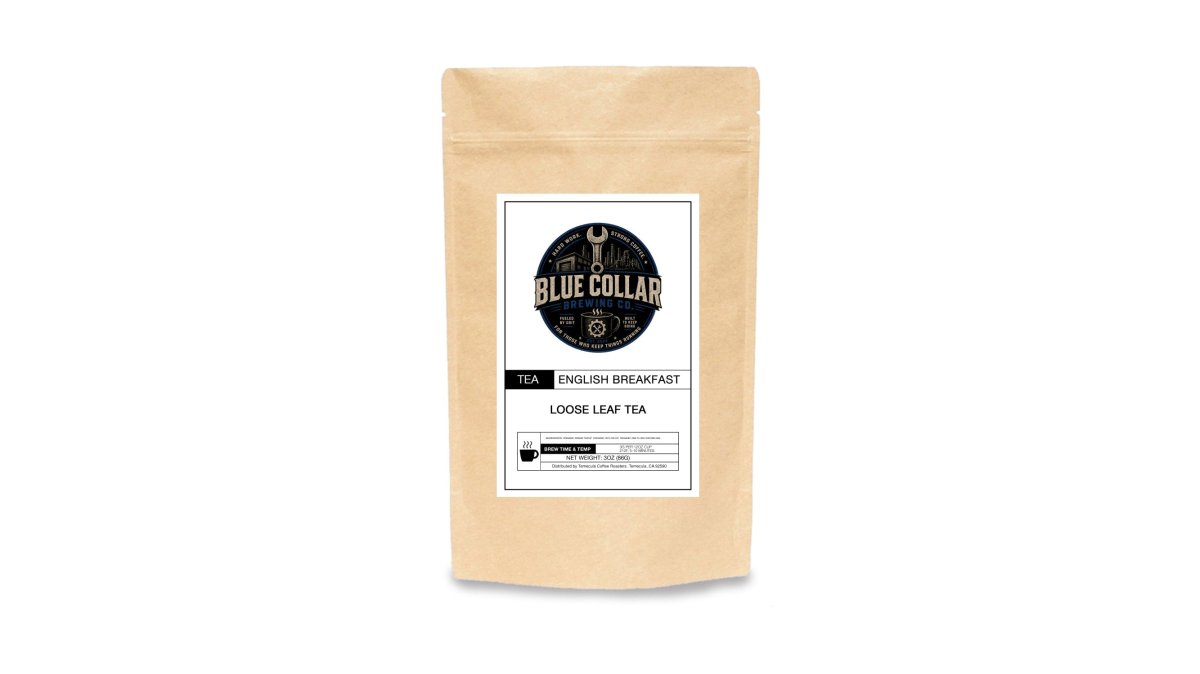
English Breakfast is the straightforward choice. It's a blend of African and Indian tea, strong enough to stand up to milk and sugar, and delivers enough caffeine to genuinely sharpen your attention. It's not complicated, but it works.
Matcha works differently. It's a powdered green tea that you whisk into water or milk, creating a thicker, more intentional drink. Matcha delivers moderate caffeine alongside L-theanine, which creates a state of calm alertness, focused but not jittery.
Hojicha is roasted green tea powder with a completely different flavor profile. It tastes warm and comforting, with notes of toasted cereal and umami balance.
For most workers, English Breakfast is the practical starting point. It's familiar, affordable, and delivers real caffeine.
Caffeine Timing for Work: Avoiding the Afternoon Crash
The single biggest mistake people make isn't choosing the wrong drink, it's drinking it at the wrong time.
Caffeine peaks in your system 30-45 minutes after consumption and remains active for 4-6 hours depending on the source. If you drink coffee at 6 a.m., you're crashing around 10-11 a.m. If you respond by drinking more coffee at 11 a.m., you're still caffeinated at 3 p.m., which wrecks your sleep that night. That sleep deprivation then makes you more tired the next day, so you drink more coffee, and the cycle compounds.
A practical caffeine schedule for a long workday looks like this:
- 6-7 a.m.: One strong cup of coffee (or two cups of tea). This covers your morning and early shift.
- 10-11 a.m.: Water, food, or a short break. Let the caffeine wear off naturally.
- 12-1 p.m.: A second serving of caffeine if you need it, either coffee or tea depending on what worked this morning.
- 3 p.m. onward: No more caffeine. You're close enough to end-of-shift that you don't need it, and it will interfere with sleep.
This timing prevents the afternoon crash because you're not relying on a single caffeine dose to carry you through 12 hours. You're using two strategic doses spaced 5-6 hours apart, which keeps you alert without creating the boom-bust cycle.
Tea fits this schedule better than coffee for most people. Because tea's caffeine releases more gradually, your second cup at noon doesn't create the same afternoon spike that a second coffee would. You stay steady through the afternoon without the 3 p.m. wall.
How to Avoid an Afternoon Energy Crash During Your Workday
The afternoon crash isn't inevitable. It's a direct result of caffeine timing, meal timing, and sleep quality. Control those three variables and you eliminate the crash.
Caffeine timing we've covered: two strategic doses, nothing after 2 p.m. But the other two matter equally.
Meal timing affects how quickly your body absorbs caffeine and how stable your blood sugar remains. Drinking coffee on an empty stomach gets absorbed faster and creates a bigger spike-and-crash pattern. Drinking it after eating breakfast or a mid-morning snack slows absorption and creates a steadier curve. For a long workday, eat something within an hour of your caffeine dose.
Sleep quality is the overlooked factor. If you're sleeping poorly, whether from late-night caffeine, stress, or inconsistent sleep schedules, no amount of daytime caffeine strategy will prevent afternoon fatigue. Your body is genuinely tired, and caffeine just masks it temporarily. Most people need 7-9 hours of sleep.
Many hardworking professionals in manual labor roles sacrifice sleep to fit in more work or personal time. That's the exact scenario where the afternoon crash becomes severe. You're fighting your body's actual needs, and caffeine can't overcome genuine sleep debt.
Jitters, Crashes, and Long-Term Tolerance
Jitters and crashes are two different problems with different solutions.
Jitters come from too much caffeine at once, or caffeine sensitivity. You feel anxious, shaky, or unable to focus despite being alert. This is more common with coffee than tea because of the higher dose and faster absorption.
Crashes happen when caffeine wears off. Your body had elevated alertness artificially sustained by the drug, and when it leaves your system, you feel more tired than you would have without it.
Long-term tolerance is the hidden cost of daily caffeine use. Your body adapts. The same dose that felt powerful on day one feels normal by day 30. You need more to feel the same effect.
Tea creates less tolerance buildup because the dose is lower and the absorption is slower. Your body doesn't adapt as aggressively. Many people find they can drink tea daily for years and maintain roughly the same effect.
Which One Should You Choose for Your Workday
The choice between coffee and tea for long term workday focus isn't about which is objectively better. It's about matching the drink to your actual workday demands and your body's response.
Choose coffee if: You work early morning shifts and need immediate alertness. You have a physically demanding job where a sharp energy boost helps you get started. You're not sensitive to caffeine and don't experience jitters.
Our Max Caf Blend and Breakfast Blend + are built for this scenario. Both deliver the caffeine you need upfront, with the flavor and aroma that make your morning ritual something to look forward to.
Choose tea if: You work long shifts and need sustained focus rather than spikes. You're sensitive to caffeine or experience jitters easily. You want to avoid the afternoon crash and sleep disruption.
Our English Breakfast provides straightforward strength without complexity. Our matcha and hojicha offer a different kind of focus, calm, sustained, and tied to intentional preparation.
The honest answer: most people benefit from a combination. Start your day with coffee or strong tea for immediate alertness. Switch to lighter tea or no caffeine by early afternoon.
At Blue Collar Brewing, we've built products for both strategies because we know your workday isn't one-size-fits-all. Whether you need the punch of our Max Caf Blend or the sustained calm of our matcha, we've roasted and sourced them specifically for people who work hard and need fuel that actually delivers. Shop Coffee and find what works for your shift.
Frequently Asked Questions
Which is better for focus, tea or coffee?
Coffee delivers a faster, more intense caffeine hit, making it ideal for immediate alertness and tackling demanding tasks. Tea provides a gentler, more sustained lift in focus over hours, with less risk of jitters or crashes. For a 10-12 hour workday, many workers find tea better for consistent concentration, while coffee works best for early-morning urgency or specific high-focus periods. Your choice depends on task intensity and caffeine sensitivity.
How much caffeine is in coffee compared with tea?
A typical 8-ounce cup of coffee contains 80-100 mg of caffeine, while the same serving of black tea contains 25-50 mg. Green tea like matcha delivers 25-70 mg depending on preparation. Coffee's higher caffeine load creates faster energy, but tea's lower dose spreads the effect over a longer period without overwhelming your system, reducing the likelihood of afternoon crashes during a long workday.
When should you drink coffee or tea during a workday?
Start your day with coffee or a strong tea blend like English Breakfast to build momentum. Save a second cup or tea service for mid-morning (around 10-11 AM) to sustain focus through lunch. Avoid caffeine after 2 PM to protect sleep quality, which directly affects next-day alertness. If you need an afternoon boost, switch to a lower-caffeine option like hojicha or matcha to maintain calm alertness without disrupting sleep.
Does tea provide steadier energy than coffee?
Yes. Tea's lower caffeine content and the presence of L-theanine (an amino acid in tea leaves) create a smoother energy curve without the sharp spike and crash coffee produces. This steady state supports sustained focus and concentration throughout a long workday. Coffee's rapid caffeine absorption can feel energizing initially but often leads to fatigue within 3-4 hours, requiring another cup to maintain productivity.
Can drinking coffee or tea late in the day affect sleep?
Both can disrupt sleep if consumed after 2-3 PM, but coffee's higher caffeine content poses a greater risk. Caffeine has a half-life of 5-6 hours, meaning half the dose remains in your system 5-6 hours after consumption. A 3 PM coffee cup still holds 40-50 mg of caffeine at bedtime. Tea's lower caffeine load is less disruptive, but timing still matters. Avoid both after early afternoon to ensure quality sleep, which is essential for next-day focus and energy.
The afternoon crash isn't a personal failing, it's a predictable consequence of caffeine timing and sleep quality. Once you understand how caffeine actually works in your body, you can build a strategy that keeps you sharp from clock-in to clock-out. Blue Collar Brewing's carefully sourced coffee and tea lineup gives you reliable options for whatever approach you choose. Get started with a blend that matches your workday rhythm and experience the difference premium, fresh-roasted fuel makes.