

Fresh Roasted Coffee Subscriptions Compared
Table of Contents
- What Makes Fresh Roasted Coffee Subscriptions Different
- Benefits of Roast-to-Order Coffee
- Sample Packs vs. Single Serve: Format Comparison
- Single Origin Favorites vs. Best Sellers Sample Packs
- Coffee Subscription Delivery Frequency and Customization
- Cost of Coffee Subscriptions Per Month and Per Cup
- How to Choose the Right Fresh Roasted Option for Your Needs
- Frequently Asked Questions
Last Updated: September 23, 2026
What Makes Fresh Roasted Coffee Subscriptions Different
Fresh roasted coffee subscriptions deliver beans roasted to order rather than sitting on warehouse shelves for weeks. This is the core difference that separates them from grocery store alternatives. When you order from Blue Collar Brewing or similar roast-to-order services, your coffee is roasted after purchase and shipped within days, preserving the aroma, flavor profile, and body that fade quickly after roasting.
Most commercial coffee loses peak flavor within two weeks of roasting. Grocery store beans, often roasted months prior, deliver a stale cup. Fresh roasted subscriptions compress that timeline, ensuring you drink coffee at its best.
A medium roast from a quality single-origin bean tastes noticeably different when fresh versus aged, a difference most specialty coffee drinkers will detect immediately.
Benefits of Roast-to-Order Coffee
Roasting to order guarantees maximum freshness, your beans are roasted after purchase with no guessing about roast dates or inventory turnover.
Sample Packs vs. Single Serve: Format Comparison
Sample packs let you try multiple coffees without committing to full-size bags. Blue Collar Brewing offers sample packs in three formats: single-origin varieties, best-seller blends, and flavored options.
Single-serve capsules prioritize convenience over exploration. Each coffee capsule is sealed with no oxygen inside (no air) so the coffee stays fresh. This format works best for people on the road or in work environments where brewing equipment is limited.
| Format | Best For | Commitment | Cost Per Serving |
|---|---|---|---|
| Sample Packs (2oz) | Trying new flavors | One-time | Lower per trial |
| 12 Pack Capsules | Light use, convenience | Flexible | Higher per cup |
| 60 Pack Capsules | Regular use | Bulk purchase | Lower per cup |
Sample packs require deciding preferences before larger purchases. Capsules remove that friction but lock you into a specific brewing method.
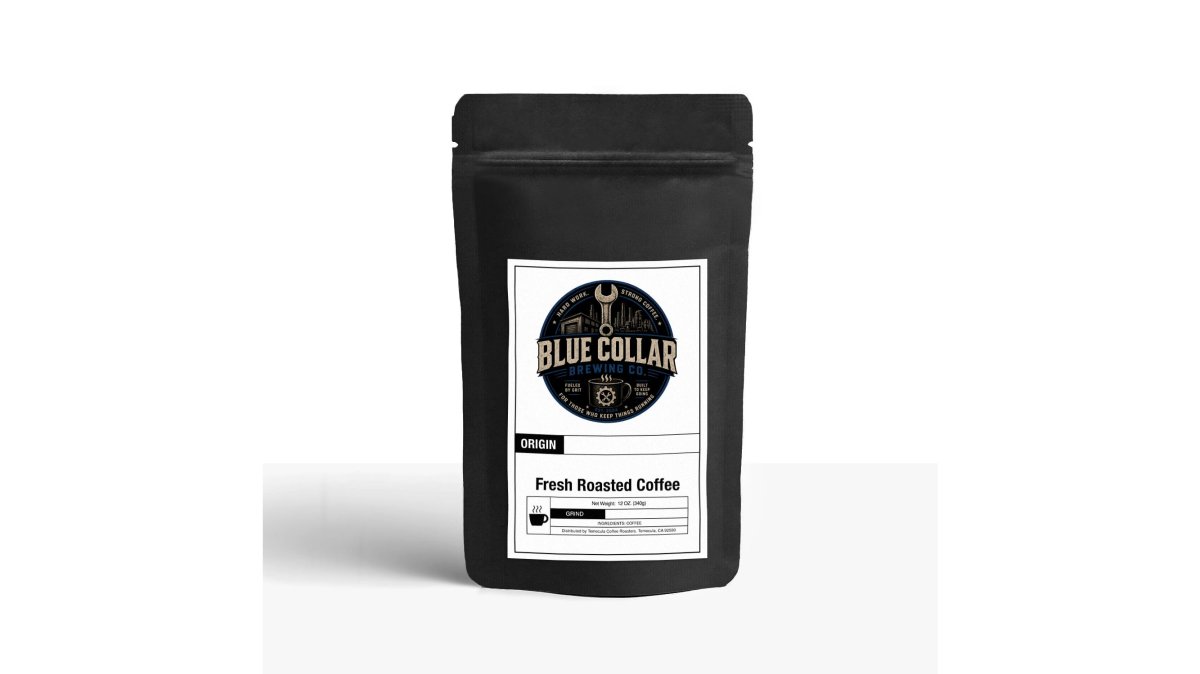
Single Origin Favorites vs. Best Sellers Sample Packs
Single-origin coffees come from one specific region and farm, allowing you to taste how geography shapes flavor. Blue Collar Brewing's Single Origin Favorites pack includes six origins: Brazil Santos (cocoa), Colombia (dried orange and berry), Costa Rica (apple and honey), Ethiopia (milk chocolate and fruit), Honduras (caramel and spice), and Tanzania (pear and floral).


These coffees highlight how altitude, soil type, and processing method shape flavor.
Best Sellers Sample Pack features house blends and popular single origins. The 6Bean Blend is a House Blend, great for Espresso; Cowboy Blend offers cocoa, caramel, & vanilla tones; Breakfast Blend is a smooth blend of coffee from South America; plus Peru and Mexico single origins.
Single-origin packs suit explorers; Best Sellers packs work better for those wanting variety without the learning curve.
Coffee Subscription Delivery Frequency and Customization
Delivery frequency determines how often fresh beans arrive. The right frequency depends on household consumption and how long you want beans to sit before brewing.
Blue Collar Brewing's sample packs are one-time purchases, avoiding subscription fatigue and cancellation friction. You order when ready, not on a preset schedule.
Cost of Coffee Subscriptions Per Month and Per Cup
Sample packs from Blue Collar Brewing cost $21.99 for six 2-ounce packs, which works out to roughly $3.67 per 2-ounce sample. That's higher per ounce than bulk bags but lower per trial since you're testing multiple origins.
Single-serve capsules range from $18.99 for a 12-pack to $59.99 for a 60-pack. The 12-pack breaks down to about $1.58 per capsule. The 60-pack drops to roughly $1.00 per capsule, rewarding bulk purchases. These prices are higher than grocery store coffee but lower than many specialty coffee shops.
True Cost-Per-Cup Calculation
The cost-per-cup calculation depends on your brewing method, coffee consumption, and extraction efficiency. A typical cup uses one capsule or about 0.5 ounces of whole bean. If you brew with whole bean, a 12-ounce bag makes roughly 24 cups at standard brewing ratios (1:16 coffee-to-water), so the cost per cup varies based on the bag price and your brewing efficiency.
For capsules at $1.00-$1.58 per unit, you're paying $1.00-$1.58 per cup. Compare this to convenience store coffee at $2-4 per cup or specialty coffee shops at $5-7 per cup. Premium roast-to-order subscriptions sit between these extremes.
Storage and Freshness Decay Impact on Value
Storage Best Practices to Maximize Value
Capsules sidestep this issue, they're sealed with nitrogen, maintaining freshness for 6-12 months. You pay more per cup upfront ($1.00-$1.58), but you're guaranteed consistency and zero waste from stale beans.
Monthly vs. Biweekly Subscription Economics
How to Choose the Right Fresh Roasted Option for Your Needs
Start by identifying your brewing method, because roast profile and grind size must align with your equipment's extraction mechanics.
Brewing Equipment and Roast Profile Compatibility
Different brewing methods extract coffee at different rates and temperatures, requiring different roast profiles to shine:
Pour-over methods (V60, Chemex, Melitta): These brewers use paper filters and slower extraction (3-4 minutes). They work best with light to medium roasts, which preserve bright acidity and floral notes. The paper filter removes oils, so you want beans with pronounced flavor clarity. A dark roast in a Chemex tastes flat and one-dimensional because the extended roasting has already muted the origin's character.
French press and immersion brewers: These methods use metal filters and full-contact immersion (4 minutes), extracting oils and heavier compounds. Medium to dark roasts perform better here because the fuller body and chocolate/caramel notes complement the oily mouthfeel. Light roasts in a French press often taste thin and over-extracted.
Espresso machines: Espresso requires medium to dark roasts (usually dark-roasted specifically for espresso) because the 9-bar pressure and 25-30 second extraction pulls different compounds than drip methods. A light roast espresso tastes sour and thin. Espresso roasts are developed to balance sweetness, body, and crema under high pressure.
AeroPress: This hybrid method (immersion + pressure) works across the roast spectrum. Light roasts highlight origin clarity; dark roasts emphasize body. The AeroPress is the most forgiving brewer for experimenting with different roast profiles.
Moka Pot (stovetop): These brewers use steam pressure and direct heat, favoring medium to dark roasts. The high temperature can scorch light roasts, making them taste bitter. Medium-dark roasts with lower acidity perform better.
Consumption Rate and Subscription Frequency
Next, consider your consumption rate. A household that drinks two cups daily needs more coffee than someone who drinks three cups weekly. Sample packs work for light consumption (under 5 cups weekly). Regular drinkers (5-10 cups weekly) benefit from biweekly deliveries of 6-12 ounce bags. Heavy drinkers (10+ cups weekly) should consider monthly subscriptions or bulk purchases.
Consumption rate also determines freshness strategy. If you drink 1 pound weekly, a monthly 4-pound shipment means the last pound sits 3 weeks post-roast, past peak freshness. Biweekly 2-pound shipments keep everything within the 10-14 day optimal window.
Flavor Preferences and Origin Selection
Think about flavor preferences. Do you like bright, acidic coffees or smooth, full-bodied ones? Single-origin coffees let you chase specific flavor profiles, Ethiopian coffees tend toward fruity and floral; Brazilian coffees toward chocolatey and nutty; Colombian coffees toward balanced with citrus notes. Blends offer consistency and balance, sacrificing origin character for reliability.
Flavored coffees add sweetness without added sugar or calories, appealing to people who want their coffee to taste like something beyond coffee. These typically work best in darker roasts where the added flavoring complements the roasted character.
Convenience vs. Quality Trade-Off
Evaluate convenience versus quality. Capsules are fastest but lock you into one brewing method and typically cost more per cup. Whole bean requires a grinder and takes more time but offers flexibility and lower per-cup cost. Sample packs require more decision-making but minimize waste and let you test equipment compatibility before committing to larger purchases.
Subscription Friction and Cancellation Ease
Finally, test your roaster's reliability and subscription flexibility. How consistently do they ship? Do they communicate roast dates clearly? Can you pause or skip shipments without friction? Blue Collar Brewing's one-time purchase model removes subscription fatigue entirely, you order when you need coffee, not on a preset schedule. This eliminates the common complaint about subscription services: the difficulty of pausing or canceling without penalty.
If you choose a recurring subscription service, verify their cancellation policy upfront. Some require email requests with 5-7 day notice; others let you pause online instantly.
Frequently Asked Questions
What should I look for when comparing fresh roasted coffee subscriptions?
Focus on roast date, roast profile variety, and whether the roaster offers customization. Verify they source from known origins and include tasting notes. Look for flexible pause or cancellation options, and confirm shipping costs don't offset the premium quality. Sample packs let you test flavors before committing to larger purchases.
How often should I have my coffee subscription delivered for maximum freshness?
Most coffee tastes best within 2-4 weeks of the roast date. Occasional drinkers can order monthly. Store beans in airtight containers away from heat and light to extend freshness between deliveries.
Is it cheaper to buy coffee through a subscription service?
Not always cheaper by unit price, but you get fresher coffee roasted to order. Sample packs like the Single Origin Favorites at $21.99 for six 2oz packs cost roughly $3.66 per ounce. Single Serve Capsules run $1.58 per capsule (12-pack) or $1.00 per capsule (60-pack). Gas station coffee costs less upfront but lacks flavor and freshness. The real value is in taste and quality, most find the premium worth it for noticeably better flavor compared to grocery store options.
How do I know if a coffee subscription is actually sending fresh-roasted beans?
Check if they roast to order rather than maintaining pre-roasted inventory. Read customer reviews mentioning freshness and aroma. Freshly roasted beans have a stronger aroma and brighter flavor than week-old coffee. If beans arrive without a roast date or smell flat, that's a red flag. Blue Collar Brewing roasts to order, so each batch is roasted fresh for your order.
What is the difference between whole bean and pre-ground coffee in a subscription?
Pre-ground is convenient for quick brewing (like single serve capsules) but sacrifices some flavor complexity. Single Serve Capsules use a sealed, no-oxygen design to preserve freshness longer than loose pre-ground. Choose capsules for convenience and consistency.