

Why Grocery Store Coffee Tastes Stale
Table of Contents
- Why Grocery Store Coffee Tastes Stale
- How to Tell If Coffee Is Fresh
- How Long Do Coffee Beans Stay Fresh
- How Long Does Ground Coffee Stay Fresh
- How to Store Coffee Beans for Maximum Freshness
- What Stale Coffee Tastes and Smells Like
- Packaging and Its Role in Coffee Freshness
- Frequently Asked Questions
Last Updated: October 15, 2026
Why Grocery Store Coffee Tastes Stale
When you open a bag of grocery store coffee stale from weeks or months on shelves, you're often holding beans that have lost their peak flavor. The coffee tastes flat, bitter, or dull because the beans have lost their brightness, sweetness, and complexity. This happens through a combination of oxidation, carbon dioxide loss, and time, all working against flavor from the moment roasting stops.
Understanding why grocery store coffee tastes stale isn't just about knowing the problem. It's about recognizing that freshness is the single biggest factor separating a great cup from a mediocre one. At Blue Collar Brewing, we roast coffee to order specifically because we know that freshness determines everything about how your coffee tastes.
Oxidation and oxygen exposure
Oxidation is the primary culprit behind stale coffee flavor. When coffee beans are roasted, they're porous and reactive. The moment they cool, oxygen begins breaking down the aromatic compounds and oils that give fresh coffee its brightness and complexity.
Whole beans oxidize slowly at first, then faster over time. Ground coffee oxidizes much more rapidly because grinding exposes vastly more surface area to air. A bag of whole beans might stay reasonably fresh for 2-3 weeks if sealed properly.
The oxidation process is irreversible. Once those volatile aromatic compounds break down, they're gone. You can't restore them by grinding fresher or brewing differently. This is why buying whole beans instead of pre-ground makes such a dramatic difference.
Carbon dioxide degassing and aroma loss
During roasting, coffee beans absorb carbon dioxide. After roasting stops, the beans slowly release this CO2, a process called degassing. This release is actually necessary for good flavor. Fresh beans need 12-24 hours to degas before they're at their peak.
But here's where grocery store coffee runs into trouble: the degassing window is brief. After about 2-3 weeks, most of the CO2 has escaped. When the aroma is gone, so is a huge part of what makes coffee taste good.
Sealed bags with one-way valves slow this process, but they can't stop it entirely. The valve lets CO2 out but prevents oxygen from rushing in. Even so, oxygen still enters slowly over time, and the aromatic compounds continue to break down.
Time between roasting and purchase
The biggest hidden problem with grocery store coffee is age. You don't know when the beans were roasted. The roast date might not be printed on the bag, or the date might be months old by the time you buy it.
Many grocery store bags are roasted 4-8 weeks before they reach the shelf. Then they sit in the store for another 1-4 weeks. By the time you brew it, the beans might be 2-3 months old.
Fresh-roasted coffee from a specialty roaster or ordered online typically arrives within 1-2 weeks of roasting. The flavor difference is immediate and unmistakable.
How to Tell If Coffee Is Fresh
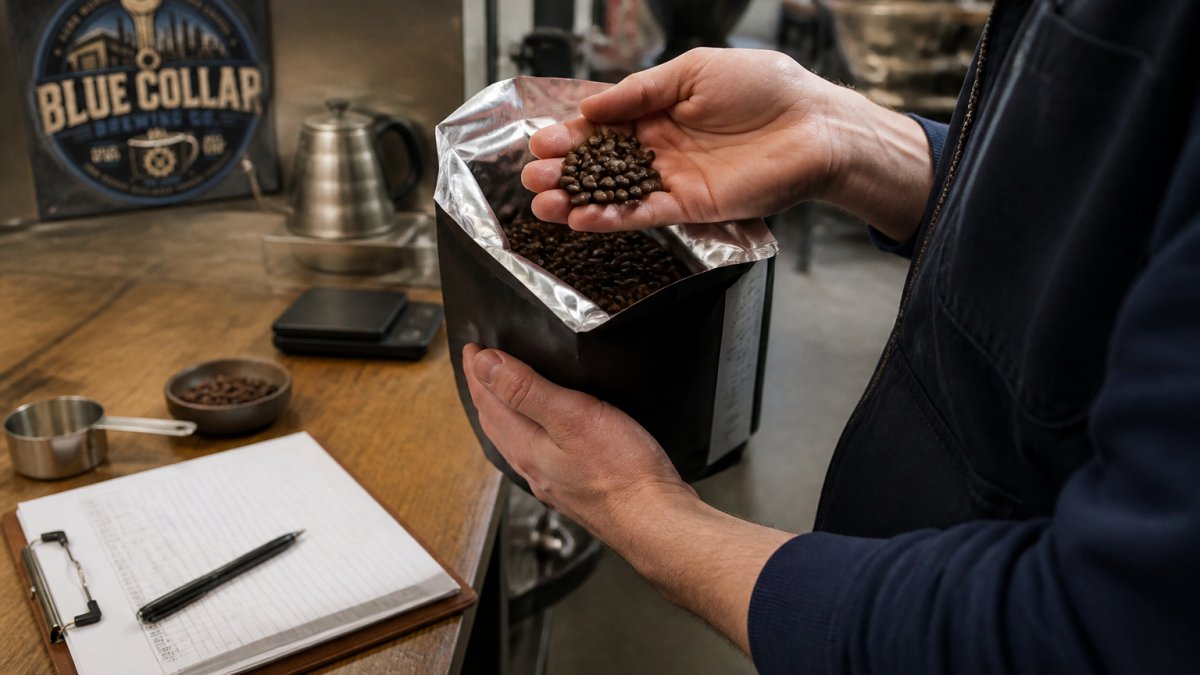
Fresh coffee has a vibrant aroma, uniform color, and visible oil on the bean surface. Stale coffee looks dull, smells flat or musty, and tastes bitter or hollow.
Reading roast dates and package codes
The roast date is your most reliable freshness indicator. Look for a printed date on the bag, it should say "roasted on" or "roast date" followed by a specific date.
If you don't see a roast date, check for a "best by" date. Best-by dates are less helpful because they're often set 6-12 months after roasting.
Some bags use batch numbers or lot codes instead of roast dates. These codes are harder to decode without contacting the roaster directly.
The ideal roast date is within 1-2 weeks of purchase. Anything older than 4 weeks has already lost significant flavor. If the roast date is more than 8 weeks old, the coffee is stale.
Aroma, color, and appearance clues
Open the bag and smell the coffee. Fresh beans smell bright, complex, and inviting. Stale beans smell flat, musty, or cardboard-like. Your nose is extremely reliable for this test.
Look at the beans themselves. Fresh whole beans have a slightly oily, rich appearance. The color should be uniform and consistent with the roast level. Dark roasts look nearly black with visible oil.
Stale beans look chalky or faded. The color appears washed out. This happens because the oils have oxidized and the surface loses its luster. If the beans look dry and flat, they're old.
The texture also matters. Fresh beans are dense and hard. Stale beans feel slightly brittle or hollow.
How Long Do Coffee Beans Stay Fresh
Whole beans stay at peak flavor for about 2-4 weeks after roasting, with the best window being the first 2-3 weeks. After that, quality declines gradually but noticeably.
Freshness window for whole beans
The first week after roasting is the "rest period." The beans are still degassing and aren't quite at their absolute peak yet.
Weeks 2-3 are the optimal window. The beans have finished degassing, the aromatic compounds are still intact, and the flavor is at its brightest and most complex.
By week 4, the beans are noticeably less vibrant. The sweetness and brightness fade. The coffee tastes flatter and slightly more bitter.
After 8 weeks, grocery store coffee stale in flavor is genuinely past its prime. It's not unsafe to drink, but the flavor is significantly compromised.
This timeline assumes proper storage in an airtight container, away from heat, light, and moisture. Poor storage accelerates degradation significantly.
How Long Does Ground Coffee Stay Fresh
Ground coffee loses peak flavor within 3-7 days of grinding, depending on storage conditions. This is dramatically shorter than whole beans because grinding exposes so much more surface area to oxygen.
Why ground coffee loses freshness faster
When you grind beans, you increase the surface area exposed to air by roughly 500 times. This massive increase in contact with oxygen means oxidation happens much faster.
A whole bean has a relatively small surface area. Grinding breaks it into thousands of tiny particles, each one now vulnerable to oxidation.
Even in a sealed container, ground coffee degrades rapidly. The coffee itself releases gases that create pressure inside the container. Over time, that pressure equalizes with the outside air, allowing oxygen to gradually enter.
For best flavor, grind your beans immediately before brewing. If you must pre-grind, use the coffee within 2-3 days and store it in an airtight container in a cool place.
How to Store Coffee Beans for Maximum Freshness
Store whole beans in an airtight container away from heat, light, and moisture. Keep the container at room temperature in a dark cabinet or pantry.
Container types and valve designs
Airtight containers are essential. Ceramic, glass, or stainless steel containers with tight-sealing lids work best. The container should have minimal air space inside, less air means less oxygen to cause oxidation.
One-way valves on coffee bags are helpful but imperfect. These valves let CO2 escape after roasting but prevent oxygen from rushing in. However, oxygen still enters slowly over time. A one-way valve extends freshness compared to an open bag, but it's not a complete solution.
The best approach is to transfer beans from the original bag into a smaller airtight container once you open it. This minimizes the air space and slows oxidation significantly.
Temperature, light, and moisture control
Heat accelerates oxidation and degassing. Store coffee at room temperature, ideally between 60-70°F. Never store coffee in the refrigerator or freezer, the temperature fluctuations when you open the container cause condensation inside, which damages the beans.
Light degrades coffee flavor. UV light breaks down aromatic compounds. Store your container in a dark cabinet or pantry, away from direct sunlight or bright kitchen lights.
Moisture is the enemy of fresh coffee. Humidity causes the beans to absorb water, which speeds up oxidation and can cause mold. Keep your storage container in a dry environment and ensure the lid seals tightly.
What Stale Coffee Tastes and Smells Like
Stale coffee has a flat, bitter, or hollow taste. The brightness and sweetness are gone. The complexity that makes fresh coffee interesting has disappeared.
Loss of brightness, sweetness, and complexity
Fresh coffee tastes vibrant and alive. There's brightness on the palate, a liveliness that makes each sip engaging. Stale coffee tastes dull by comparison.
Sweetness is one of the first things to go. Fresh beans have subtle sweet notes, caramel, chocolate, fruit, nuts, depending on the origin and roast. Stale beans lose these notes entirely.
Complexity is the depth of flavor, the layers that unfold as you drink. Fresh coffee might taste fruity at first, then develop nutty or chocolatey notes. Stale coffee tastes the same flat note from start to finish.
The overall experience feels thin. The coffee lacks body and mouthfeel. It tastes like it's missing something, because it literally is, all those aromatic compounds have oxidized or escaped.
A simple at-home freshness test
Here's how to compare fresh coffee to stale coffee side by side. Buy a small bag of freshly roasted beans from a specialty roaster or order from Blue Collar Brewing.
Then brew a cup from your grocery store coffee. Notice the difference in aroma first, the fresh coffee should smell significantly more vibrant and complex. Then taste both.
The fresh coffee will taste brighter, sweeter, and more interesting. The grocery store coffee will taste flat and bitter by comparison. This test makes the difference unmistakable.
You don't need to be a coffee expert to notice this. Anyone can taste the difference between fresh and stale coffee. Once you've tried truly fresh coffee, grocery store coffee becomes noticeably disappointing.
Packaging and Its Role in Coffee Freshness
The bag your coffee comes in matters, but it's not the whole story.
Foil-lined bags with one-way valves are standard for specialty coffee. The foil blocks light and provides a barrier to oxygen.
Vacuum-sealed bags remove most of the air initially, which slows oxidation. However, as CO2 degasses, air gradually enters to replace it.
The real issue is time. Even the best packaging can't overcome months of storage.
This is why roast date matters more than packaging type.
Stale grocery store coffee is the result of oxidation, degassing, and time working against flavor from the moment beans leave the roaster.
The simplest solution is to buy fresher coffee.
Frequently Asked Questions
Why does grocery store coffee taste stale compared to freshly roasted coffee?
Grocery store coffee tastes stale because it sits on shelves for weeks or months after roasting. During this time, oxygen exposure causes oxidation, which breaks down aromatic compounds that give coffee its sweetness and brightness. Carbon dioxide naturally degasses from the beans, carrying away flavor with it. Stale coffee loses complexity and aroma, leaving behind a flat, dull taste. Freshly roasted coffee, by contrast, retains these volatile compounds for only 2-4 weeks after roasting, making the difference noticeable in every cup.
How long do coffee beans stay fresh after roasting?
Whole coffee beans stay fresh for about 2-4 weeks after roasting, with peak flavor in the first 2-3 weeks. After that, oxidation and degassing gradually strip away the aroma and sweetness. Most specialty roasters recommend using beans within 30 days of the roast date. Grocery store coffee often sits in warehouses and on shelves for 2-3 months or longer before you buy it, which is well past the peak freshness window. Always check the roast date on the bag and buy from roasters who stamp it clearly.
How long does ground coffee stay fresh, and should I buy whole beans instead?
Ground coffee stays fresh for only 1-2 weeks after grinding because the increased surface area exposes more of the coffee to oxygen. Whole beans, with their protective outer layer, last 2-4 weeks. If you grind your own beans at home just before brewing, you'll taste a noticeable difference in brightness and aroma compared to pre-ground coffee. For manual laborers with busy schedules, whole beans can provide fresher flavor than pre-ground options.
How should I store coffee beans to keep them fresh longer?
Store whole beans in an airtight container away from light, heat, and moisture. A sealed bag with a one-way valve works well if you keep it in a cool, dark cupboard or drawer. Avoid the refrigerator or freezer, as temperature fluctuations and condensation can speed up oxidation. If you buy in bulk, divide beans into smaller airtight containers and store extras in a cool place. Proper storage can extend freshness by a week or two, but it cannot reverse the clock on beans that are already past their peak roast date.