

Why Coffee Tastes Bitter in Stainless Steel Mugs
Table of Contents
- Why Coffee Tastes Bitter in Stainless Steel Mugs
- How to Clean Stainless Steel Coffee Mugs Properly
- Best Coffee for Early Mornings in Stainless Steel
- Ceramic Lined Travel Mug Benefits vs. Bare Steel
- Steel Grades and Their Impact on Flavor
- Temperature Retention and Flavor Degradation
- Frequently Asked Questions
Last Updated: September 26, 2026
Why Coffee Tastes Bitter in Stainless Steel Mugs
When coffee tastes bitter stainless steel mugs, you're experiencing a real chemical reaction. The acidic compounds in coffee interact with the steel's surface, creating metallic notes that mask the coffee's true flavor profile. The culprit isn't the coffee itself, it's how the mug changes what you're tasting.
Coffee oils build up in microscopic pores on the steel's surface and oxidize, turning rancid and leaving bitter residue. Combined with coffee's natural tannins and acidic compounds, this creates an unpleasant aftertaste, but it's entirely fixable.
The Role of Metallic Notes and Oxidation
Stainless steel imparts metallic notes through two mechanisms: chemical leaching and oil oxidation. When hot coffee sits in steel, acidic compounds like chlorogenic acid pull trace elements from the alloy into your cup, creating a sharp metallic edge that intensifies with heat and time. Separately, coffee oils trapped in microscopic pores oxidize over weeks, creating rancid, bitter residue that a quick rinse won't remove.
How Coffee Acidity Interacts with Steel
Coffee's pH of 4.85-5.10 is acidic enough to trigger reactions with metal. Acidic compounds like chlorogenic acid become reactive in stainless steel, causing the surface to release trace metals that alter sensory perception and register as bitterness.
Temperature matters: hot coffee accelerates chemical reactions, while cold brew tastes noticeably better because lower temperature slows leaching.
How to Clean Stainless Steel Coffee Mugs Properly
The bitterness problem is often residue buildup, not the coffee. Proper cleaning removes oxidized oils, biofilm, and metallic residue that make cups taste stale.
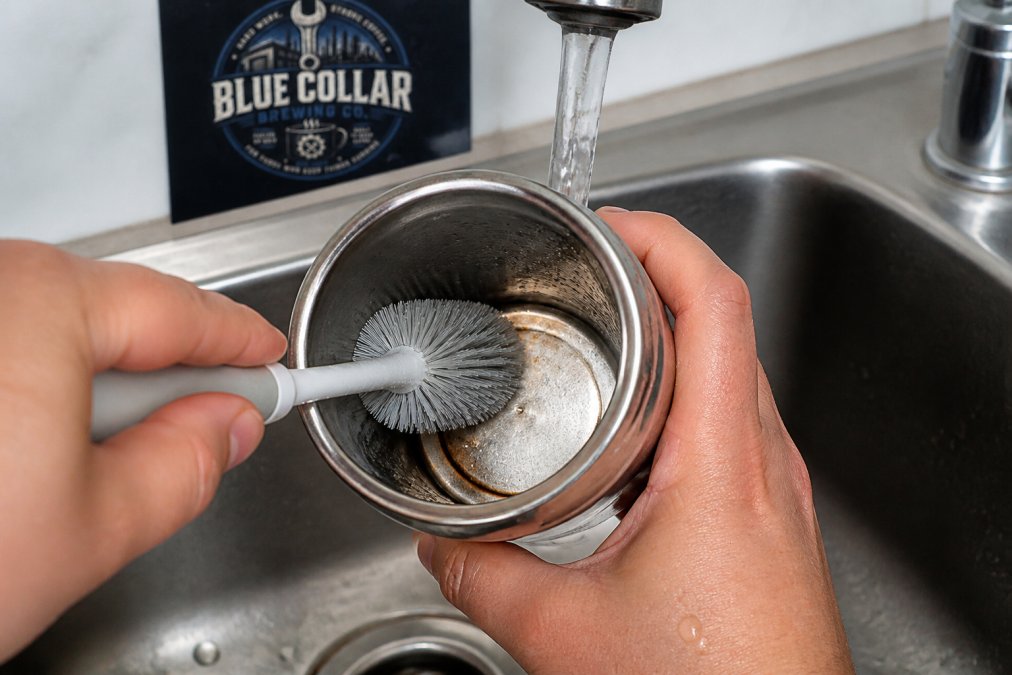
Understanding Biofilm and Oil Buildup
Stainless steel's microscopic pores trap coffee oils and biofilm, which oxidize and turn rancid. After five to seven days of daily use without deep cleaning, oxidized oils create noticeable flavor change. After two weeks, the mug tastes noticeably worse than a freshly cleaned one.
Daily Cleaning Protocol to Prevent Buildup
Immediate rinse (within 5 minutes of finishing): Rinse the interior with hot water immediately after drinking. Wipe the inside surface, paying special attention to the bottom, seams, and area below the rim where oil residue accumulates. Rinse again with fresh hot water.
Brush cleaning: Use a soft bottle brush or cloth, never abrasive scrubbers. Abrasive pads scratch the surface, creating deeper pores for oils and increasing oxidation area.
Dishwasher cycle: Run the mug on a hot cycle at least three times per week. High-temperature water and aggressive jets remove oxidized oils and break down biofilm more effectively than hand washing. Air dry immediately to prevent water spots.
Lid and seal attention: The lid and rubber seal trap more biofilm than the mug body. Remove the seal if possible and clean it separately. Biofilm on the seal transfers to your coffee every time you drink. Rinse the seal thoroughly and air dry it completely before reattaching.
Weekly Deep Cleaning to Remove Stubborn Residue
When daily cleaning isn't enough, or if you notice a persistent stale taste, perform a deep clean:
Baking soda soak: Fill the mug halfway with hot water and add two tablespoons of baking soda. Let sit 30 minutes. The alkaline baking soda neutralizes acidic residue and breaks down oxidized oils. Scrub gently, then rinse thoroughly at least three times.
White vinegar rinse: Fill the mug with equal parts white vinegar and hot water. Let sit one hour. Vinegar's acidity dissolves mineral deposits and oxidized oils by breaking down chemical bonds. Rinse multiple times to remove vinegar smell. Especially effective for biofilm.
Lemon juice treatment: Rub the inside of the mug with cut lemon, focusing on the bottom and seams. Lemon's acidity and antimicrobial properties break down biofilm and oxidized residue. Let sit 15 minutes, scrub gently, and rinse thoroughly.
Activated charcoal method: Place activated charcoal in the mug with hot water overnight.
Maintenance Schedule
Do a deep clean weekly if you use the mug daily. Monthly deep cleaning is sufficient if you use it a few times per week. If you notice bitterness returning faster than expected, increase the frequency of deep cleans. Some water supplies have higher mineral content, which accelerates biofilm formation and requires more frequent maintenance.
Best Coffee for Early Mornings in Stainless Steel
Lighter roasts have higher acidity and interact more aggressively with steel, producing pronounced metallic notes. Medium roasts strike a balance with enough body to mask metallic flavors while retaining complexity. Darker roasts have lower acidity and denser profiles, your best bet for stainless steel because bold character masks metallic interaction.
Ceramic Lined Travel Mug Benefits vs. Bare Steel
Ceramic-lined mugs create a barrier between coffee and steel, eliminating chemical interaction and metallic notes. The downside: they cost more and are more fragile, a chip exposes steel underneath. Bare steel is cheaper and more durable but requires proper cleaning. For 10-12 hour workdays, ceramic-lined is worth the investment. For frequent mug-switching, bare steel with proper cleaning works fine.
Steel Grades and Their Impact on Flavor
Alloy composition directly affects reactivity with acidic beverages and biofilm accumulation. Understanding steel grades helps you choose a mug that tastes better over months of daily use.
Grade 304 Stainless Steel: The Standard
Grade 304 is the most common stainless steel in consumer mugs, containing approximately 18% chromium and 8-10.5% nickel. However, it reacts noticeably with acidic coffee. When hot coffee sits in a 304 mug for more than two hours, acidic compounds pull trace nickel and iron into your cup, creating a sharp metallic edge.
Grade 316 Stainless Steel: Enhanced Corrosion Resistance
Grade 316 adds molybdenum (2-3%) to the chromium-nickel base, significantly improving corrosion resistance and reducing reactivity with acidic beverages. The molybdenum creates a more stable oxide layer that resists acid penetration more effectively than 304.
In a 316 mug, you'll notice:
- Metallic notes appearing after 4-5 hours of contact (vs. 2-3 hours for 304)
- Cleaner taste in light roasts because less trace metal is leached
- Reduced stale taste even with weekly cleaning (instead of required deep cleaning)
- Slower biofilm accumulation due to the more stable surface
- Minimal flavor difference between fresh-brewed and 3-hour-old coffee
Other Grades: 430 and Food-Grade Variants
Grade 430 stainless steel is cheaper than 304 but less corrosion-resistant. It contains 16-18% chromium but no nickel. Some budget mugs use 430 steel, and it reacts more noticeably with acidic coffee than 304. Avoid 430 if flavor is a priority.
How to Identify the Grade of Your Mug
Check three places:
- Product description: Reputable manufacturers list the grade on the product page or packaging.
- Bottom of the mug: Many mugs have "304" or "316" stamped or printed on the base.
- Instruction manual: If included, the manual often specifies the steel grade.
If your mug doesn't specify the grade anywhere, contact the manufacturer. If they can't tell you, assume it's grade 304.
Cost-Benefit Analysis
For workers who spend 10-12 hours on the road or at a job site with the same mug:
- Grade 304: Costs $15-25, requires weekly deep cleaning, noticeable metallic taste after 2-3 hours
- Grade 316: Costs $25-40, requires monthly deep cleaning, minimal metallic taste even after 5+ hours
If you switch mugs throughout the day or drink your coffee quickly, grade 304 is sufficient. If you nurse the same mug for hours, grade 316 delivers measurably better flavor over time.
Temperature Retention and Flavor Degradation
Vacuum insulation keeps coffee hot, but heat also accelerates flavor degradation. The longer coffee sits hot in any mug, steel or ceramic, the more its aromatic compounds break down.
Frequently Asked Questions
Why does coffee taste bitter in stainless steel mugs?
Coffee's acidic compounds react with stainless steel, creating metallic notes that intensify bitter flavors. Coffee oils oxidize on steel surfaces, developing rancid tastes over time. The aromatic compounds in your coffee also interact with the steel's surface, changing how your olfactory senses perceive the flavor. Regular cleaning removes biofilm and residual oils that accelerate this degradation.
How often should you deep clean a travel mug to prevent bitter flavors?
Deep clean your stainless steel mug weekly with baking soda or white vinegar to remove oxidized oils and biofilm buildup. Daily rinsing after each use prevents acidic compounds from sitting on the steel surface. If you notice persistent metallic aftertaste despite daily cleaning, switch to deep cleaning twice weekly. Ceramic-lined alternatives require less frequent deep cleaning since the non-reactive coating prevents direct contact between coffee and steel.
Does ceramic lining really prevent bitter taste in coffee?
Yes. Ceramic-lined travel mugs create a barrier between coffee and stainless steel, eliminating metallic notes and preventing chemical reactions with acidic compounds. The ceramic coating is non-reactive, so your coffee's aromatic profile and tasting notes remain unchanged. This is especially valuable for premium, fresh-roasted coffees where you want to preserve the intended flavor, like Blue Collar Brewing's House Blend with its clean bright finish and nutty chocolate notes.
What type of stainless steel coffee mug is best for avoiding bitter taste?
Food-grade 304 stainless steel is standard and adequate, but 316-grade steel is more corrosion-resistant and less reactive with acidic coffee. Vacuum-insulated mugs retain heat longer, which can accelerate flavor degradation if coffee sits for hours. Electropolished steel surfaces are smoother with fewer microscopic pores, reducing oxidation. For the best results, choose a ceramic-lined mug or prioritize aggressive cleaning routines with bare steel.