

7 Ways to Improve Pour Over Coffee Flavor
Table of Contents
- 1. Master Your Pour Over Coffee Grind Size Guide
- 2. Control Water Temperature for Optimal Extraction
- 3. Perfect Your Bloom: The Foundation of Better Flavor
- 4. Use Filtered Water to Eliminate Off-Flavors
- 5. Get the Coffee-to-Water Ratio Right
- 6. Choose the Best Coffee for Early Mornings
- 7. Master Pouring Technique and Flow Rate
- Frequently Asked Questions
Last Updated: October 2, 2026
1. Master Your Pour Over Coffee Grind Size Guide
Getting your grind size right is the single most important variable in pour over coffee flavor. If your grounds are too coarse, water rushes through without extracting enough flavor. Too fine, and the brew becomes bitter and over-extracted.
Blue Collar Brewing's single-origin coffees arrive fresh-roasted to order, which means they're at peak flavor when you brew them. To unlock that potential, you need the right grind. A medium-fine grind allows water to contact the grounds for 2.5 to 4 minutes, extracting the full range of flavors without pulling out harsh compounds that create bitterness.

The grind size also affects how water flows through your coffee bed. Finer grounds create more surface area and slower flow, which increases contact time. Coarser grounds speed up the flow and reduce extraction. If your brew tastes sour or thin, go finer. If it tastes bitter or muddy, go coarser.
| Grind Size | Best For | Brew Time | Result |
|---|---|---|---|
| Coarse | French press, cold brew | 8-12 hours | Full-bodied, less acidity |
| Medium-Coarse | Chemex, Melitta | 4-5 minutes | Balanced extraction |
| Medium-Fine | Pour over, Hario V60 | 2.5-3.5 minutes | Clean, bright flavor |
| Fine | Espresso, Turkish | 25-30 seconds | Intense, concentrated |
2. Control Water Temperature for Optimal Extraction
Water temperature directly controls how fast extraction happens. Too cold, and the water can't pull out enough soluble compounds, your coffee tastes weak and sour. Too hot, and extraction happens too fast, pulling out bitter compounds and over-extracting the grounds.
Most home brewers don't have a thermometer handy, so here's a practical shortcut: let boiling water cool for about 30 seconds before pouring. That gets you close to 200 degrees. If you're serious about consistency, a gooseneck kettle with a built-in thermometer removes the guesswork.
Different coffee origins respond differently to temperature. Lighter roasts (like Blue Collar Brewing's Ethiopia Natural, which features milk chocolate and fruity notes) benefit from slightly hotter water to fully develop their delicate flavors. Darker roasts can tolerate cooler water without tasting under-extracted. The thermal stability of your dripper also matters, ceramic and glass retain heat better than plastic, so plastic drippers may need slightly hotter water to maintain consistent extraction throughout the brew.

3. Perfect Your Bloom: The Foundation of Better Flavor
(/products/brazil-santos) Colombia with its dried orange and berry notes or the Brazil Santos with its elegant cocoa character.4. Use Filtered Water to Eliminate Off-Flavors
Water makes up 98 percent of your cup of coffee, yet most home brewers ignore it completely. Tap water contains chlorine, minerals, and other dissolved solids that interfere with flavor extraction. Chlorine tastes harsh and metallic. Excess minerals (hard water) can clog your dripper and create a flat, dull cup.
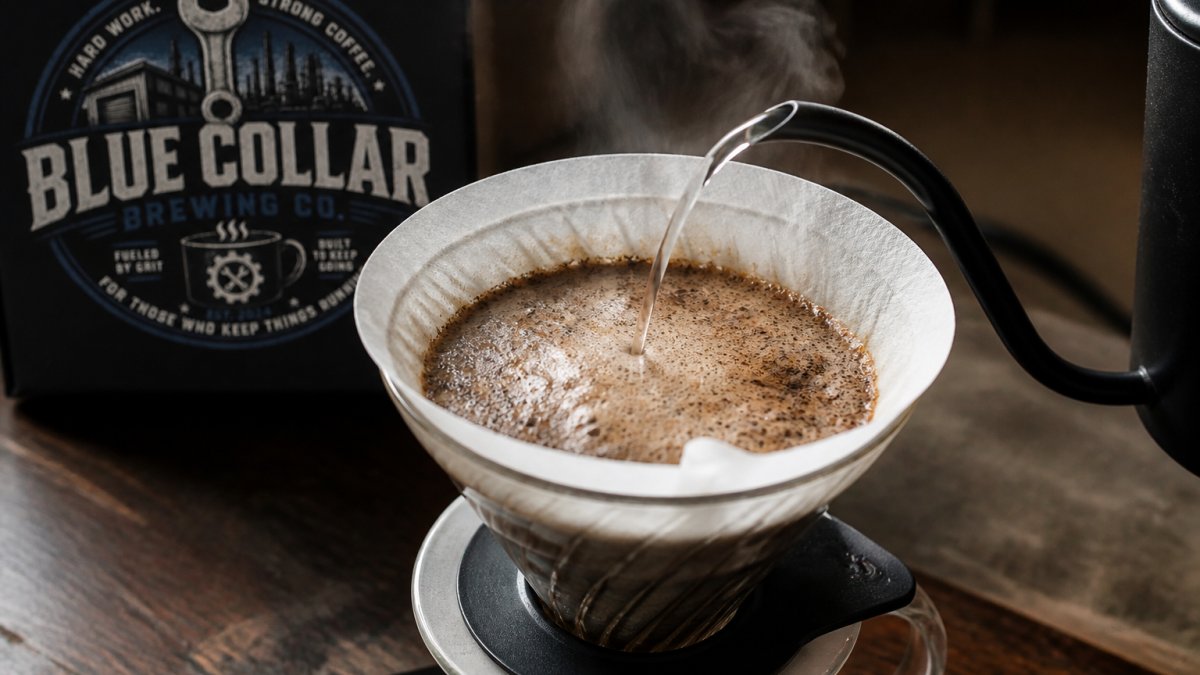
The solution is filtered water. A simple pitcher filter removes chlorine and reduces mineral content without removing everything. If your tap water is very hard, consider a more advanced filter or use bottled water designed for coffee brewing.
Using filtered water is one of the easiest upgrades you can make. It costs almost nothing and immediately improves every cup you brew. Hard water also builds up scale inside your kettle and dripper over time, reducing heat transfer and slowing water flow. Filtered water prevents this buildup, keeping your equipment in better condition longer. When you combine filtered water with fresh-roasted beans from Blue Collar Brewing, you're removing one of the biggest barriers to exceptional flavor.

5. Get the Coffee-to-Water Ratio Right
The coffee-to-water ratio determines how strong or weak your brew tastes. Too much coffee and the cup becomes over-extracted and bitter. Too little and it tastes thin and sour. The standard ratio for pour over coffee is 1:16, that's one part coffee to 16 parts water by weight.
To use this ratio, weigh your coffee and multiply by 16. If you're brewing 20 grams of coffee, use 320 grams of water. A simple kitchen scale makes this precise and repeatable. If you prefer a stronger cup, try 1:15. For a lighter, more delicate cup, try 1:17.
Most home brewers eyeball their coffee and water, which is why their results vary wildly from day to day. Once you dial in your preferred ratio, stick with it. This consistency is what separates good coffee from great coffee. Whether you're brewing Blue Collar Brewing's Nicaragua with its cocoa and floral notes or the Kenya with its bright acidity, the ratio you choose shapes how prominently those flavors come through in your cup.
| Ratio | Strength | Best For | Brew Time |
|---|---|---|---|
| 1:15 | Strong | Dark roasts, espresso-style | 2.5-3 minutes |
| 1:16 | Medium (Standard) | Most pour overs, balanced flavor | 3-4 minutes |
| 1:17 | Light | Light roasts, delicate flavors | 3.5-4.5 minutes |
| 1:18 | Very Light | Specialty brewing, subtle notes | 4-5 minutes |
6. Choose the Best Coffee for Early Mornings
The best coffee for early mornings is one that tastes clean, smooth, and energizing without being harsh or overly acidic.
Blue Collar Brewing's medium-roast coffees are specifically crafted for this purpose. The Brazil Santos offers an elegant, smooth cup with cocoa notes, perfect for starting your day without shock to your system.
The origin also matters. Single-origin coffees from different regions have distinct flavor profiles. Ethiopian coffees tend toward fruity and floral notes. Central American coffees (Colombia, Nicaragua, Peru) offer balanced acidity and chocolate undertones.
7. Master Pouring Technique and Flow Rate
How you pour the water matters as much as what water you pour. Pouring technique controls the flow rate through your coffee bed, which directly affects extraction time and flavor.
Use a gooseneck kettle for better control. The narrow spout lets you pour slowly and precisely, keeping the water flow even across the entire coffee bed.
The draw-down time, how long it takes for all the water to drip through, should be between 2.5 and 4 minutes for most pour over setups.
| Pouring Style | Flow Rate | Best For | Result |
|---|---|---|---|
| Slow, steady pour | 2-3 minutes | Precise extraction, clean cup | Balanced, clear flavors |
| Fast pour | 1.5-2 minutes | Over-extracted, muddy | Bitter, harsh taste |
| Pulse pour (pour, pause, repeat) | 3-4 minutes | Even extraction, control | Clean, complex flavors |
| Continuous spiral pour | 2.5-3.5 minutes | Consistent flow, minimal agitation | Smooth, balanced cup |
Improving your pour over coffee flavor doesn't require expensive equipment or years of experience.
The fastest way to get started is with fresh-roasted beans. Blue Collar Brewing roasts every batch to order, delivering maximum flavor and aroma when it arrives at your door. Pair that with proper technique, and you're guaranteed a smoother, richer cup that actually tastes like the origin it comes from. Shop Coffee and experience what fresh-roasted coffee can really taste like.
Frequently Asked Questions
How does grind size affect pour over coffee flavor?
Grind size directly controls how fast water passes through the coffee grounds, determining extraction time and flavor intensity. Too coarse and water rushes through, leaving your coffee sour and under-extracted. Too fine and water moves slowly, creating bitterness from over-extraction. Medium-fine grounds are the sweet spot for most pour over setups, allowing balanced extraction that brings out the coffee's natural sweetness and complexity without harsh notes.
What water temperature should I use for pour over coffee?
Water between 195°F and 205°F produces the best pour over coffee flavor. Boiling water (212°F) extracts too quickly and can scorch the grounds, creating burnt or bitter tastes. Water cooler than 195°F extracts too slowly, leaving your coffee sour and thin. Let freshly boiled water cool for 30 seconds before pouring. This temperature range ensures even extraction that highlights the coffee's intended flavor profile, whether you're brewing a smooth Brazil Santos or a fruity Ethiopia Natural.
Why is the bloom phase important for pour over coffee?
The bloom phase allows carbon dioxide trapped in the coffee grounds to escape, which improves water contact with the beans and ensures even extraction. Without blooming, water channels through the grounds unevenly, creating under-extracted, sour coffee. Bloom for 30-45 seconds by pouring just enough water to saturate the grounds, about twice the weight of the coffee. This brief pause dramatically improves flavor clarity, balance, and the overall quality of your final cup.
How does freshly roasted coffee improve pour over flavor?
Freshly roasted coffee beans contain more volatile oils and aromatic compounds that create the complex flavors you taste. Coffee roasted to order, like Blue Collar Brewing's single-origin selections, preserves these compounds better than pre-roasted coffee sitting on shelves for weeks or months. Roasted-to-order coffee also has more CO2, which helps with the bloom phase and extraction. The flavor difference is noticeable within the first 2-4 weeks after roasting, making fresh beans a simple way to dramatically improve your pour over experience.