

How to Keep Coffee Fresh Longer: 7 Storage Rules
Table of Contents
- The Four Enemies of Fresh Coffee (and How to Beat Them)
- Best Coffee Storage Containers: What to Look For
- How Long Does Roasted Coffee Stay Roasted Coffee Stay Fresh?
- Should You Freeze Coffee Beans? The Facts
- How to Tell If Coffee Is Fresh: Quick Checks
- Climate and Humidity: Adapting Storage to Your Region
- Storage Tips for Different Brew Methods
- Common Storage Mistakes That Ruin Your Coffee
- Frequently Asked Questions
Last Updated: September 5, 2026
The Four Enemies of Fresh Coffee (and How to Beat Them)
Coffee freshness is a race against four forces: oxygen, moisture, heat, and light. Oxidation is the primary culprit. Once roasted coffee meets air, the volatile compounds responsible for aroma and flavor begin degrading immediately, making an airtight container your first line of defense.
At Blue Collar Brewing, we roast every batch to order, so we've studied what happens to beans after they leave the roaster. Oxygen exposure triggers staling, moisture accelerates the breakdown of soluble solids, and heat or direct sunlight speeds up both processes. The goal is to slow each one down.
The practical takeaway? Store coffee in a cool, dark place inside a sealed vessel. Skip the countertop jar next to the stove, and never leave beans in the original bag without closing it tightly. Oxygen exposure does most of the damage.
Best Coffee Storage Containers: What to Look For
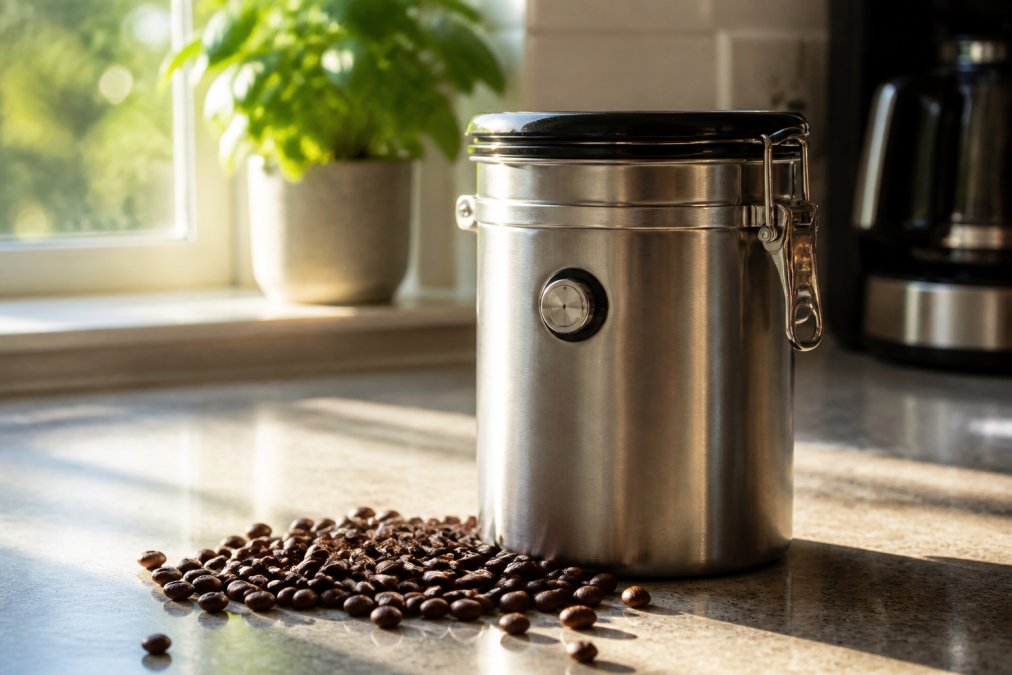
The best coffee storage containers share three features: an airtight seal, an opaque body, and a one-way CO2 valve. Freshly roasted beans release carbon dioxide for days after roasting, a process called degassing. A one-way valve lets that gas escape without letting oxygen in, preserving bean integrity while preventing pressure buildup.
Ceramic and stainless steel canisters outperform glass because they block light entirely. Glass looks great on a counter, but unless it sits in a dark cabinet, it exposes beans to the very enemy you're trying to avoid. Vacuum seal containers work well too, though they require a bit more effort each time you open them.
How Long Does Roasted Coffee Stay Roasted Coffee Stay Fresh?
Roasted coffee is a perishable product, and its freshness window is far shorter than most people assume. The peak flavor window for whole bean coffee is generally between 4 and 14 days after the roast date (peer-reviewed research). After that, the coffee enters a period of gradual decline, where it remains drinkable but loses its vibrant, complex character. By day 21 to 28, most coffees will taste flat, papery, or even slightly sour.
The Oxidation Timeline
The staling process is driven by oxidation. Roasting creates thousands of volatile organic compounds responsible for aroma and flavor. These compounds are highly reactive with oxygen, and once exposed to air, they begin breaking down. The process is not linear; it accelerates with time, temperature, and surface area.
- Days 1-3: The beans are degassing heavily, releasing CO2. The flavor is bright and intense, but the coffee may taste slightly 'closed' or underdeveloped. This is why many roasters recommend waiting a few days after the roast date before brewing.
- Days 4-14: This is the 'sweet spot.' The coffee has degassed enough to brew evenly, and the volatile compounds are at their peak concentration. This is when you will experience the full range of flavors the roaster intended.
- Days 15-21: The coffee is still usable, but you will notice a decline in aroma intensity and a loss of brightness. The cup will taste more 'woody' or 'earthy.'
- After Day 21: The coffee is considered stale. The volatile compounds have largely degraded, and the remaining flavors are dominated by bitter, papery notes. This coffee will not produce a good cup, regardless of your brew method.
Why Whole Beans Last Longer Than Ground Coffee
Grinding increases surface area by a factor of hundreds. A whole bean's small exposed surface protects the interior from oxygen; once ground, every particle is exposed to air, and oxidation proceeds dramatically faster. Pre-ground coffee can go stale in as little as 30 minutes to a few hours after grinding, which is why we strongly recommend grinding immediately before brewing (peer-reviewed research).
The Impact of Roast Profile and Origin
Not all coffees age the same way. Darker roasts, such as French or Italian, have a more porous structure because the extended roasting process breaks down the bean's cellular matrix, allowing oxygen to penetrate more easily. Oils that migrate to the surface of dark roast beans are also highly susceptible to oxidation, leading to rancid flavors. Lighter roasts, which are denser and less porous, tend to hold their freshness longer. Origin also plays a role; high-altitude grown beans, like those from Ethiopia or Colombia, are denser and may retain their flavor profile slightly longer.
The Role of the Roast Date
The roast date is the single most important piece of information on a bag of coffee. A 'best by' date is meaningless; it is a regulatory label often indicating 6 to 12 months from packaging, far beyond peak flavor (the FDA). Always look for a 'Roasted On' date. If you cannot find one, assume the coffee is already stale.
Practical Storage Math
To maximize freshness, match your purchase size to your consumption rate. If you brew a single cup a day, a 12-ounce bag will last about three weeks, meaning the last few cups will be past their prime. Consider buying an 8-ounce bag or splitting your purchase into smaller, resealable portions to minimize time beans spend in an opened container.
Should You Freeze Coffee Beans? The Facts
Freezing coffee can significantly extend shelf life if done correctly. At temperatures of 0°F (-18°C) or lower, the chemical reactions that cause staling slow to a near standstill. However, the risks are real and specific: moisture condensation and odor absorption.
The Freezing Protocol That Works
- Start with freshly roasted, whole beans. Do not freeze pre-ground coffee. Grinding increases surface area by orders of magnitude, making beans exponentially more vulnerable to moisture and oxygen. The texture of thawed grounds will be compromised, leading to uneven extraction and a flat, muddy cup.
- Portion into single-use, airtight containers. The most common mistake is freezing a large bag and repeatedly scooping from it. Every time you open the container, warm, humid air rushes in and condenses on the frozen beans. This introduces moisture, which degrades flavor and can lead to freezer burn. Instead, divide the beans into small, vacuum-sealed bags or glass jars that hold just enough for one brew session.
- Freeze once, and only once. Thawing and refreezing causes cellular damage to the bean structure and accelerates moisture migration. Once you remove a portion from the freezer, it should go straight into your grinder. Do not return it.
- Let the beans come to room temperature before opening. This is non-negotiable. If you open a sealed container of frozen beans while they are still cold, condensation will form immediately on the bean surface. Wait 10-15 minutes for the container to reach ambient temperature before breaking the seal.
The Science of Freezer Burn
Freezer burn is not caused by cold; it is caused by dehydration and oxidation. When beans are not sealed in an airtight container, the dry, cold air of the freezer sublimates moisture out of the bean, leaving it dry, brittle, and flavorless. Coffee beans are also highly porous and will absorb odors from your freezer. A vacuum-sealed container or high-quality, gasket-sealed canister is essential to create a barrier against both moisture loss and odor absorption.
When Freezing Makes Sense
For most home brewers, freezing is unnecessary. If you go through a 12-ounce bag within two to three weeks, an airtight, opaque canister in a cool, dark cabinet is sufficient. Freezing becomes valuable when you buy in bulk (e.g., 2- or 5-pound bags) or want to stock up on a limited-edition seasonal roast. In these cases, portioning and freezing immediately after the roast date will preserve peak flavor for up to three months.
The Verdict
Freezing is a powerful tool, but not a shortcut. It requires discipline in portioning and strict adherence to the thawing protocol. If you cannot commit to the protocol, stick to buying smaller quantities more frequently.
How to Tell If Coffee Is Fresh: Quick Checks
Fresh coffee has a distinct aroma that fills the room when you open the bag. If you can't smell much, or if the scent is flat and papery, the coffee has already staled. Stale coffee also produces a dull cup with muted flavor and almost no crema on espresso.
Check the roast date first. Coffee within two weeks of roasting is in its peak flavor window. Beyond four weeks, you're drinking a shadow of what the bean could deliver. Another quick test: squeeze the bag. Freshly roasted beans release CO2, so a recently sealed bag should feel slightly puffed.
| Freshness Indicator | What to Look For | What It Means |
|---|---|---|
| Aroma | Strong, sweet, floral or nutty scent | Volatile compounds intact |
| Roast date | Within 2-4 weeks | Peak flavor window |
| Bag pressure | Slight puffiness | Active CO2 release |
| Ground texture | Consistent, not clumping | Low moisture exposure |
Climate and Humidity: Adapting Storage to Your Region
Humidity is the silent killer of coffee freshness. In humid climates, moisture in the air accelerates staling and can promote mold growth in poorly sealed containers. If you live somewhere with high humidity, your storage strategy needs to be more aggressive.
Keep coffee away from the refrigerator entirely. The temperature fluctuations inside a fridge cause condensation every time the door opens, and the moisture that forms on beans degrades flavor quickly. The same logic applies to cabinets above the stove or near dishwashers, where heat and steam create a hostile environment.
For humid regions, consider storing smaller portions in the freezer and keeping only a few days' worth in your countertop canister. This minimizes the time beans spend exposed to ambient moisture. A cool, dark place with stable temperature is the ideal environment, regardless of where you live.
Storage Tips for Different Brew Methods
Your brew method should influence how much coffee you buy and how you store it. Espresso drinkers need beans at their freshest because the flavor profile is concentrated. Buy smaller bags more frequently and use them within two weeks. Drip coffee drinkers have more flexibility, since the brewing process is more forgiving.
Pre-ground coffee for convenience is worth reconsidering. If you're using single-serve capsules, the packaging does the freshness work for you. Our single-serve coffee capsules are sealed with no oxygen inside, so each cup delivers the same freshness as the first. For those grinding at home, buy whole beans in quantities you'll use within three weeks.
The roast profile matters too. Darker roasts go stale faster because the roasting process makes beans more porous and oils migrate to the surface. Lighter roasts hold their freshness slightly longer. Adjust your purchase frequency based on what you're drinking.
Common Storage Mistakes That Ruin Your Coffee
The most common mistake is leaving coffee in its original bag after opening. Those bags have one-way valves for a reason, but once opened, they don't reseal tightly enough to keep oxygen out. Transfer beans to an airtight container immediately after opening.
Another frequent error is storing coffee in the refrigerator. The fridge introduces moisture and absorbs odors from other foods, making your coffee taste like last week's leftovers. The freezer works only with the strict protocols covered earlier; the fridge never works.
Buying more coffee than you can use within the freshness window is a third mistake. A 12-ounce bag of whole beans lasts most people about two to three weeks. If you're brewing for a crew on a job site, that math changes, and our instant coffee option offers 30 servings in a resealable pouch that stays fresh without special storage. Match your purchase size to your actual consumption rate.
Keeping coffee fresh comes down to controlling oxygen, moisture, heat, and light. The right container, proper portioning, and buying according to your consumption pace will keep every cup tasting like the roaster intended. Blue Collar Brewing roasts to order and ships fast, so beans arrive within days of roasting, not months. Get started with Blue Collar Brewing and taste the difference fresh coffee makes on your next early shift.
Frequently Asked Questions
Will coffee stay fresh in a Ziploc bag?
A Ziploc bag works for a day or two, but it is not a long-term solution. The bag lets air pass through slowly, and the seal is not airtight enough to block oxygen. Coffee goes stale fastest when exposed to oxygen, so a Ziploc bag will speed up flavor loss. For keeping coffee fresh longer, transfer beans to a proper airtight container with a one-way valve. Squeeze out as much air as possible before sealing if you must use a Ziploc temporarily.
Does freezing coffee beans actually keep them fresh?
Yes, but only under the right conditions. Freezing slows down the staling process by reducing oxidation and moisture movement. The key is using an airtight, freezer-safe container and taking out only what you need. Never refreeze beans after they thaw, because condensation introduces moisture that ruins flavor. For long-term storage beyond a few weeks, freezing whole beans works well. For daily use, a cool, dark pantry in a proper canister is simpler and just as effective.
Is 2-year-old coffee still good to drink?
Two-year-old coffee is safe to drink, but it will taste flat, dull, and likely stale. Roasted coffee hits peak flavor within 1 to 3 weeks after roasting and declines from there. Even in an airtight container, coffee loses most of its aromatic oils and flavor compounds within a few months. If the coffee shows no signs of mold or off smells, it is not harmful. But you will not get the rich flavor profile you expect. Fresh-roasted coffee makes a noticeable difference in every cup.
What are the four enemies of coffee freshness?
The four enemies are oxygen, moisture, heat, and light. Oxygen causes oxidation, which makes coffee taste stale and flat. Moisture speeds up the breakdown of coffee's soluble compounds and can encourage mold. Heat accelerates the chemical reactions that destroy flavor. Light, especially direct sunlight, degrades coffee's oils and aroma. To keep coffee fresh longer, store whole beans in an airtight, opaque container in a cool, dark cabinet away from the stove, window, or any humid area.
This article was written using GrandRanker