

Does Fair Trade Coffee Taste Better? The Real Answer
Table of Contents
- The Short Answer: Fair Trade Certification Doesn't Guarantee Better Taste
- What Fair Trade Certification Actually Means
- Direct Trade vs Fair Trade Coffee: Which Affects Flavor More?
- How Specialty Grade Coffee Differs From Commodity Coffee
- The Psychology of Labels: Why Fair Trade Feels Better
- Is Organic Coffee Better for the Environment and Your Cup?
- What Actually Determines Coffee Flavor: Roasting, Origin, and Freshness
- Frequently Asked Questions
Last Updated: October 1, 2026
The Short Answer: Fair Trade Certification Doesn't Guarantee Better Taste
The straightforward answer is no. Fair trade certification doesn't automatically mean your fair trade coffee taste will be better. A fair trade label tells you about the economics of how that coffee was produced and traded, not about its flavor profile. You can find exceptional-tasting coffee that carries fair trade certification, and you can find mediocre coffee with the same label. You can also find outstanding coffee with no certification at all.
Many assume ethical sourcing and superior taste go hand in hand. They don't. Fair trade coffee taste depends on entirely different factors: bean origin, freshness, roast quality, and preparation skill.
At Blue Collar Brewing, we roast every batch to order, prioritizing freshness and flavor.
What Fair Trade Certification Actually Means
Fair trade certification is fundamentally an economic and social tool, not a flavor standard. When you see a fair trade label, it means the coffee was produced and traded according to specific standards designed to ensure farmers receive fair compensation and work under acceptable conditions.
Fair trade sets minimum prices, requires direct buyer-producer relationships, and mandates community investment. These affect farmer livelihoods but say nothing about bean quality, processing, or taste.
Fair trade certification ensures supply chain transparency and economic equity, separate from specialty grade, which measures physical and sensory bean qualities.
Fair trade certified coffee can score poorly on cupping tests; exceptional coffee may lack certification. The certification verifies the transaction, not product quality.
Direct Trade vs Fair Trade Coffee: Which Affects Flavor More?
Fair trade uses certification organizations to verify standards. Direct trade involves roaster-farm relationships without third-party certification, allowing better quality communication and often higher farmer prices.
Direct trade can lead to better-tasting coffee through roaster-farmer collaboration on flavor profile and processing, but only if both prioritize quality.
Fair trade offers consistent standards and third-party verification of economic terms, but doesn't require cupping scores or sensory evaluation.
Neither model guarantees freshness. A directly traded coffee sitting six months tastes stale; fair trade roasted last week tastes fresher. Freshness matters more than sourcing model.
How Specialty Grade Coffee Differs From Commodity Coffee
This is where the real flavor distinction lives. Specialty grade coffee is sorted, graded, and evaluated by trained cuppers using a standardized scoring system. Commodity coffee is what you get when none of that happens.
The Specialty Coffee Association's 100-point scale rates specialty grade at 80+ points. Cuppers evaluate fragrance, aroma, flavor, aftertaste, acidity, body, balance, and overall impression. Defects are deducted; multiple defects disqualify specialty status.
Cupping is rigorous and repeatable: cuppers grind to specific size, brew at 200°F, and taste as it cools, documenting flavor notes and off-flavors. This standardization ensures consistent quality across specialty grade coffees.
Commodity coffee, by contrast, is bulk coffee sold on the commodity market based on price and basic specifications like bean size and moisture content. It's cheaper because nobody spent time cupping individual lots for quality.
Here's the critical point: fair trade certification and specialty grading are completely independent systems. A coffee can be fair trade certified and still score below 80 points on the SCA scale.
When you buy specialty grade, you're buying coffee that's been evaluated for defects, consistency, and sensory characteristics by someone trained to spot problems. When you buy commodity coffee, you're buying based on trust that the seller knows what they're doing.
Blue Collar Brewing focuses on sourcing specialty grade beans because that's what affects what you taste. The origin matters, the processing method matters, the roast profile matters.
The Psychology of Labels: Why Fair Trade Feels Better
Here's something worth acknowledging: knowing your coffee was ethically sourced can make it taste better to you, even if the flavor profile itself hasn't changed. This is real, and it's worth understanding, because it reveals how perception and neurobiology interact in ways most people don't expect.
When you know a coffee supports fair wages and sustainable farming, that knowledge changes your perception of the experience at a sensory level. This isn't just emotional; it's neurological. The brain's taste perception system is deeply influenced by expectancy.
Here's how it works: taste perception isn't purely about what your taste buds detect. It's a combination of taste, smell, texture, temperature, and, critically, context and expectation.
This is why blind taste tests often show different results than labeled tastings. In a blind test, you're evaluating purely on sensory input. In a labeled test, your brain is integrating the label information into the flavor perception. Neither result is "wrong", they're measuring different things.
The risk is mistaking this psychological benefit for a flavor benefit. If you buy a coffee solely because it's fair trade, assuming that means it will taste exceptional, you might be disappointed.
But here's the nuance: that psychological satisfaction is real value. If knowing your coffee supports fair farming practices makes the experience more enjoyable, that's a legitimate reason to choose fair trade. You're not being fooled; you're experiencing a genuine psychological and neurological response to ethical alignment.
The best approach combines both: source specialty grade coffee from producers who also prioritize fair compensation and sustainable practices. That way you're getting beans selected for quality and supporting an ethical supply chain and benefiting from the psychological satisfaction of ethical alignment.
Is Organic Coffee Better for the Environment and Your Cup?
Organic certification, like fair trade, is an environmental and agricultural standard, not a flavor standard. Organic coffee is grown without synthetic pesticides or fertilizers, which benefits soil health and reduces chemical runoff. These are meaningful environmental benefits.
But organic coffee doesn't automatically taste better than conventionally grown coffee. The flavor depends on the same factors: origin, processing, roasting, and freshness. You can find outstanding organic coffees and mediocre ones. Same with conventional.
What does matter for both the environment and your cup is sustainable agriculture more broadly. Some of the best-tasting coffees come from farms using shade-grown methods, rotating crops, and building soil health, practices that may or may not carry organic certification. Certification is a label; sustainability is a practice.
The environmental impact question is more nuanced than the taste question. Organic farming generally reduces chemical inputs, which is better for local ecosystems. But it can also require more land to produce the same yield, which has its own environmental cost. Conventional farming with responsible chemical management can have a smaller land footprint.
For your cup, focus on freshness and specialty grade. For the environment, look for coffees from farms using sustainable practices, which may or may not be certified organic. The best choice is often a coffee that's both fresh and from a farm you can learn about directly.
What Actually Determines Coffee Flavor: Roasting, Origin, and Freshness
Here's where the real flavor story lives. Three factors dominate what you taste: where the beans came from, how recently they were roasted, and how the roaster developed the roast profile.
Origin matters because different regions produce beans with different inherent characteristics. Ethiopian coffees often have floral or fruity notes. Colombian coffees tend toward chocolate and caramel.
Roasting is where a skilled roaster transforms those origin characteristics into the cup. The same beans roasted light versus dark will taste completely different. Light roasts preserve origin flavors and acidity.
Freshness is the factor most people underestimate. Coffee begins losing flavor the moment it's roasted. Within two weeks, you'll notice a difference. Within a month, the coffee tastes noticeably flatter. This is why roasted-to-order matters. If your coffee was roasted three months ago, no amount of fair trade certification or specialty grading will make it taste fresh.
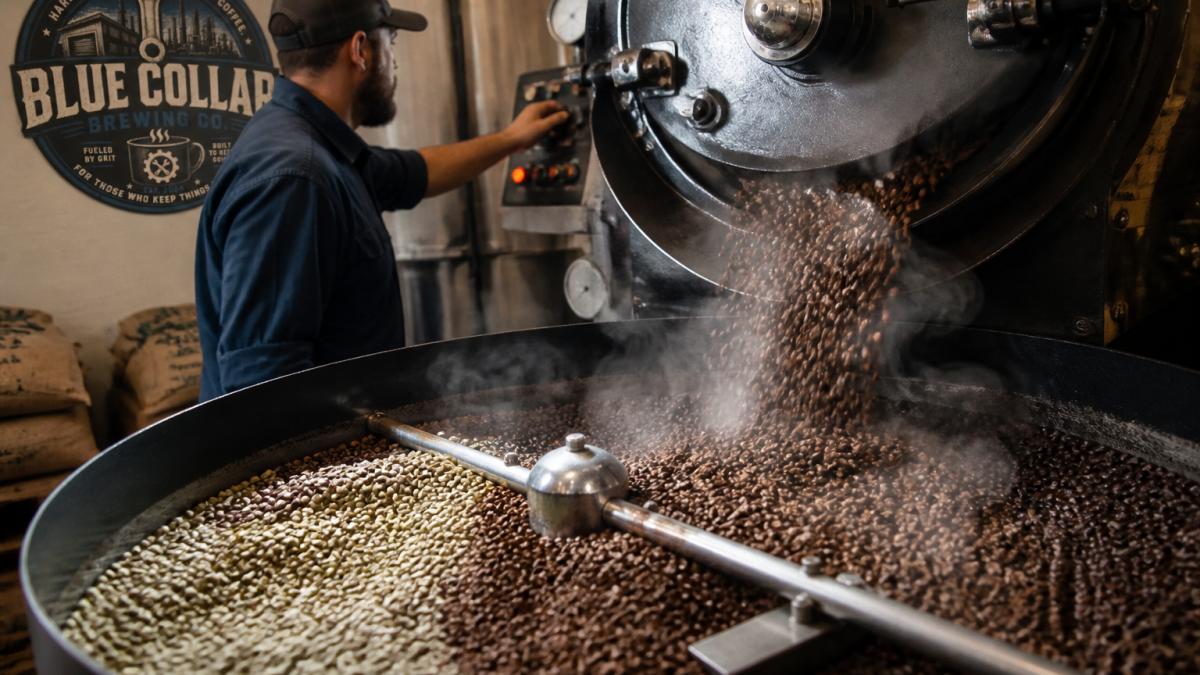
When Blue Collar Brewing roasts every batch to order, freshness is the priority. You get beans roasted days before they arrive, not weeks or months.
The practical takeaway: if you want better-tasting coffee, prioritize freshness and specialty grade over certifications. Then choose based on origin and roast style according to your taste preferences.
The gap between ethical sourcing and exceptional taste is real, but it's also closable. You don't have to choose between supporting fair farming practices and getting coffee that tastes outstanding.
That's the approach that delivers on every front, better taste, fresher coffee, and the confidence that your purchase supports producer livelihoods. When you combine specialty grade beans, fresh roasting, and ethical sourcing, you get the best of all three.
| Factor | Impact on Taste | Impact on Ethics | Key Takeaway |
|---|---|---|---|
| Fair Trade Certification | None directly | Yes, ensures fair wages | Ethical choice, not a flavor guarantee |
| Specialty Grade | Significant | None directly | Directly affects flavor quality |
| Roasting Date | Significant | None directly | Freshness matters more than labels |
| Origin | Significant | Indirect, supports region | Flavor foundation, varies by region |
| Roast Profile | Significant | None directly | Light vs. dark changes everything |
Frequently Asked Questions
Is fair trade coffee worth the extra cost?
Fair trade coffee supports farmer livelihoods and supply chain transparency, which matters if those values align with yours. However, the taste difference is not guaranteed. If you prioritize flavor, specialty grade coffee from direct trade or single-origin sources can offer a noticeable taste improvement. The worth depends on whether you value ethical sourcing alongside taste, not on taste alone.
How does direct trade compare to fair trade in terms of flavor?
Direct trade often produces higher-quality beans because roasters work directly with specific farms, selecting for flavor characteristics and offering premium prices that incentivize quality. Fair trade certification focuses on fair wages and working conditions but doesn't require the same flavor-focused bean selection. For taste, direct trade can often lead to higher quality. For broader economic impact on farming communities, fair trade reaches more producers.
Does fair trade certification guarantee higher quality beans?
No. Fair trade certification addresses economic fairness and supply chain standards, not bean quality. A fair trade coffee can be commodity grade or specialty grade. Quality is determined by cupping scores, bean density, defect rates, and roasting skill, factors independent of fair trade status. Many specialty coffees are not fair trade certified, and some fair trade coffees are lower quality. Check the specialty grade rating or cupping score if taste is your priority.
Is organic coffee better for the environment than conventional fair trade coffee?
Organic certification restricts synthetic pesticides and fertilizers, reducing chemical runoff and supporting soil health. Fair trade addresses economic practices but not farming methods. An organic fair trade coffee combines both benefits. However, conventional fair trade coffee with sustainable agriculture practices may have a smaller environmental footprint than non-certified organic coffee with poor farming methods. Look for certifications that address both farming practices and economic equity for the strongest environmental impact.